
Antonia Fraser, 2001
“I have seen all, I have heard all, I have forgotten all.”
Marie Antoinette
Key Terms: Marie Therese was such a chad – Diamond-crusted scapegoats evermore – Most people cannot read outrageous information critically, this isn’t new, it has been this way for centuries.
I was a late bloomer in terms of nerding out over world history. I didn’t read much of any non-fiction unless a teacher compelled me to, and I didn’t take any course so much as resembling a history class after high school. I don’t have a good reason for why other than I had always been frustrated with those European eras where there’s some 5-10 important guys named Henry or Louis and they’re all fucking with each other.
All that changed a few years back. I had just finished Les Miserables (the book, not that goofy Hug Jackman play) right before I was invited to go to a touring exhibition of Napoleon’s hair brushes and taste in women. At that time I had no idea there had been more than the one revolution in France, and of that I only knew a bunch of fancy people got their heads cut off or beaten with hammers, but none of that fun seemed to show itself in the Hugo novel. After staring at Napoleon’s nail clippers, my curiosity was agitated, and I didn’t know what to do about it.

I am a broad and our heavenly father designed me to be shoppin’, but unfortunately he did not endow me with the capacity to love that shoppin’. One dumb day I wandered through the retail district, hands sackless, dragging myself back to the parking garage to swallow the three hours I had just wasted for nothing. Before accepting that defeat, I stopped at one of those cutesy free book boxes. It was outside of the same Unitarian “temple” I’d gone to as a teenager to see Chuck Palahniuk read his newest book at the time and learned that, contrary to my assumptions that I had based on one book (you know the one), Chuck Palahniuk was an absolute dork with chicken wing shoulder blades.
Anyway, the selection was mostly trash. Like literally. Someone had stuffed a bunch of their McDonald’s leavings in the box. But hidden behind all that was a single book, this Marie Antoinette book. I took it with me, partially to feel better about my meaningless day, and partially because of my previously mentioned French agitation. Then I went home and threw it on top of my never ending to-read pile and ignored it for another year.
The book reads like pop history, though it’s decently dense. The writer, Antonia Fraser, is not an academic or historian. She was born in England to an Earl and a Countess, in the 1930s. So basically around the time that most people with ~posh~ titles were either going broke or desperately downsizing. Fraser’s family was the latter, so they were able to give her the proper rich girl life that sent her through a series of prestigious boarding schools with silly British names. When she was done with school, she took the only job she would ever work. It was at a publishing house, and there’s no record on whether she was any good at whatever she was doing there because a couple years later she fucking bought the whole place and used it to pump out her pop history books. Meanwhile, I’m sitting in the 2020s with a perennial fear that the Kindle bot may one day ban one of my more profitable pen names if I make the sex scenes a smidge too weird.
Back to the book. Like I said, it’s fairly dense. Pretty much starts at ground zero, Marie Antoine’s (Antoinette is the Frenchified version of her name) Habsburg childhood. Marie was the FOURTEENTH child of the very fucking formidable Marie Therese and her husband/second cousin, the Holy Roman Emperor Francis I. I’ve yet to look for a book that focuses solely on the life and wild times of Marie Therese, so as of now this Marie Antoinette book has provided one of the juicier accounts of the character of that bewitchingly callous woman. In this first quarter, you learn that one of history’s most memorable and adept wielders of weaponized diplomacy was a very cold and distant mother. She may have cared for her offspring at least a little, I’m sure, but their purpose in that great house was primarily as means to politically beneficial ends.
The largest portion of the book is devoted to Antoinette’s teenage years at Versailles. Her mother shipped her off to marry France’s awkward heir at the age of 14. Marie Therese had convinced the aging King Louis XV of France to put aside their historic differences. After all, they both wanted to Delenda-Est Prussia and Britain.

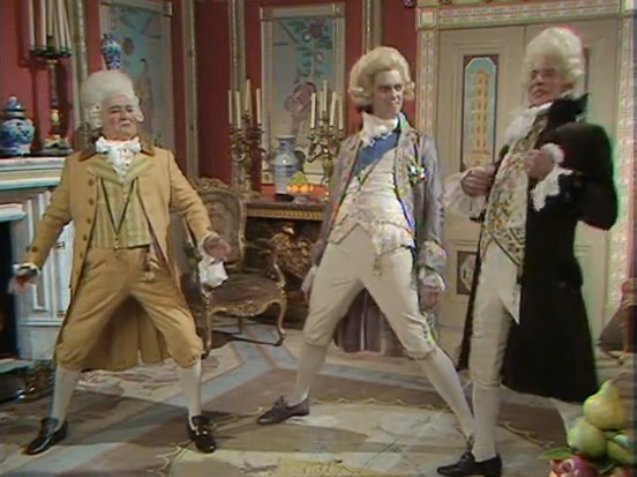
Antoinette’s tender years at that silly place were not happy ones. The code of conduct at Versailles was intentionally ridiculous. It was crafted by the fabulous crossdresser/esteemed warrior Philippe d’Orleans, brother of the Sun King Louis XIV. The whole point of it was to be another measure to control the nobles once they’d been coerced into a kind of soft kidnapping by the Sun King. By Antoinette’s time, it had just become the way things were done.
For the unfamiliar, here’s an example: Marie Antoinette, in the position of Dauphine, would not have been allowed to dress herself. Instead, she was woken every morning by a crowd of noble women who’d watched her sleeping while waiting for all the aristocratic attendants to arrive. Clothing items were then removed or placed on Antoinette one-by-one. So the gal with the highest title at court swapped her undergarments, then the next highest title tied her corsette, then the next highest title put Antoinette in her pantyhose, and so on and so on until some 30 to 40 women had each gotten to at least put a glove or brooch on the girl. After this they led her to the breakfast room where they and the men who had dressed the Dauphin stood at the edges of the room while watching the awkward young couple eat.
Like I said, this was an intentionally designed conduct, it was social engineering, so there was a kind of logic to it, but it is French logic, and I’ve already put my poor blog through enough of that lately.
Okay so, on top of pretty much never getting any private time, being fourteen and without a familiar face in a strange land, and being forced to get rid of her fussy dog; Marie Antoinette had to deal with a constant anti-Austrian sentiment in the French court and trying to figure out how to get her very weird little husband to fuck her, lest she get another berating letter from her mean mother. Neither Antoinette nor the king-to-be seemed to know what sex was, so supposedly they wasted a few years because he just kept sticking his dick in her and letting it sit there like a marinating chicken wing.
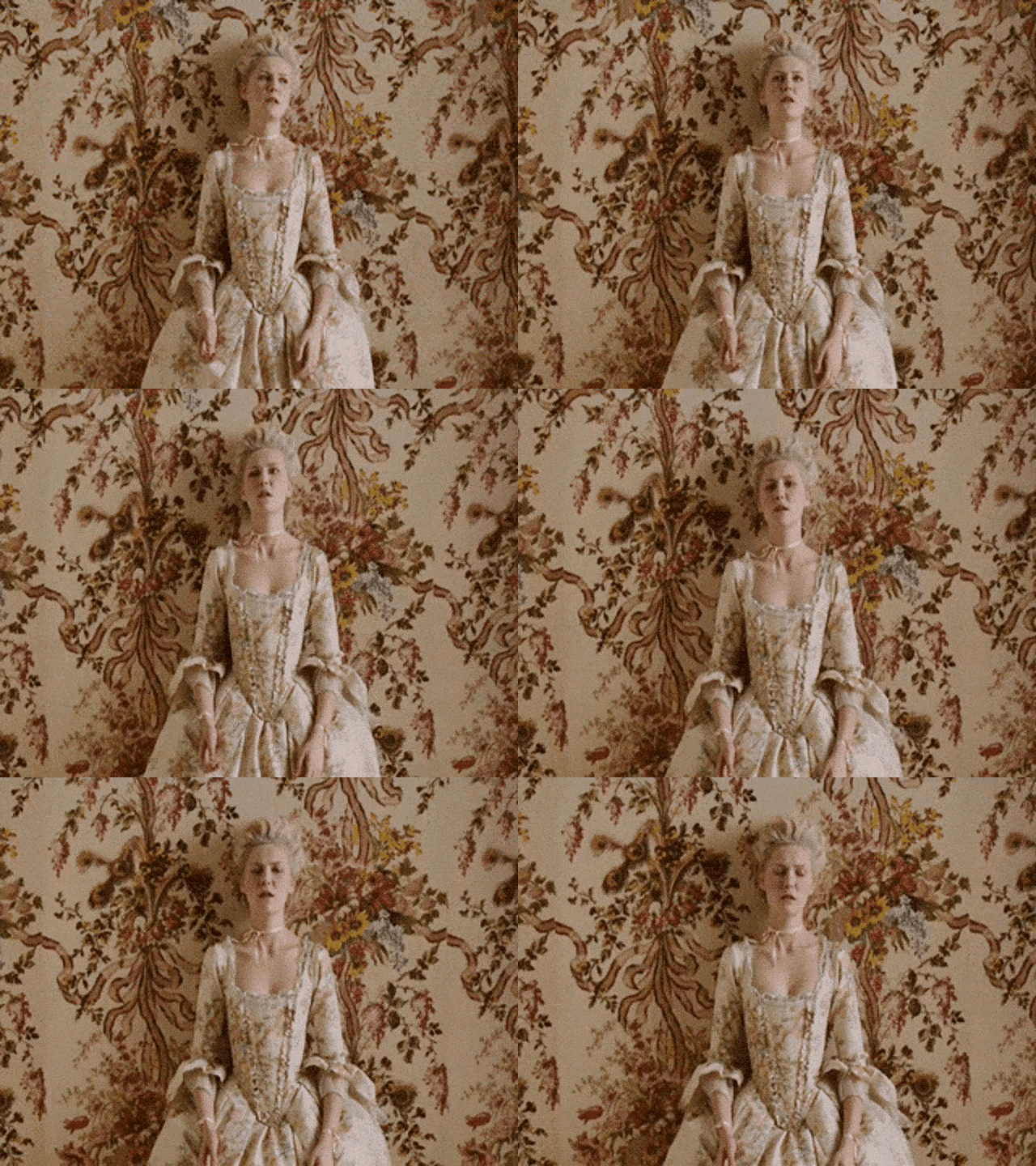
Eight years into her marriage, it seems the happy half of her life starts. She and Louis figure out how to fuck, and she starts having babies. With an heir born, the French nobility becomes slightly nicer to her and spends slightly less energy spreading rumors that she is an Austrian spy. Her life had this one lovely little window, and it lasted a little while, then it all got so much worse. The long overdue welcome into the French aristocratic fold was shadowed by a rapid decline in her popularity among the common classes.
By the late 1700s, literacy had increased considerably throughout Paris. Newspapers were tightly controlled by a licensing system under the authority of the crown. It was at this time that underground newspapers and tabloids exploded in popularity. These tabloids, known as libelles, were essentially the 18th century version of clickbait. In them were printed any rumor its writer could find, any scandal the writer could imagine out of two narrowly linked events. Marie Antoinette was like 18th century France’s first term Donald Trump. There was a lot of money in feeding the angry mob a daily dose of recreational outrage. The scandal that was two scoops of ice cream in 2016 was, in the 1780s, the scandal of Antoinette being offered a diamond necklace, not being interested in it, and then having her signature forged on a buy order by a famous fraud of a woman from the disgraced and impoverished Valois family1.
Why did she do it? Because her ancestors had drank away all the money, her husband was a broke chump, and she went to Marie Antoinette to ask for a royal pension based on her loose connection to the old Valois line (her father’s; the mother had been a servant girl that her dad knocked up while drunk but barely did anything for, so the children ran around like barefoot Appalachians in whatever shithole their parents hadn’t been kicked out of yet. In other words, they were like the Sackville-Baggins.) The lazy bitch expected that Antoinette would just give it to her for being a woman, ya know, like gal-to-gal2, but Antoinette told her “non,” and was clear that it was because she’d heard too much about all the shit the busted Valois woman had stolen from other people who had taken pity on her.3
The real work of destruction had been done long before by satire, libel and rumour; Marie Antoinette had become dehumanized. The actual assault by a body of people inspiring each other with their bloodthirsty frenzy was the culmination of the process, not the start of it.
Antonia Fraser
It was an asinine drama, but that didn’t matter. The tabloids picked it up and hawked it on every corner. Around the same time, the crown and therefore France was finding that they may have been a bit too excited with their financial support of the American Revolution. The debts were gargantuan and staring the whole nation in the face. Marie Antoinette was a simpleton who liked shoes and shiny things and had no idea what anything cost or what money there was. Doesn’t matter, because everyone wanted to hate the Austrian anyway. She with all her tall hairdos, hundreds of shoes, and sea of ballgowns, was dubbed Madame Deficit and took the blame for the country’s financial crisis. Fun fact: that bit of bullshittery about “let them eat cake” came from those same tabloids.
The last third of the book covers the Revolution and its impact on Antoinette. The ill-considered and failed run for the border. The forced relocation from Versailles to the leaky, moldy old Tuileries palace in France. Her husband’s ever progressing alcoholism. Two or three jump scares when the peasants broke through some gate or another. And finally, her imprisonment. For all the artificial hate incurred against her, this last act was actually really controversial. The king’s was as well, but Antoinette and their children was more hotly debated. It was all a push by that freakish spazz, Robespierre, and the opportunistic Duke of Orleans who nicknamed himself Philippe Egalite, who had hoped that his cousin’s headlessness would elevate him to the throne.4
Antoinette faced her final act like a boss. She was stoic and outwardly calm through her imprisonment. She quietly wept but did not panic while listening to the pleading screams of her husband and the cheers of the whole city as Louis XVI was shoved into the guillotine. When her turn came a couple weeks later, she is said to have shed no tears and her last words were an apology to her executioner (translated: “Pardon me, sir, I did not do it on purpose.”) after she accidentally stepped on his foot on the stairs of the execution platform.
A frequent charge made against “Antoinette” was that she was bathed in the blood of the French people; the truth of it was, of course, exactly the other way round.
Antonia Fraser
I came out of this book with a love for Marie Antoinette that I never expected to have. More importantly, the enjoyment I got from reading this led to a complete inverse of my reading habits. Ever since then, I read maybe one fiction book for every 5 non-fiction books, the majority of which are history. A year after reading the Antoinette book, I could tell all the main fancy names of Europe apart and had a general understanding of the tribal movements that populated that continent, the monarchies and dukedoms created by the void left after the fall western Roman Empire and the Vatican’s great leap forward in political power, the wars and sore spot borders, the source of all those damn gypsies, the molding of unified Italy and Germany, the thousand paper cuts to Germanic assholes that led to the world wars, the eclipsing of Europe by American ballsiness, the birth and calamitous death of the communist experiments in the east, the battle royale of Orthodox (Russia-sponsored), Catholic (Austria and Italy-sponsored), and Muslim (Turkey-sponsored) that broke the Balkans into a hundred irreperable pieces. I could go on forever.
The point is, where once I was dumb, I am now slightly less dumb. All thanks to Marie Antoinette and some rich British lady who said, “I am the publisher now.”
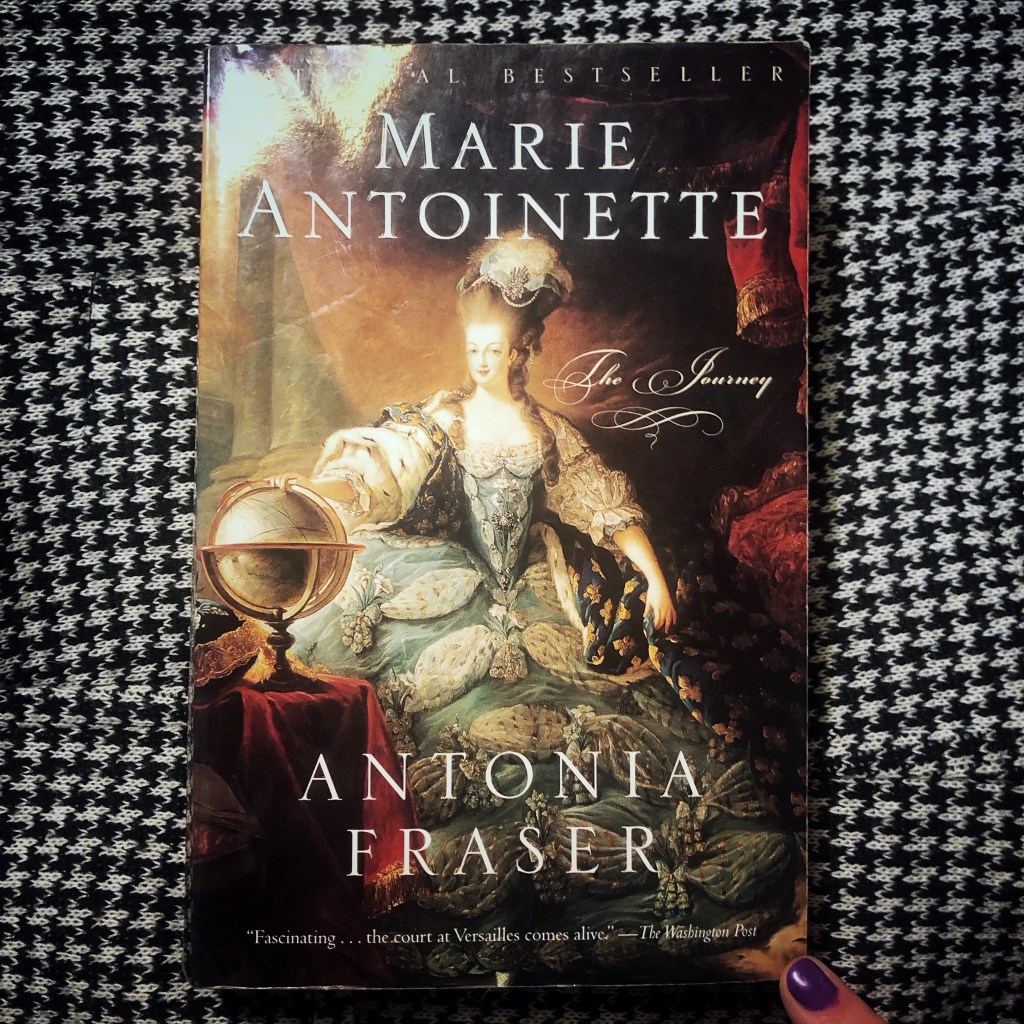
Buy a copy here.
- The Valois were the cadet branch of the Capetian dynasty that the House of Bourbon, which Antoinette had married into, had replaced on the throne in the 1500s. ↩︎
- This concept is a myth, by the way. Anytime some gal starts talking in terms of “woman to woman” or anything like that, it means they’re up to shit and likely do not care, or perhaps even hope, that you get burned by whatever shit that is. ↩︎
- Justice comes in odd forms. The shady Valois bitch died by falling from her hotel room while trying to hide on a ledge outside the window when her debt collectors came to the door. ↩︎
- It didn’t, he lost his own noggin a short while later. ↩︎
If you had fun reading this, consider leaving a tip.


 The Normal Times
Leave a comment