
The Process Church of The Final Judgment or, the Process, taught a novel form of millennialism1. They were established in Britain in 1966. Not quite Christian, not quite Scientologist, but heavily borrowing from both. Some scholars of their time just called them Satanists due to their patched together belief system.
Pre-History
The founders of what would become the Process Church were an English couple, Mary Ann MacLean and Robert Moore, who would later change his name to de Grimston, probably because it sounded gothier. Mary Ann is the more interesting of the two. Born in 1931, and grew up in Glasgow, the rest of her past is choppy and built of rumors. Various accounts have said that she had spent a year in the United States, had a relationship with the boxer Sugar Ray Robinson, and worked as a high-end prostitute in London, servicing prominent figures in British business and politics.
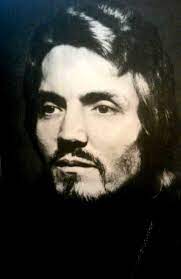
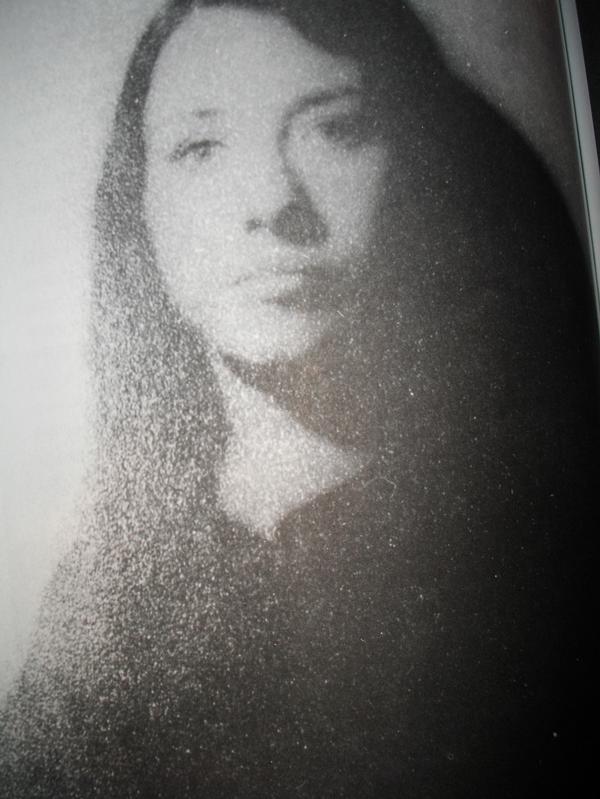
Robert was born in Shanghai in 1935, his parents relocated to Britain in his infancy. When he came of age he joined the Cavalry, serving from 1954 to 1958. After his service ended he began working as an auditor at the London branch of the Church of Scientology. It was there that he met Mary Ann. In 1962 the couple were ejected from the church. They married a year later.
Early Days
The couple started a brief Scientology splinter group named Compulsions Analysis, which was established in Mayfair, West London in 1966. It was a religious group that incorporated the methods of Scientology and the ideas of the psychologist Alfred Adler2, particularly his theories concerning ‘secret goals,’ or the hidden personal agendas that gave rise to compulsions and neuroses. The idea was to discover these goals and make them conscious. In the beginning, the couple offered radical sessions of their Compulsions Analysis in return for fees, some of them quite pricy.
In the initial phase of the group’s beliefs, Moore and MacLean taught that there was only one supreme divinity, God, and the focus of the group’s activities was to transform those aspects of human nature which defied God. Many of the group’s therapeutic practices or “processes” (hence the name) and concepts were derived from Scientology, including the term “processing,”. In these therapy sessions, the group utilized an electronic meter titled the “P-Scope”, which was based on the Scientology E-meter.
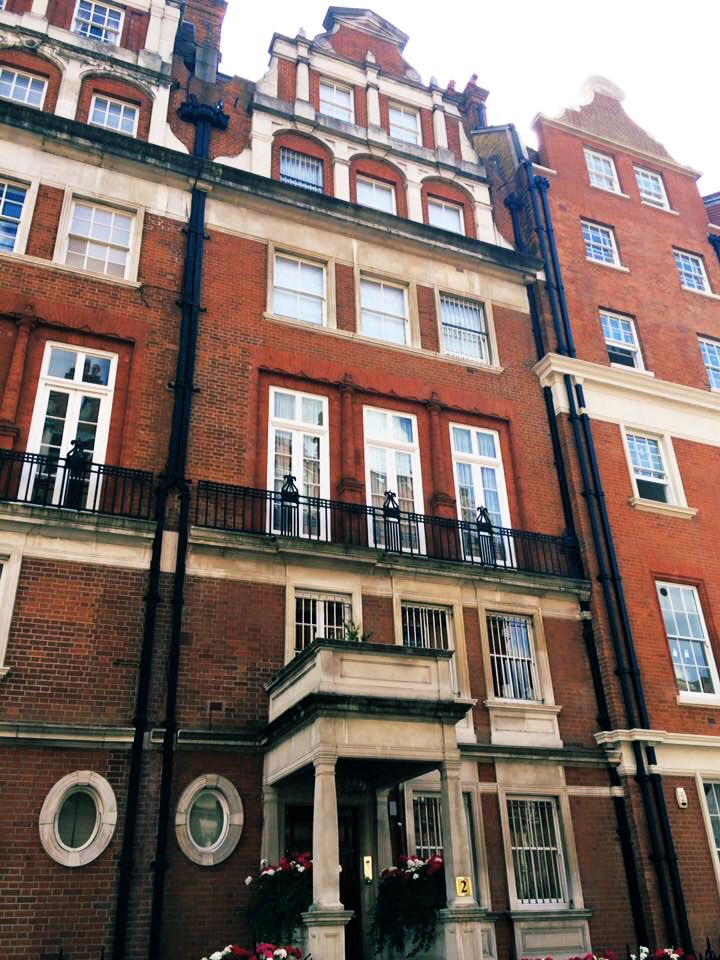
It was at the time of founding that Robert Moore changed his name to Robert de Grimston. In 1966, the regular clients of Compulsions Analysis evolved into a new group, The Process, which took on an increasingly religious character. In March, twenty-five members of the Process moved into a commune at 2 Balfour Place in Mayfair, an affluent area in the West End of London.
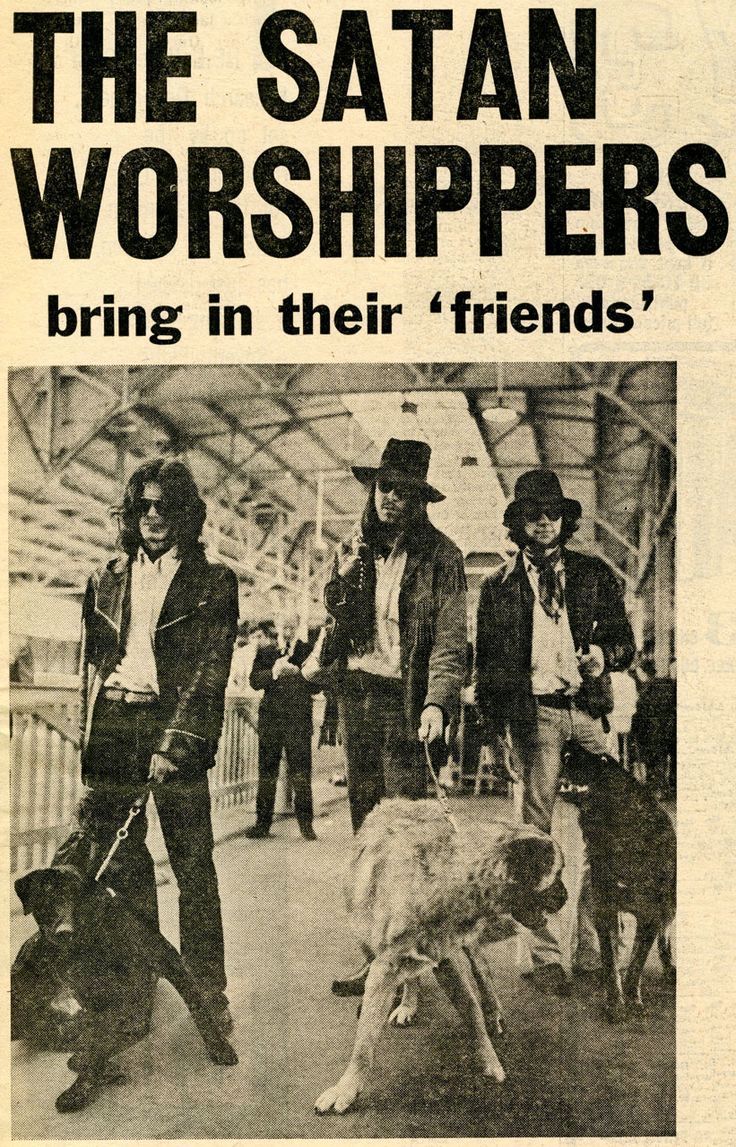
On 23 June, around 30 Church members—accompanied by their six Alsatian dogs—moved to Nassau in the Bahamas. In September, they moved on to Mexico City. They bought an old bus and began driving across the Yucatan Peninsula for a place to settle. They found a location known as Xtul; meaning “the end” in Mayan, and the group took this as a sign that this was the place. They set about establishing a community, although would only remain there for a month. They faced opposition from both locals and from the parents of several Church members, who enlisted anti-cult groups to try and recuperate their children through legal means.
Despite seeming like a failure, like no more than an extended vacation, The Yucatan experience remained an important part of the Process Church’s own mythology. It was while there that the group clarified its hierarchical structure, with the De Grimstons at the top, who were referred to as “the Omega”, followed by those regarded as masters, then priests, then prophets, and finally messengers. After that point, there would be a crucial division within the group between those who had gone through the Xtul experience and those who did not. As the de Grimstons’ Compulsions Analysis sessions attracted more and more disaffected proto-hippie types, the group had remarkable spiritual experiences and began suspecting that they were not only on the cutting edge of experiential psychological research but were also, in fact, a chosen spiritual elite ordained to herald the End Times.
“The central theme of the questions became one’s problems in relation to the Process, not in relation to oneself. I lived in an atmosphere of tremendous guilt. If I ever slacked off and missed some sessions,” she went on, “I was made to feel so evil it wasn’t true. Always someone was being attacked and reviled – the retribution was terrible.” She was bitterly disappointed at the way her original enthusiasm had been dashed. She lost two stone in weight, reducing her already slim figure to skeletal proportions. “I could see what was happening to me, but I was completely paralysed.”
Susie Cooke, a 16 year old London commune member. Her experience earned her a write up in the Guardian back in 1998.
The Highest High
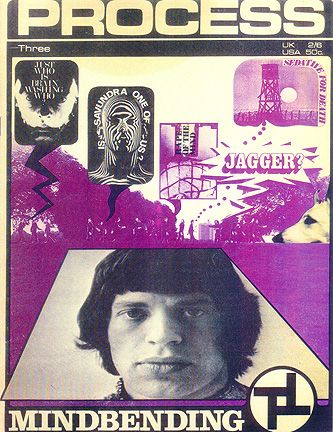
By November 1966, most of the Process members were back in London. Between the end of that year and 1967, the Process began to operate as a church. It became increasingly evangelistic and focused on attracting new members. It opened a library and an all-night coffee shop known as Satan’s Cavern. It also began issuing a magazine, at first titled The Common Market and later renamed The Process. They took up costumes, wearing black robes and turtlenecks and medals featuring the Goat of Mendes. DeGrimston began receiving communications from what he considered to be the forces that ruled existence.
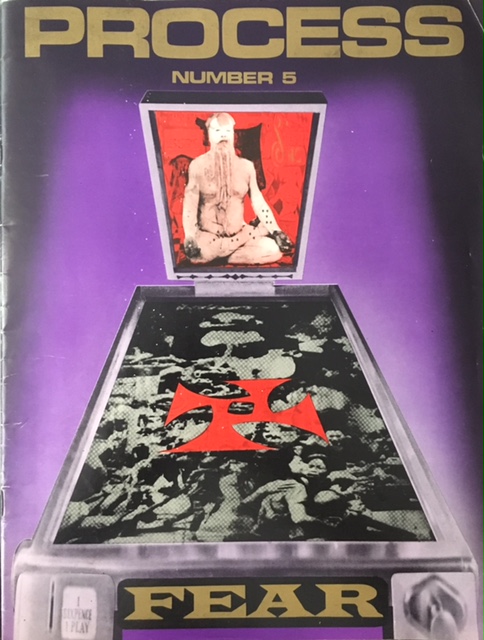
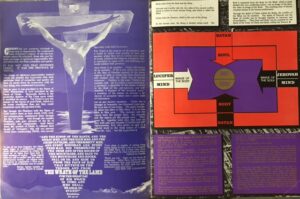
In 1967, Moore introduced the notion of four divinities to the group’s beliefs. The Process Church preached the existence of four gods, who were regarded not as literal entities but as inner realities existing within each human personality. These deities were not worshipped, however. They were known as Jehovah, Lucifer, Satan, and Christ, and were collectively referred to as the Great Gods of the Universe. Jehovah is strength. Lucifer is light. Satan is separation. Christ is unification. None of the deities was considered evil, but basic patterns of human reality. The real “devil” was humanity or the “Grey Forces”, which were understood as representing the compromise and conformity typical of the masses.
Each member was instructed to follow the god, or gods, which were best suited to them and each individual was understood as a combination of two of these gods. The Church taught that an individual’s personality and relationships could be explained by reference to which gods he manifested. De Grimston, for example, described himself as a blend of Luciferian and Christian traits, while Mary Ann regarded herself as a combination of Jehovan and Satanic traits.
According to Process eschatology, the four separate divinities would be unified in the end times. The group began using a swastika-like symbol (“the P-Sign”) as its insignia. The symbol had four superimposed P letters, and was also seen as representing the trumpets of the four Great Gods. The group also used a second symbol, “the Sign of the Union”, which featured the letter Alpha inside the letter Omega, representing the intercourse of male Lucifer with female Jehovah.
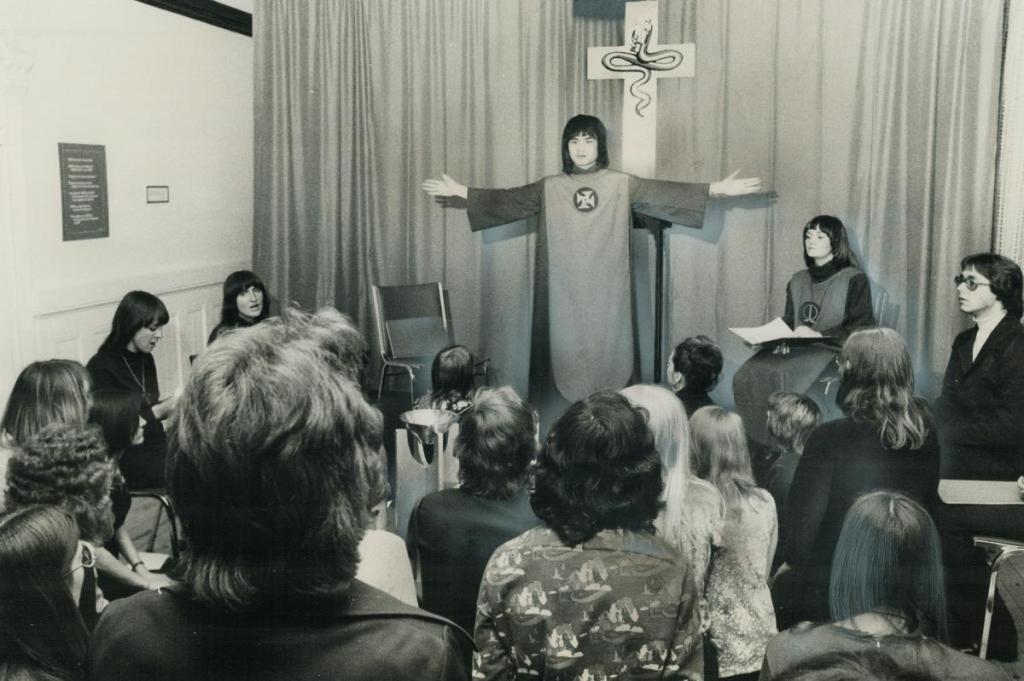
The communal life of the Church members was strictly regulated. Among group members, sex and the use of drugs and alcohol (with the exception of caffeine and nicotine) were strictly rationed, with these practices being regarded as a distraction from spiritual work. The Church held public rituals similar to Christian practices, such as baptisms, marriages and a weekly gathering titled the Sabbath Assembly.
“Robert’s vision convinced him that people were divided into four types, based on the four god forces. Each was an extreme, and the idea was to discover which path suited you and to follow it whole-heartedly. Jehovans were disciplined, authoritarian, ascetic puritans (Mary Ann was a classic example). Satanists were dedicated to violence, chaos and lust. Lucifereans were self-indulgent sensualists (the most popular type in the 1960s, I’d imagine). Christ, as unifier of all three, was the symbol of the new man to emerge after the coming destruction. All the rest were what DeGrimston called ‘The Greys,’ the great mass of lukewarm mediocrities, who take the safe path of compromise and conformity. John Grey “hides, even from himself, his own intensity of feeling” and “has wrapped himself in a cocoon of compromise and mediocrity.” People like him would burn in the purging fires of the last days – which, according to DeGrimston, were soon approaching.”
Gary Lachman
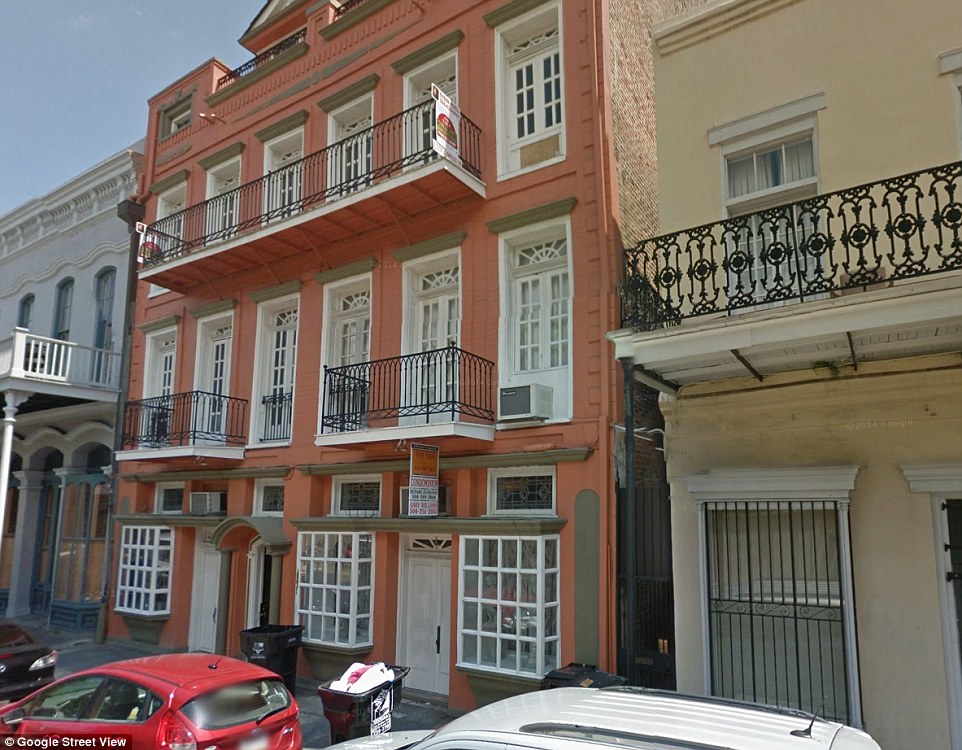
From late 1968 onward, they began spending most of their time in the United States. The Church opened chapters in many U.S. cities, the first of which was in New Orleans, where the remaining members of the Xtul colony settled. Several European chapters followed, in Munich, Rome, and London. In the early 1970s, it opened its largest chapter, in Toronto, Canada. Peak capacity for the church was thought to be at a few hundred active members.
Their western expansion was soured in the 1970s. Police investigating the Tate-LaBianca Murders which were carried out by members of the Manson Family suspected a possible connection between the Charles Manson and the Process Church. Vincent Bugliosi, the prosecutor of the Manson trial, asked Manson if he knew Moore, he responded: “You’re looking at him. Moore and I are one and the same,”.
Two members of the Church subsequently visited Bugliosi to stress that the group had nothing to do with Manson or his Family. Manson’s visitor’s records indicate that the following day he was visited by the same two members. The Church then included a brief article on Manson in the 1971 Death issue of its magazine, in which it included a short essay by Manson himself. Although no connection between the Process Church and Manson was ever substantiated, the group’s reputation was damaged by the association. The number of donations received began to decline and Church members were harassed in public. To shift the group’s image, its leaders played down their image of black garments and Alsatians and presented a softer interpretation of their four divinities doctrine to limit the Satanic elements.
Finale
The relationship between Mary Ann and De Grimston grew strained; De Grimston had begun a relationship with a younger woman, Morgana, who later became his wife. They also disagreed on the direction of the Process Church; MacLean believed that they should declare the “Satanic” phase to be over, to be replaced by a “Christian” phase, De Grimston disagreed. The couple separated in 1974.
De Grimston took a minority of the group members with him, seeking to continue the Process Church in a manner akin to his original form. He abandoned the project in 1979, afterwards, he worked a day job in an office on Staten Island. Most of the Church’s members retained their allegiance to MacLean. She renamed the Church as the Foundation Church of the Millennium, which in 1977 became the Foundation Faith of the Millennium, and in 1980 the Foundation Faith of God; followers generally referred to it simply as “The Foundation.” The group defined itself as “a Christian church” which required its members to believe in the Trinity, the divinity of Jesus Christ, and his second coming. It also promoted a healing ministry that was influenced by Pentecostalism. Like the Process Church, membership was organized according to a hierarchical system of degrees, and it was led by a nine-member Council of Luminaries.
In 1982, the Foundation Faith of God moved its base to Utah, where it established an animal rescue refuge in Kanab. In 1993, the organization changed its name to Best Friends Animal Society; it removed all references to religious ideas from its statutes. It was the largest no-kill animal shelter in America.
Leftovers
Some Processans are still kicking around, but it seems to be mostly people who became curious after the Internet Age. From their website’s FAQs, now found in the Internet Archive:
This is merely the opinion of an anonymous follower of The Process.
1. What is The Process Church Of The Final Judgment?
It is extinct cult, it is it is a living church. It is a psychotherapy instruction, it is a religious text. It is an atheist ideal. It is however you take the words and it is the answer and it is the question.
2. Who was/is Robert DeGrimston and where is he now?
This site has no comment to make on this. His Wikipedia is a good place to start.
3. What is the history of The Process Church Of The Final Judgment?
This author has no qualifications to answer this. Timothy Wyllie is a rare individual who has – he made this interview.
4. How can I join?
There is no need to join a defined chapter, by definition of the teachings. But for the best place to begin, try The Society Of Processeans.
5. What is the lingering attraction of The Process?
The strength of Robert DeGrimston’s teachings. You can get many of them here and judge yourself.
You will have more questions than answers, regardless of how far into the Writ you are.
There are recordings made by Robert de Grimston available on the Archive. I made a partial transcription from the opening of one of these to provide a sense of the language used, included below. Taken from The Universal Law by Robert De Grimston, Brethren Information 7 – Chapter One of ‘Exit’.
The Universal Law covers all aspects of existence.
	What a man gives, he must receive.
	What effects he creates are created upon him in return.
	If we wish to receive something, we must first give it. If we do not wish to receive something, we should not give it.
		Jesus Christ states "Do Unto Others" - he is informing man of the Universal Law.
The Eternal Paradox: Ultimately we give only to ourselves. But in order to do so, we must give to others.
	We cannot give joy to someone who is not in a state to receive it.
	Our choice is to offer joy and to be available to give joy, but to whom we give it is not our choice. The person who receives joy from us does it by his own choice.
		We make ourselves available to offer, but he either receives it or rejects it.
		So although we must give in order to receive, no one is compelled to receive from us. If we have rejected what others have offered from us, our offers will be rejected in return. If we accept joy from another, others will accept joy from us.
		The Universal Law creates a universal exchange where giving and receiving are practiced with absolute precision.
Man does not have to take it upon himself to implement the law. The law is a fact, not a regulation with which we are obliged to comply.
Like nature, the universal law is a balance.
	Sometimes it will seem to be weighed too heavily upon oneside, it will tilt, even steeply, but the pressures caused by the tilt will ultimately bring it level once again.
Whatever man might do, the law is inexorable.
	One man kills another. The first must eventually be killed in order to redress the balance.
		If not in one lifetime, than in another.
		His choice is to kill, in order to be killed himself. But it is the choice of the one he kills, that he should be the victims of the killing, perhaps the squaring of one of his own accounts, perhaps giving his life, in order to receive one in return.
		We open ourselves to the power of destruction by sending out destruction.
			A being who has not destroyed, cannot be destroyed, no matter how destructive the environment around him might be, except by the choice of his creator. It's destruction is its own choice.
			Similarly, a being who does not give sustenance does not receive sustenance, except through its creator, however well intentioned and potentially giving the being around it might be.
			A person cannot take for himself. If he tries, what he takes will betray him, turn sour for him, and give him no joy. Or in some way it will negate itself for him.
If a man is sick, either in mind or body, then he requires the gift of healing.
Further Reading
1. Millennialism
A belief that a Golden Age or Paradise will occur on Earth prior to the Last Judgment and the future eternal state of the “world to come”.
2. Alfred Adler
Austrian medical doctor, psychotherapist, and founder of the school of individual psychology.
His emphasis on the importance of feelings of belonging, family constellation, and birth order set him apart from Freud and other members of the Vienna Circle. He proposed that contributing to others (Social Interest) was how the individual feels a sense of worth and belonging in the family and society. His earlier work focused on inferiority, the inferiority complex, an isolating element that plays a key role in personality development. Adler believed that people were driven by what he called ‘secret goals,’ hidden agendas that gave rise to compulsions and neuroses. The idea was to discover these goals and make them conscious.
A detailed account of the history of and life within the Process Church as told by a participant-observer is contained in William S. Bainbridge’s book Satan’s Power. A sociologist, Bainbridge encountered the Process Church in 1970, while he was studying Scientology. Bainbridge had conducted several months of fieldwork with the group during the early 1970s, particularly in its Boston branch. His writing is considered a more “even handed view” of the church.




 The Normal Times
Leave a comment