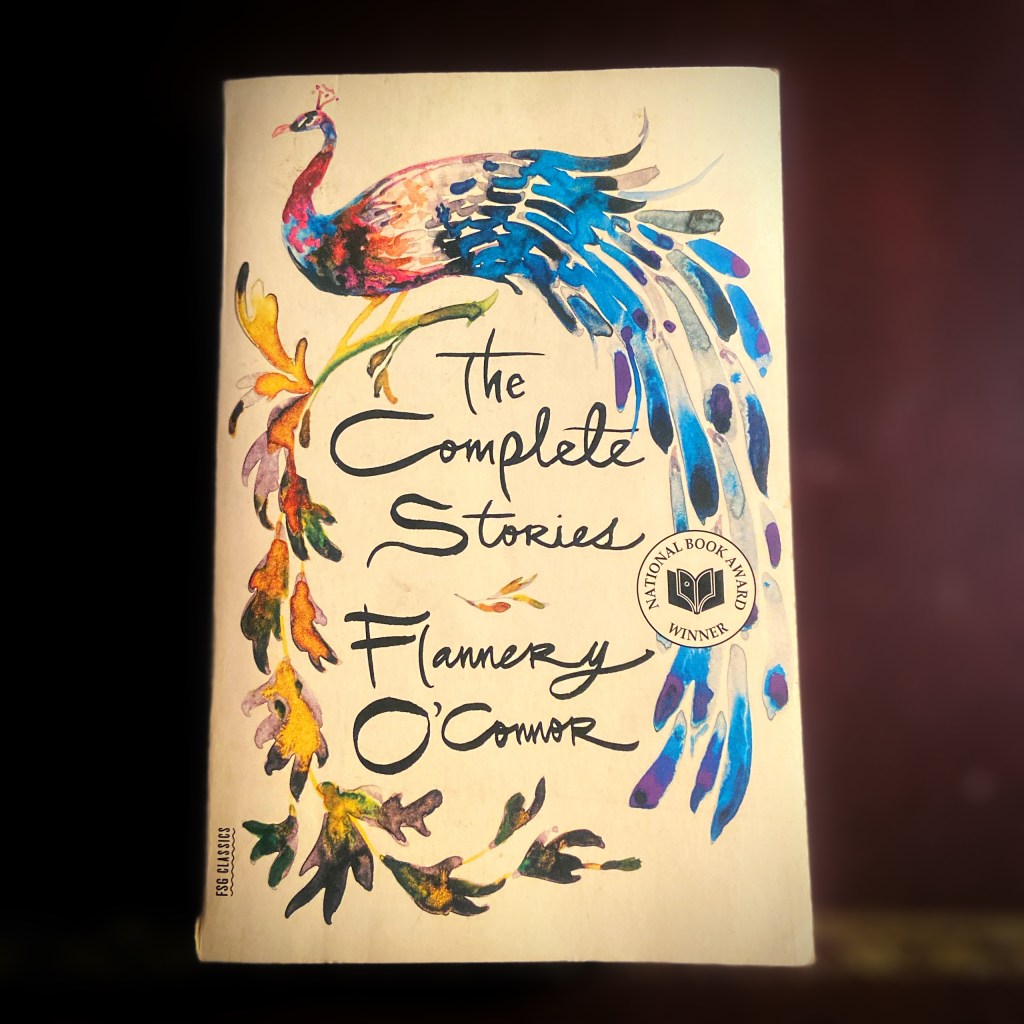
“You shall know the truth and the truth shall make you odd.”
There are two sub-genres of fiction that aren’t full seek-em-out Favorites, but that I’ll always have a soft spot for. These are Southern Gothic and the hippie novel. The best thing about Southern Gothic is I can’t even explain it. Judging by what I’ve seen when I’ve tried to read any definition of the term, no one else can either. It’s the byproduct of what I call True Weird. Cities have plenty of True Weird. It’s those wandering souls you see screaming at a tree like it stole from them, wearing a bed sheet they pulled out of an overflowing PlanetAid bin and tied around their unhealthy neck like a cape. Cities also have a disproportionate amount of LARP Weird. Pretenders desperate to be seen as quirky or eccentric. Art scenes are especially infested with this personality. They aren’t weird, they just want you to think they’re cool and unique because they blow half their income on vintage nunsploitation tapes or wall-to-wall displays of the Disney obsession that they dragged into their fully grown years.
But rural people, these are the ones that are True Weird. Rural people are weird in a way that a pretender couldn’t even dream of. No one out-weirds rural people, and that goes for rural people in any country. Southern Gothic novels are almost always concerned with rural people, and these novels themselves are intrinsically always weird. Half the time, particularly with Faulkner, I have no idea what is actually happening in these pages but I’m having a great time anyway. All the suffocating prose, the cryptic aphorisms, the meanness of everyone and thing. Great times. But Flannery O’Connor isn’t like this. She was a terse and sardonic broad who laid her writing out flat and undecorated. Getting her start in 1950, she seems ahead of her times, or maybe she’s just more timeless than the more obnoxious members of her generation, those self-proclaimed pioneers like Kerouac and Burroughs.
Born in Georgia, died in Georgia; her thirty-nine years of life seem completely devoted to peacocks and writing. But still she traveled. Showing up late to the Iowa Writers Workshop to ask for a spot with an accent no one could understand. Getting wined and dined by the NY publishers while privately, eternally, laughing at them.
This collection was pretty robust. I would doubt there’s a short story of hers that isn’t in here. For those who like her, or think they’d like her, the collection I found is a version from some publisher called Farrar, Straus and Giroux. Similar to my other short story collection reviews, I made a short note after each story, but not all of them will be covered about here.
The Geranium
An old Southern cabin dweller’s failing health forces him to move in with his daughter in New York City. With nothing to look at but a neighbor’s geranium, the geranium becomes way more important than it should. One day it disappears and all that is symbolized becomes a matter of life, death, and madness.
The Barber
Best opening line of the collection: “It is trying on liberals in Dilton.”
Favorite line of the story: “You a Mother Hubbard?”
This story is probably over 70 years old, yet small town politics remain the same in spite of our x-topian technology.
Wildcat
Like the Don Quixote windmill scene, but in Georgian English, (“Lord waitin’ on me now”). Instead of Don, it’s a freaked out old man in a rickety wooden farmhouse. Instead of windmills, a wildcat terror that comes in the night.
The Crop
“Miss Willerton sat down at her typewriter and let out her breath. Now! What had she been thinking about? Oh. Bakers. Hmmm. No, bakers wouldn’t do. Hardly colorful enough. No social tension connected with bakers. Miss Willerton sat staring through her typewriter … Social problem. Social problem. Hmmm. Sharecroppers! Miss Willerton had never been intimately connected with sharecroppers but, she reflected, they would as artsy a subject as any, and they would give her that air of social concern which was so valuable to have in the circles she was hoping to travel!”
This is what I imagine most modern journalists do when they start scouring whatever social platform they leech half their main content from.
The Turkey
Young dummy chases a turkey to death and runs to town expecting people to lift him on their shoulders and cheer. The turkey trophy gets left to stiffen and rot while the boy runs red-faced into the night.
The Train
An old man can’t tell black people apart and the stress of it all sets him off into some psychedelic fit.
The Peeler
A street hawker with a shiny new potato peeler brings together an uncommon crowd, among them a blond proselytizer and his daughter, Sabbath, the newcomer town idiot, and a freshly converted yet fiercely devout atheist with an axe to grind. The atheist harries the father-daughter team while the idiot follows on his heels. Scenes of ego fly before the atheist retires to the home of his new devotion, the town prostitute.
The Heart of the Park
Idiot and Atheist find themselves together again when the Idiot, going about some freakish routine at the town park, is descended upon by the Atheist as he takes in his afternoon peeping from the bush by the park pool. The Atheist demands the address of the proselytizers so he can go argue at them some more. The Idiot holds the details hostage as he forces the Atheist to spend the day being his friend. After a round of milkshakes, an hour yelling obscenities at zoo animals, and a gawk at a shrunken man under glass, the fun comes to an end with the Atheist whipping a rock at the Idiot’s face.
A Stroke of Good Fortune
Ruby and Bill Hill hadn’t eaten collard greens in five years and sure as shit weren’t going to start now.
Enoch and the Gorilla
The Idiot appears alone in this one, harassing a gorilla this time, one set up for a show who can shake hands. The Idiot gets geared up to yell at the beast, but the warmth of its hand pressing his is the first show of kindness he’s received since arriving in town. That is, until the gorilla responds to the Idiot’s exuberant introduction by leaning forward and telling him to go to hell.
The River
A preacher promises miracles in the river, the river that leads toward the Kingdom of Christ. One man who doesn’t need no fool preacher decides to go looking in the under-currents for that divine kingdom.
The Displaced Person
Hell is other peacocks.
Good Country People
One-legged girl goes off to college a year and turns into a huge asshole. To spite her mother she changed her name from Joy to Hulga. After a further act of rebellion involving a traveling bible salesman Hulga finds herself stuck in a treehouse and robbed of her prosthetic leg.
You Can’t be Poorer than Dead
A bootlegger dies and his nephew can’t stay sober enough to get his body in the ground.
Everything that Rises Must Converge
A young man finds catharsis when his mother gets her wig knocked around after a mis-step in race relations, that is, until her bad blood pressure bestows the youth with a mortal lesson.
Revelation
“Go back to hell where you came from, you old wart hog” A woman almost dies from this.
A Good Man is Hard to Find
Grandma doesn’t wanna go to Florida, and the old betty is proven right when a detour ends in her whole family getting murdered.
Make yourself odd, buy a copy here.


 The Normal Times