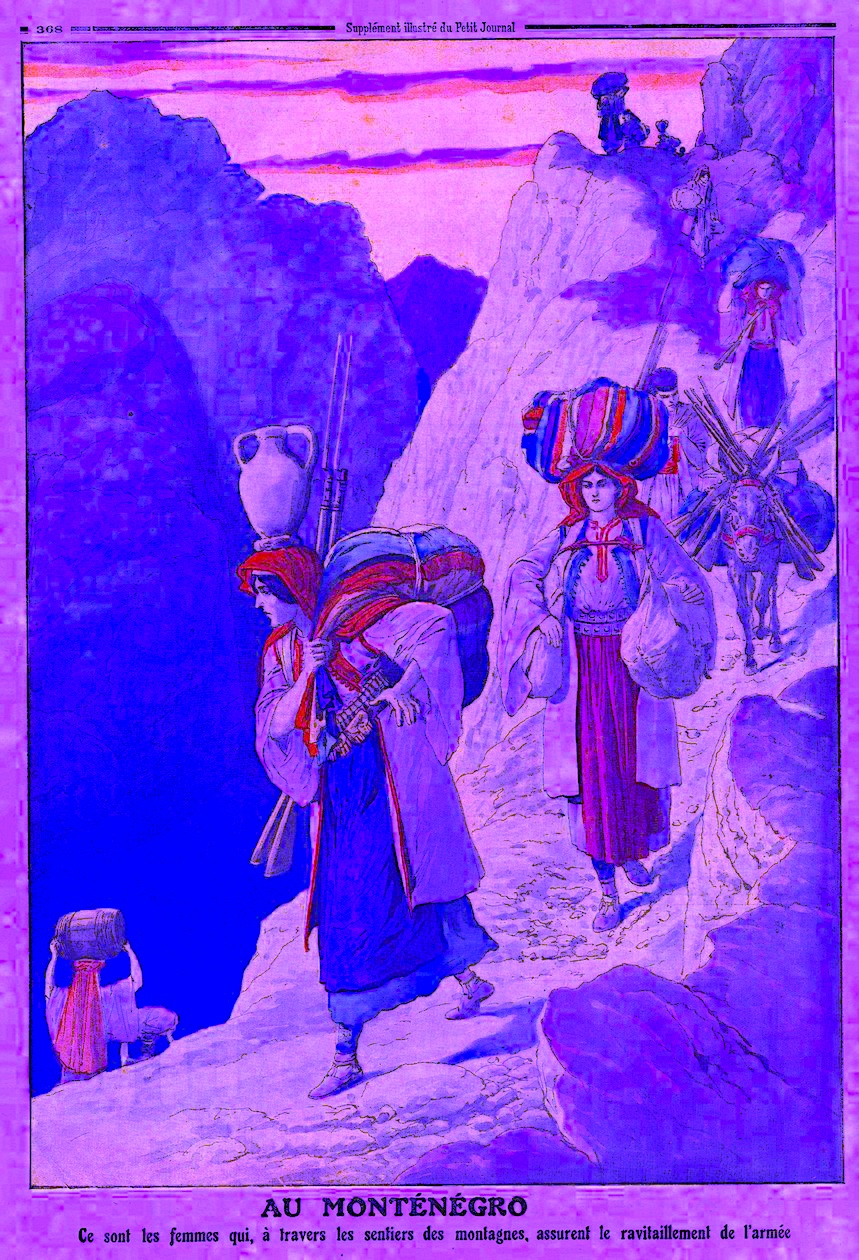
Or, the Hateful stumble towards the first World War.
The Balkan Wars took place in the Balkan states in 1912 and 1913. In the First Balkan War, Greece, Serbia, Montenegro and Bulgaria declared war upon the Ottoman Empire and defeated it, leaving only Eastern Thrace under Ottoman control. In the Second Balkan War, Bulgaria fought against Greece, Serbia, Montenegro, and what was left of the Ottomans. It also faced an attack from Romania from the north.
For a few years after 1900 there was a kind of casual and quiet agreement as the world waited for Ottoman Empire’s death rattle to lead to the inevitable, conclusive end. Germany’s influence was coiling tighter around Constantinople. Macedonia troubled the Ottomans with a relentless revolutionary movement, and other Balkan states were bashfully beginning to play around with geopolitics in that troubled state. The Young Turks revolution came in as an accelerating explosion that turned everything upside down.
“A constant focus was kept on Slav Europe; revolutionary changes there could lead to the Habsburg monarchy becoming the dominant power in the Danube Valley and Constantinople.”
A History of Europe by J.M. Roberts
Habsburg policy had turned away from its cautious stance in 1906, when a tariff war started with Serbia. The hardening of Habsburg policy with Serbia reflected the political weight of the Magyars at Vienna. The Magyars top priority was to assure that Habsburg foreign policy would oppose Slav national ambitions. In their half of the monarchy, the Magyars ruled over large populations of non-Magyars to whom they denied fair treatment. Serbia, a Russian satellite and client, was the inspiration of South Slavs who hoped for unification in an enlarged Serbia. The Magyars feared that their Slav subjects would respond to this and were eager to show them that they could hope for nothing from Serbia by demonstrating its powerlessness to effect change.
Serbia still held hopes of acquiring Bosnia and Herzegovina, which would provide an outlet to the Adriatic if the Ottomans lost their legal sovereignty over them. Formal annexation by the Dual Monarchy would end these dreams; it would also tarnish Serbia’s prestige as the champion of South Slav hopes. Additionally, an annexation would enable the Habsburgs to start putting down the problem of terrorism that they suspected was being cultivated in Serbia, a paranoia that the Austrians especially would come to learn years later was very justified, (Franz Ferdinand, Gavrilo Princip, the Shot Heard Around the World, etc).
Russia was recovering from an embarrassing defeat by Japan in the Far East and was taking renewed interest in southeast Europe. In principle, Russia did not oppose Habsburg acquisition of Bosnia and Herzegovina; all she required was adequate compensation to balance with the Dual Monarchy’s gain. Russia asked for a strengthening of her position in the Straits with the support of the Dual Monarchy. What seemed to be an agreement turned into a diplomatic disaster. Austrian annexation took place on October 5, 1908, and Russia strongly protested once it became clear that the quid pro quo agreement would not be honored. To make it worse, a newly constructed and over-eager Germany butted into the Anglo-Russian convention, and gave its unconditional support to the Austrians. Like star-crossed lovers, these two nations seem like they’ve been tempting a romantic doom since Bismarck’s bullying statecraft, til they got the stuffing knocked out of them in the mid-20th century, at least. Anyway, Russia knew it could not fight Germany and the Habsburg empire together. The best they could do is have the Russian foreign minister advocate for a Balkan league to resist further encroachments.
The new Balkan nations were dissatisfied and anguished. Serbians hated the Austrian occupation of Bosnia and Herzegovina and the lesser status of Slavs under Magyar rule. Romanians were incensed over their 3,000,000 countrymen who were annexed to the kingdom of Hungary by way of Transylvania. Macedonia, still under Ottoman rule and chronically disordered, was coveted by Bulgarians and Greeks, who were each hopeful at their chance to forge some bit of empire out of chaos.
“In the end, the First Balkan War was started by Montenegro on 8 October 1912. Facing Montenegrins, Bulgars, Serbs and Greeks, the Turks hastily made peace with Italy by ceding territory in Africa. The Great Powers began to fear dangers nearer home.”
A History of Europe by J.M. Roberts
The Dual Monarchy didn’t want Serbia to have an Adriatic port, because Europe was just like that back then. At the same time, the Russians were worried that the Bulgars intended to fight their way to Constantinople and take the city for themselves. Ambassadors between the powers met, resulting in the creation of Albania. This was the last new nation carved out from the Ottoman Empire, and it was created to cut off Serbia from the sea. This ham-fisted invention of Albania caused the Second Balkan War.
Serbia was attacked by Bulgaria in order to run the Serbs out of the part of Macedonia invaded by Serb forces. Romania chose to attack Bulgaria while she was preoccupied in Serbia, with the aim of taking Dobruja. When the great powers didn’t intervene, Bulgaria lost almost everything it had gained in the First Balkan War. By the end of this sequel, Serbia had gained 1,500,000 more inhabitants, but the thwarting of her Adriatic hopes embittered her against Austria. The seemingly bottomless well of Serbian hatred against this nation had reached its burning zenith. Meanwhile, Vienna’s paranoia over Serbian ambitions was further incensed. The Ottoman Empire lost the bulk of its territory in Europe, and the much enlarged Serbia pushed for union of the South Slavic peoples. The Bulgarians were left with new grudges to nurse against their neighbors and an unsupportive Russia.
In the short time between the declared ending of the Second Balkan War and the beginning of the First World War there wasn’t much in the way of peace and quiet. No forgive nor forget. Culture, the nation-state, sovereignty, and the wars that come with those frictions are uglier in the Balkans than most other places. Almost constantly this region is poked and prodded from elsewhere nations seeking huge tracts of land, cheap money, and cheaper labor. It’s a land murderous thieves have treated like a deranged playground before skipping back to the safety of their home Vienna or Venice, while the natives who actually care die like stray dogs for no good reason.


 The Normal Times