
A Re-Skim of that Trendy Fourth Turning Book
This post is based on the predictions put forth in The Fourth Turning: An American Prophecy, written by William Strauss and Neil Howe in 1997. It’s a fun read, but it’s essentially pop-sociology. I read it around six years ago. When I finished, I put a hot pink sticker on the spine that read “2025”, the potential year when all things would become horrid before time turned and our world was renewed. And here we are.
I didn’t re-read the whole thing, just the prediction parts, the “prophecies” concerning the years of 2000ish to 2025ish.
For those unfamiliar with this pop decadeology hit of yore, the whole argument is that time is cyclical and each rotation of these cycles has quarters populated by four generational archetypes transitioning through their respective life stage out of four; childhood, young adulthood, midlife, elder years. A large chunk of this book is spent on presenting what the authors see as recurring patterns across generations, stretching back to the germination of the seeds of America: those first whiffs of “fuck this” in 15th century England. So basically it’s a book full of confident guesses based on the authors’ particular frame of reference. And no, there is not a satisfying accounting of ancient or Julian or any other calendar. But whatever, I am here to have fun.
Our, as in we early second millennium people, our time is supposed to be, or have been, the supposed fourth turning era (fourth quarter) of a cycle that began around 1946. Our quarter was guesstimated to start around 2005 and to be marked by crisis, upheaval, and renewal. 9/11 is early but seems pretty crisis. 2008 is kinda late but also a crisis.
…these events will reflect the tearing of the civic fabric at points of extreme vulnerability – problem areas were, during the Unraveling (1984 to 2005), America will have neglected, denied, or delayed needed action. Anger at ‘mistakes we made’ will translate into calls for action, regardless of the heightened public risk.
pg. 273
We seem to have plenty of problem areas. Family stuff, mental stuff, race stuff; some would say gun violence, others would talk about disappearing jobs or disappearing communities. Others more would bring up the multi-dimensional beast of social media and the myriad ways it ruins us all.
Soon after the catalyst, a national election will produce a sweeping political realignment, as one faction or coalition capitalizes on a new public demand for decisive action. Republicans, Democrats, or perhaps a new party will decisively win the long partisan tug-of-war, ending the era of split government that had lasted through four decades of Awakening and Unraveling. The winners will now have the power to pursue the more potent, less incrementalist agenda about which they had long dreamed and against which their adversaries had darkly warned.
pg. 275
Certain bits of this could be nearly any of the last two decades’ elections, but it doesn’t seem to fully apply to any of them.
Obama got elected on a high mood of Hope and Change. Some people thought the Democrats were going to rule forever. Obama remains so popular that I’d bet at least half the Dem base would vote for him over the last three if they could. Then again, I’d bet a slight bit more of them might go for Bill Clinton. Nostalgia sells. There was definitely some realignment in this election, and the Dems got some stuff done that the base seemed to like, or at least not hate.
Donald Trump even winning was weird, but act I Trump was a wild time to be young. You could build a profitable social media brand based on vitriol of any eleventy-billion flavors. You could take your pent-up rage over how mediocre this brave new world of adulthood was turning out and go fist fight your perceived ideological other in the street if you were in the right city at the right time. It was a time for playground logic and cheap funny money. Pink hats fought red hats, while others looked to the blockchain to save them from their drunken spending habits. Lots of political realignment and radicalization, but definitely no sense that the “long partisan tug-of-war” was doing anything besides escalating.
Biden didn’t have an exciting victory so much as a strong catalyst. His opponent will always be the first name in any history about Biden’s win. Spirits were pressurized or demoralized or radicalized, and no one was in a very charitable mood. This admin, however much Joe Biden was involved in it, provided a sampling of some of the policies that many thought the louder parts of the Left would push for. Though I can’t confidently say how much political realignment happened in these years. The most I heard was something like: “Trump was obnoxious but at least we had more money,” signaling anything from a broader turn to Trump or a sizable amount of people who planned on treating election day like any other Tuesday.
In foreign affairs, America’s initial Fourth Turning instinct will be to look away from other countries and focus total energy on the domestic birth of a new order. Later, provoked by real or imagined outside provocations, the society will turn newly martial. America will become more isolationist than today (1997) in its unwillingness to coordinate its affairs with other countries but less isolationist in its insistence that vital national interests not be compromised.
pg. 276
Maybe it’s the major keywords of the last couple months, but this quote is ringing like all of Christendom’s bells. It is applicably current, but it also seems constant.
There was a distinctive mood building before Obama’s election. Far away wars were tiresome and unpopular. There was apathy, there was annoyance, and most importantly there was a sliver of disappointment when Obama was done and the Great Idea of the American nation felt no better. Like we just had a president that talked slick for eight years and that’s it. Trump’s Super America shtick capitalized on that mood. That mood which for a moment may have united sizable portions of Right and Left on the gripe that this world police thing wasn’t paying out, morally or economically, and our house is getting run down.
Society seems to have gone “newly martial” a couple of times in the last five to ten years. China talk has picked up higher tempo very recently, plenty of people got their blood hot over Ukraine or Israel, and I’d say there was a kind of soft martializing that started with Covid. Never have I ever seen people behave in such a willfully callous manner on that large a scale. A hoard of boring Robespierres in every city and county. That sticks out to me as the worst, which is shameful because that inanity was spurred on by a highly contagious illness from a foreign land and alarm-belling the frailty of our supply chains, yet that seemed secondary. People screamed about masks, ratted out neighbor’s for parties and restaurants for doing restaurant things, and the federal government played chicken with the idea of coerced vaccinations at a time when much of the populace were the most mentally vulnerable they had ever been in their lives. If I could turn that era into a person, I would beat them into the bloodiest pulp my skinny arms could render. I know that my sentiments are not unique, and I don’t think they’re healthy to have.
Back to the quote, that isolationist thing is almost too obvious. We are most definitely more isolationist than in 1997. There were people crafting policies still operating in Cold War mindset in 1997. But look at us now. Kosovo, for example, has taken a few concerning bruises since 2005, but I’d legitimately be shocked to hear U.S. planes were bombing Belgrade again, even if it has only been twenty-four years. Russia stomped into Ukraine and the West fed them some supplies and said “good luck!”. Plenty of people would say the U.S. is less willing to coordinate affairs, and Trump’s act II so far has been a clear example of someone important insisting that vital American interests not be compromised. Not that we agree on what those interests even are.
Many despair that values that were new in the 1960s are today so entwined with social dysfunction and cultural decay that they can no longer lead anywhere positive…
I can agree with this. I get the sense that people aren’t as bananas about Neoliberalism as they used to be. The culture spawned in the Sixties does feel like it’s gone rotten in a few ways. The free sex was meaningless beyond novelty, the drugs were dirty and killed us, and music was never going to save anyone. There is a palpable amount of animosity towards Boomers because of the lush opportunities they were presumed to have throughout their lives.
But in the crucible of crisis, that will change. As the old civic order gives way, Americans will have to craft a new one. This will require a values consensus and, to administer it, the empowerment of a strong new political regime.
pg. 7
Old civic order given way? Seems so. Values consensus? Absolutely not. We’ve got the MAGA thing, the Woke thing, and all the irritated people in between. Strong new regime? Sure as shit not Biden’s. But Trump’s? Strong? Empowered? His win was decent, but that talk of mandates rightfully dried up. And does this supposed “New Right” he energized have the chops to keep up the momentum after he’s gone? Is this our strong new regime? Silly as it seems, I don’t see any other serious contender on the field.
The authors claimed that around 2025 America is supposed to “pass through a great gate in history”. Could be too soon to tell, but can it be said that we are now? Or already have? The authors include the possibility of this time being marked by people “succumbing to authoritarian rule.” Covid shit, depending where you were, was pretty authoritarian and made people insane. Masses of people will not hesitate to tell you that either Trump or Biden or some other clown are authoritarians. Beyond that we’ve got a ton of people pissed off or freaked out about “AI” and in the last decade civic violence has inched its way into being something closer to commonplace. Maybe, likely, this theory is all hogwash, the product of two guys profiting off their pet project. We as a people and nation could just keep walking backwards into hell until some hideous war or erupting geyser breaks us. Or maybe these guys did some okay work recognizing patterns and we will soon see a new dawn.
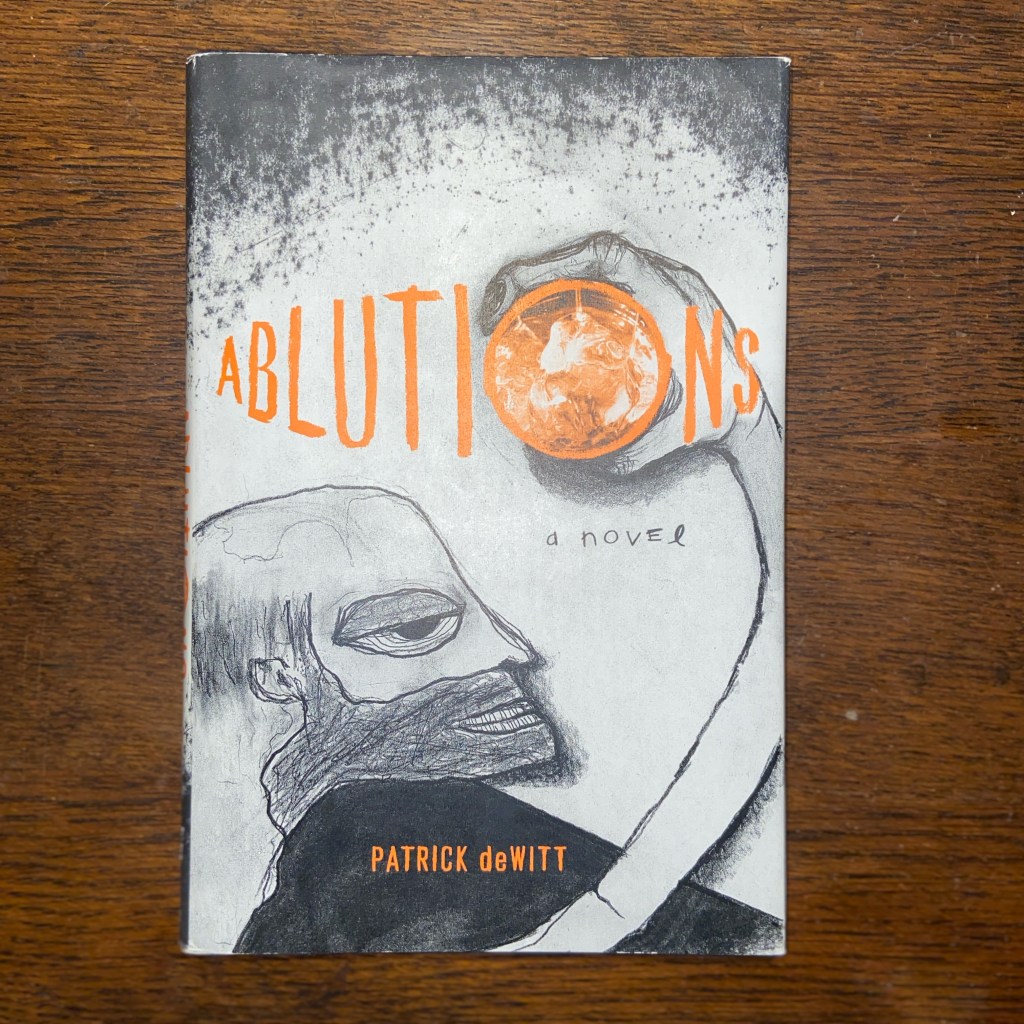
If you’re in a predictiony mood, buy a copy here.


 The Normal Times
Leave a comment