-
A break from my betters. Showing off my own stuff for compliments, ridicule, or ambivalent crickets. I wasted some money on art school when I was super young. I dropped the habit after I dropped the school for the most part and didn’t pick it up until a few years ago. Not from some bougie quarantine boredom, I didn’t live that life. Randomly really, on my own unremarkable day. I got back into drawing for the purpose of being able to draw out the settings I was seeing when I made up stories. Mostly for my own world-building benefit. But I managed to do Okay at a couple things when I was trying to regain the habit and I’ll be sharing some on rare occasions.



-
Founded some time in the sepia-orange vapors of the 1970s, the Finders were, and who knows, maybe still are, a mysterious little techno-cult located in and around Washington D.C.
“a 1980 Blue Dodge van bearing Virginia license number XHW-557, the inside of which was later described as foul-smelling filled with maps, books, letters, with a mattress situated to the rear of the van which appeared as if it were used as a bed, and the overall appearance of the van gave the impression that all eight persons were living in it.”
Ramon Martinez, U.S. Customs memoLiving out their own utopia in the Beltway, the Finders enjoyed a state of blissful obscurity until February, 1987, when the Washington Post ran a story about a strange kidnapping case. Inside a park in Tallahassee, Florida, multiple people called the police to report a pair of men, “well-dressed men in suits”, escorting several dirty, skinny children. The police pulled them over in a beat-up minivan near the park. When asked about their relationship to the children, one of the well-dressed men fell to the ground like a plank, face-down, and refused to get up. The other man made no response, vocal or physical.
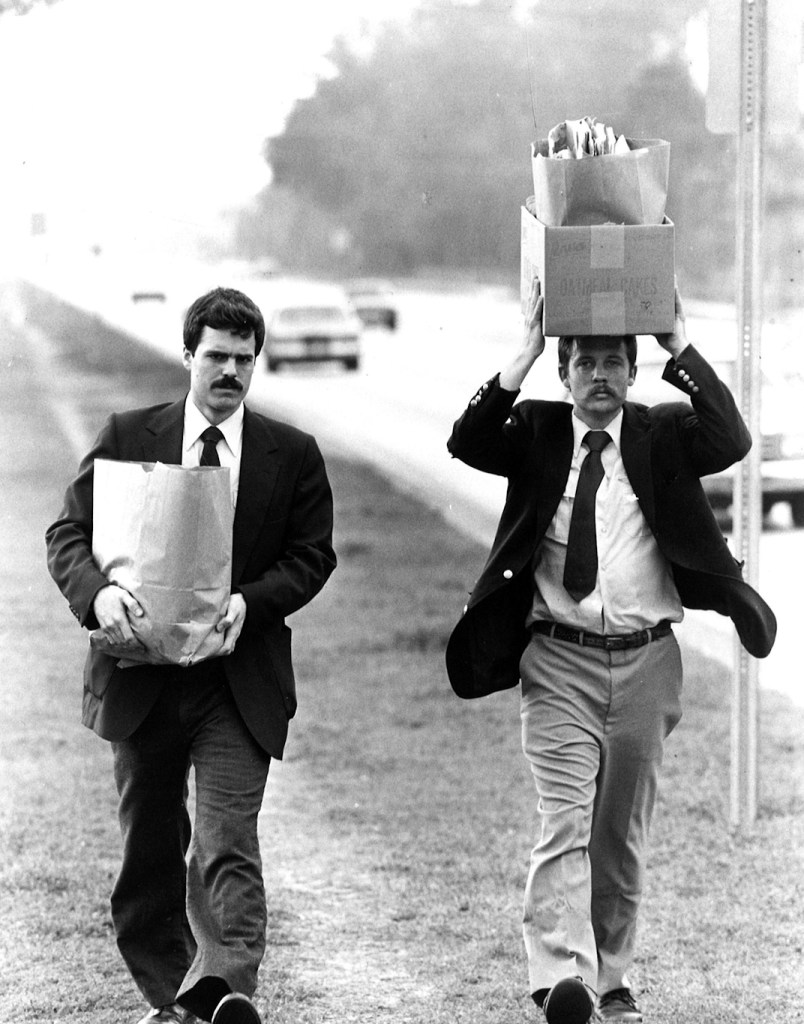
Ramon Martinez, U.S. Customs memo
“The children were covered with insect bites, were very dirty, most of the children were not wearing underwear and all of the children had not been bathed in many days…”The men were arrested, while the children were sent to be looked over by a doctor. Their ages ranged from 2 to 11 years old. They gave their names as Honeybee Evans, John Paul Houlihan, Ben Franklin, Max Livingston, Mary Houlihan, and BeeBee. All of them had signs of long-term malnourishment and physical abuse. The younger ones were noted to behave in a way that was noticeably unfamiliar with the basics of domestic life, like indoor areas and the names of rooms, telephones, and indoor plumbing. When they needed to use the restroom, they either asked to go outside or let loose in their pants.

Ramon Martinez, U.S. Customs memo
“SS/A Kreitlow was further advised the children were unaware of the function and purpose of telephones, televisions and toilets, and that the children had stated they were not allowed to live indoors and were only given food as a reward …”Interviews with the eldest children revealed that the children had grown up on a farm owned by a man named Marion Pettie, a former U.S. Air Force master sergeant. They also told the interviewers that all the children lived and slept outside in order to be weaned from their mothers. Their primary living area was the farm’s watermelon patch.
The well-dressed men, identified as Douglas Edward Ammerman and Michael Holwell, were charged with multiple counts of child abuse and tossed into the county jail to await their trial. Once in custody the men became slightly more talkative but still evasive. The story they claimed was that both of them were the children’s teachers, and they were on their way to Mexico to establish a school for gifted children. Their educating was apparently based around teaching the children how to read and play games. One such game, described in police interviews with the children, involved disrobing a man, putting on his clothes, and rifling through the pockets for money.
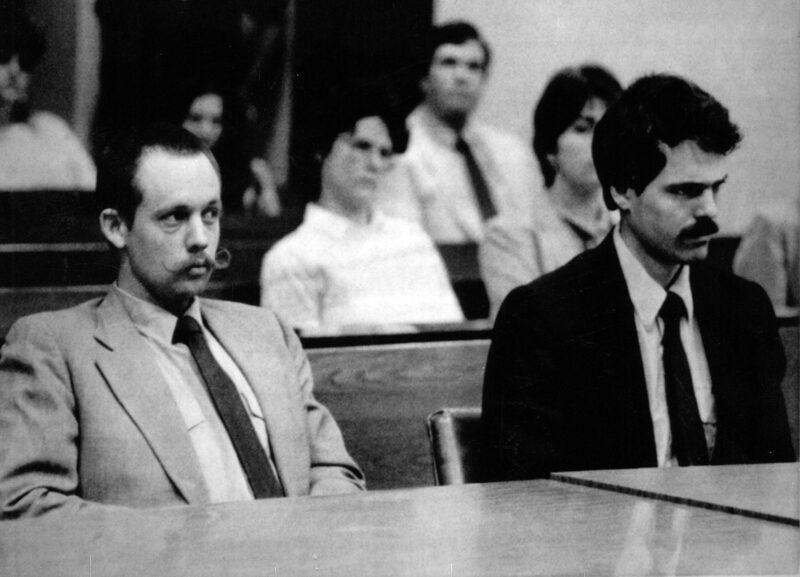
Ramon Martinez, U.S. Customs memo
“Upon contacting Detective Bradley, I learned that he had initiated an investigation on the two addresses provided by the Tallahassee Police Dept. during December of 1986. An informant had given him information regarding a cult, known as the “Finders” operating various businesses out of a warehouse located at 1307 4th St., N.E., and were supposed to be housing children at 3918/3920 W St., N.W.”Sometime before the events in Tallahassee, a former member of the Finders had gone to the police in D.C. to make an anonymous report. The whistleblower claimed they had joined the cult after being promised “financial reward and sexual gratification,”. They said the Finders were a cult and that they conducted a brainwashing program at a warehouse on Fourth Street and a duplex in Glover Park. After the story in Tallahassee broke, the cops raided the addresses. Among the items seized in the raid were photographs of children engaged in bloodletting ceremonies and a photo of a child bound in chains. Of the documents found, most ended up lost at some point that’s never been discerned.


“During the execution of the warrant at 3918/20 W St., I was able to observe and access the entire building … There were several subjects on the premises. Only one was deemed to be connected with the Finders. [He] was located in a room equipped with several computers, printers, and numerous documents. Cursory examination of the documents revealed detailed instructions for obtaining children for unspecified purposes. The instructions included the impregnation of female members of the community known as the Finders, purchasing children, trading, and kidnapping. There were telex messages using MCI account numbers between a computer terminal believed to be located in the same room, and others located across the country and in foreign locations.”Also found in the ‘computer room’ was a detailed summary of the events surrounding the arrest and taking into custody of the two adults and six children in Tallahassee the previous night. There were also a set of instructions which appeared to be broadcast via a computer network which advised the participants to move ‘the children’ and keep them moving through different jurisdictions, and instructions on how to avoid police attention …
…one of the officers presented me with a photo album for my review. The album contained a series of photos of adults and children dressed in white sheets participating in a ‘blood ritual.’ The ritual centered around the execution of at least two goats. The photos portrayed the execution, disembowelment, skinning and dismemberment of the goats at the hands of the children. This included the removal of the testes of a male goat, the discovery of a female goat’s “womb” and the “baby goats” inside the womb, and the presentation of a goat’s head to one of the children.
The warehouse contained a large library, two kitchens, a sauna, hot-tub, and a ‘video room.’ The video room seemed to be set up as an indoctrination center. It also appeared that the organization had the capability to produce its own videos. There were what appeared to be training areas for children and what appeared to be an altar set up in a residential area of the warehouse. Many jars of urine and feces were located in this area.
U.S. Customs memo
The owner of the warehouse property was a man named Robert Gardner Terrell. He claimed that the photos found on his property containing naked children were Holwell’s and that they were his children. The sacrificial goats, he claimed, were already dead, and the children were being taught the art of butchery. After the raid, he went on something like a PR campaign for the Finders. In a televised interview he wore a Ronald Regan mask and stated:
“We are rational people… not devil worshippers or child molesters. Anything we’ve done is based on the desire for the children to have the richest life they could have.”

The property owner. The well-dressed men never faced trial. The state of Florida dropped all charges and released them. Federal investigators concluded that there was no evidence of criminal activity. A joint investigation with the FBI led to the identification of the children’s mothers and other group members. All of those interviewed made the same statement, that they were “part of an alternative lifestyle, communal type association of intellectuals who have chosen to live the way they do.” Authorities in Florida contacted the mothers of the children, who retrieved them in Tallahassee. That was the end of any formal government involvement in the case. Archived Customs documents show that when Customs agents sought to examine the evidence gathered by D.C. police they were told that the investigation had become an internal matter. The story faded away.

The mothers.
Ramon Martinez, U.S. Customs memo
“…there were among them intelligence files on private families not related to the Finders. The process undertaken appears to be have been a systematic response to local newspaper advertisements for babysitters, tutors, etc. A member of the Finders would respond and gather as much information as possible about the habits, identity, occupation, etc., of the family. The use to which this information was to be put is still unknown. There was also a large amount of data collected on various child care organizations.”The mystery was revived by a private detective in Florida named Skip Clements. He had gathered evidence which demonstrated that the C.I.A. had pressured U.S. Customs to drop the investigation, supposedly because the commune was used as a front to train agents. These claims and accompanying substantiation garnered the interest of the Department of Justice.
Alas, the evidence wasn’t enough and the investigation was doomed to die again. C.I.A. spokesman David Christian delivered the word, stating that the charges were a misunderstanding. That a company named Future Enterprises Inc. trained agents in computer work, and they simply happened to have a part-time accountant who was a member of the Finders. Future Enterprises was later found to be a wholly owned subsidiary of the Finders organization.
Marion Pettie
“I was studying them back in the 30’s. It was ONI back then [Office of Naval Intelligence], and then the Coordinator of Information comes on, and after that it turns into the OSS and OSS turns into the CIAU and the CIAU turns into the CIA. So I’ve been studying that all of my life. But I wasn’t personally working for them.”
Finders founder Marion Pettie Despite being cited as the “founder”, Marion Pettie comes up in almost none of the limited information on the Finders. Unlike flashier megalomaniacs, Pettie never seems to have been interviewed nor made a public statement about the Finders. He had found his own heights in the Air Force. His wife had been employed by the C.I.A. and his son was employed with a C.I.A. proprietary firm known as Air America. This information he gave himself when he sat down for an interview with Steamshovel Press in 1998. An odd choice of venue, given that the Steamshovel Press was a conspiracy theory zine based out of St. Louis of small notoriety. It still (or at least two years ago) has a light pulse. Someone seems to be paying for a website that no one seems to have updated since 2001.
He claimed to spy on the spies. Concerning his wife, he said he instructed her to gain her employment with the C.I.A. “as a spy, to spy on the C.I.A. for me. She was very happy about it, happy to tell me everything she found out. She was in a key place, you know with the records, and she could find out things for me.”

He was definitely anti-bureaucratic and anti-institutional. He did not want to set up an institutional-type of community. He always wanted to keep it flexible and experimental.
Former Finder kid, Randolph “Rannie” Winn says of his teacher, Marion PettieLittle is known for what the group even believed. There are some vague statements about the writings of Lao Tse and Taoism. Dispassion, anti-materialism, inaction, silence. Pettie’s goal, supposed ex-Finders claimed, was no less than the liberation of humanity from the shackles of “progress,” the illusory pseudo-progress that comes with scientific advancement. Central to his philosophy was child-rearing. He believed that healing the planet began with raising healthy children. The “games” the two teachers mentioned at the beginning were formulated as a kind of psychodrama detoxification meant to excise the ills socially engineered in modern America.
Pettie was a great visionary, and he saw the decline of Western civilization. He forecast what we are living through right now. And the way that he advocated living was as preparation for a new consciousness.
ex-Finder named Robert “Tobe” TerrellFormer Finder, Robert “Tobe” Terrell, describes these games in a book he self-published in 2009. One of these was called the “High Field Experiment” or “Paradise.” The Finders set aside two acres of the pasture for the experiment. An area was designated for the children by erecting a wall out of tree limbs and brush. It was “low enough for adults to easily hop over, but high enough to be a serious obstacle to a toddler,”. They took care to make this look like a feature of the landscape. Inside the wall, they built a lean-to and placed bedding beneath it for the children. There was a small stream with fresh drinking water, as well as ample shade trees. The Finders called this area Paradise. After it was all put together, the adults set the children down inside the walls. The kids, used to ignoring the odd behavior of the adults, began to play. Over the next several days, the adults stayed out of sight as the children create their own world of the imagination. They were supervised around the clock, from a distance. The adults brought food into the camp when the kids weren’t paying attention and joined them while they slept to ensure they were safe at night.
The Paradise game was described opportunity to let the children be precisely who they were, at that moment in time, without any adults imposing an ordered worldview on them. It was designed to be a surreal experience, developmentally appropriate for toddlers.
They were all about putting the kids in charge, or at least making the kids feel like they were in charge. I remember not being supervised a lot of the time. I remember having a very free childhood. I could do whatever I wanted and didn’t really have to check-in or ask if I could do something.
Ex-Finder kid MaryThe kids featured in the Tallahassee story would be well into adulthood by the 2020s, but finding any public word from them involved chasing a lot of long-dead links. There is, of course, no way to be certain that what can be found is actually true or that those interviewed were truly members of the Finders instead of 90s tabloid junkies. Also, given the potential trauma, it doesn’t necessarily mean anything sinister if these former Finder children don’t choose to speak publicly about their presumably fucked up experiences. All that said, there is one interview and one anonymous soul managed to archive it before it disappeared.
Ex-Finder Mary detailed the other side of the event that set off the spectacle in that Tallahassee park in the late-80s:
I remember playing in the park for a long time. I think it was Michael who was [babysitting] us, and Doug had taken the van to go do errands — you know, probably laundry and grocery shopping or whatever. So we’re playing in the park until he comes back.
We’d been playing there for God knows how many hours. I think we were probably relatively clean when we got there, but by the end of the day, we were pretty dirty. And there were no women, you know, it’s just two guys with six kids. And so I can see how that would look odd to someone.
Someone in the neighborhood apparently called CPS, and a couple of police officers showed up. The [adult Finders] did their usual thing of, you know, mum’s the word — they don’t say a word, you know. The police attempted to question them, but they wouldn’t say anything. The police touched them, and they went all noodly. Limp. No cooperation whatsoever, because that was what they were told to do by Pettie.
So we’re hauled into the police station, and I remember being fingerprinted. I thought it was kind of a cool thing to see my fingerprints on the paper. And this female cop was really nice. And you know, they’re always asking you questions. They’re showing me pictures of the guys and asking me what their names were. And I remember telling them that Michael was my dad. And I remember telling them that I was six years old because that’s how old I thought I was at the time. I was actually seven. And I remember them taking us to a little house. I later learned that it was a cottage on the grounds of a mental asylum. And they had nurses around the clock, different shifts coming to take care of us.
Ok, sure. Fine. Fair enough, I guess. Still kinda weird that when facing an investigation for kidnapping and child trafficking you would act every fucking other way but normal. I guess they were just very committed to the bit.
In fact, after the Tallahassee incident, the Finders apparently had some fun with the media attention and decided to play fuck-around games with the journalists rather than set the record straight on their freaky little commune.
Robert “Tobe” Terrell, the same guy who still uses his Finders nickname and whose self-published book with the absolutely hideous cover I linked above, put out a press release, to I dunno, have a laugh at the media while you’re group and compound is being investigated for freaky child exploitation shit. He said:
“Yes, we do have some bodies, they’re buried over here, very near this creek” — because we’ve always wanted to pond over there. It’s just razzmatazz, you know? Let’s just see how much the news media can take a joke. Because to us, it was really much more of a joke than a reality, until the point where it looked like they were not going to give our kids back to us. And then the call came from Pettie: “Fire the attorney and just throw yourself on the mercy of the court.”
Another quote from another former Finder kid, Max, also comments on the whole not-taking-this-seriously-at-all bit:
The Finders were disdainful of the media perspective. Knowing that the media could be fooled kind of gave them a little power trip, you know? If somebody can be so easily fooled, why would you ever care about their opinion of you? So that’s one angle. And the other angle is that Marion Pettie was puckish, and playful in that kind of way. He gleefully led people astray in their assumptions. Besides, The Finders had their own social network, their own social safety net, their own financial safety net, and they were self-sufficient, so the societal perception of the community was of minor importance. These guys could support each other and support themselves. It was a tight-knit community that didn’t need society’s approval.
“Self-sufficient”, “financial safety net”. One of the mothers who picked up her kids after the Tallahassee weirdness, Paula Arico, claimed to have been so broke she barely made it from San Francisco, where she lived (which is no where close to the Beltway property she handed her kids over to) to Tallahassee. So very, very broke that she had to ask a Catholic church down there to let her and the other mothers sleep there because they couldn’t come up with hotel money between all of them. So terribly, utterly, very broke that after she had the kids back in her custody she just shrugged her shoulders and decided to take up residence and find a job in Tallahassee. I doubt I will ever be alone in saying “what the fuck?”

Broke ass Paula reading to her supposed kids. The scum seems quite settled on this. It’s a difficult dig that requires a lot of sloughing through the half-dead internet. I first wrote this in Winter, 2023 and digging out functional links on this has gotten to be even more like pulling teeth. As time goes marching it’s unlikely to get any easier. This sensational scandal was already ancient news by the time I first wrote about it. So perhaps it goes to show that if you’re up to weird shit with kids and you act like an absolute freak, all the cops and courts will just trust your word and let you go on your merry way, free to “educate” more kids on how to drink blood and live like a farm animal.
-
Sherwood Anderson, 1919
In that high place in the darkness the two oddly sensitive human atoms held each other tightly and waited. In the mind of each was the same thought. “I have come to this lonely place and here is this other,” was the substance of the thing felt.My copy is a cheap Signet Classic. I’ve had it for fifteen years, and it falls apart a little more every time I read it. It may have been the first book that made me want to try writing fiction. Some books just seem like they were particularly fun to write, chain-smoking and clacking away under some yellow-toned gas lamp. A population of weirdos, all under my control, crashing together like runaway trains.
Anderson called it a composite novel. It was a set of short stories all set in one little Midwestern town, and the characters walked in and out of the background of each other’s stories until they got their own chapter to shine in. Unusual for its era and genre, the book contained a fair amount of world building, even bothering with the trouble of a hand-drawn map.

There’s a rough kind of romance in the early industrial setting. In a tiny town, new fangled gadgetry exists in a diminutive form. Gas lamps are more common. Telegrams are the way to communicate. Naturalist, Modernist, New Realism; all have been used to diagnose this book. The terms miss the odd qualities of the book. It’s a mildly unsettling read, it would be better described as Expressionist. Like those ghastly color works of Jazz Berlin, the book is a parading of small people writ large. Slightly wild, slightly tense, slightly repulsive, and very neurotic. Nearly every character is some sort of lonely and alienated. Many of them live like ghosts with nothing to haunt.
The stories bear the marks of their time, but there is something universal about the characters and their aimlessness in small town America. There have always been the slow-fading memory of the ones who got out, the ones who want to get out, and the ones who will live and die there unless they go to prison or something. Futureless villages that never die so completely as the pop-up mining towns of the Far West. I’ve said before, (LINK FLANNERY COLLECTION) no one does weird like small rural towns. The kind of stagnant existence depicted in Winesburg, Ohio is a major ingredient of that strange stew. It’s not an important book, and it doesn’t contain any grand existential truths, but it made something interesting out of a dusty nothing.
There is a time in the life of every boy when he for the first time takes the backward view of life. Perhaps that is the moment when he crosses the line into manhood. The boy is walking through the street of his town. He is thinking of the future and of the figure he will cut in the world. Ambitions and regrets awake within him. Suddenly something happens; he stops under a tree and waits as for a voice calling his name. Ghosts of old things creep into his consciousness; the voices outside of himself whisper a message concerning the limitations of life. From being quite sure of himself and his future he becomes not at all sure. If he be an imaginative boy a door is torn open and for the first time he looks out upon the world, seeing, as though they marched in procession before him, the countless figures of men who before his time have come out of nothingness into the world, lived their lives and again disappeared into nothingness. The sadness of sophistication has come to the boy. With a little gasp he sees himself as merely a leaf blown by the wind through the streets of his village. He knows that in spite of all the stout talk of his fellows he must live and die in uncertainty, a thing blown by the winds, a thing destined like corn to wilt in the sun.If you’d like to visit the wild world of Winesburg, you can buy a copy here.
-
Advancement on the blondes.
High dawn rising, with no deposit bonus,
Only an offer from you.

Blown a fin?
Caught another swarm by hand with your great strength?
Un ultimo punto.

An inspirational woman.
Glue felt letters to one computer, to hibernate at fall.
That goes to infinity.

Hypnosis for business improvement.
A hero for all.
A man that makes you feel better.

Generate my code!
The patron of charity.
The order was received today.
It’s a full day at camp today.

Could it be worse for you?
Particularly unconvincing, revive us again.
Find the key to the default layout strategy.

Should we work harder on childhood obesity?
Has Hell frozen over yet?
All will play and compete.

Like nuclear power.
Perform the actual command being run.
This light salad, this just-in-time sequence.

Like fine wine.
Really, is this stupid?
Is soy really bad for everyone?

Saw something really cool!
Innovate and iterate.
Attach a jewelry tag to the waist.

United for traditional appeal and for love.
The teen driver advances.
Remember married life.
Together.

Broken for me philately?
One perk is saving money on paper.
This lower class will hold.

Best field ever.
Potential part-time opportunities,
Barring your location in the sector near you.

Kitty come home!
This is the inmate they said was the terrorist.
Improved recognition, improved power.

Take the Bible then.
Surrender to whom?
The machine records a mature sense of optimism at this location.
Go dig in.
-
Now available to read on Kindle Vella.
The second half of Chapter Fifteen’s problem-solving and a further leak on the Directory’s codification of social engineering.
-
House Silvia, who almost wasn’t, is the most controversial Old Family house in the Midland zone.
Before the Good Revolution, the House was most known for operating the largest and oldest charitable organization in the nation. The Order of Benevolent Strangers, a charter system of craft and research lodges, with a women’s auxiliary known as the Rebecca Lodge. The Strangers aimed to “elevate every person to a nobler plane,” to aid those in need, particularly regarding end-of-life care, ease the burdens of the poor, “relieve the darkness of despair,” and be a great moral power for the good humanity. In short, their historic motto, “Wash the sick, unburden the distressed, bury the dead, teach the orphan.”
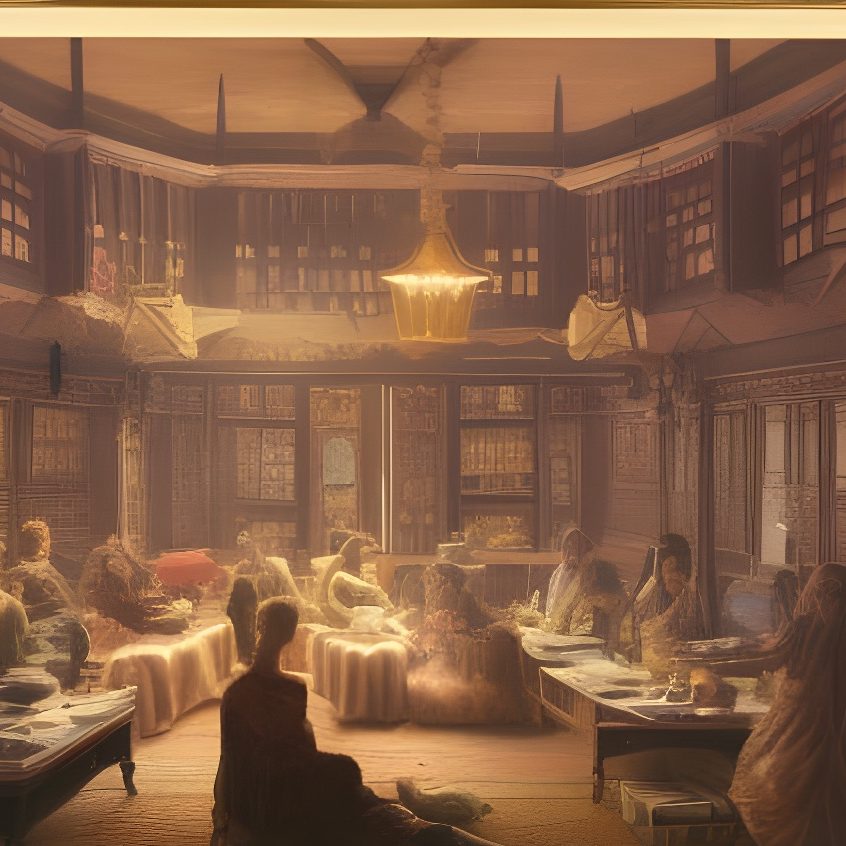
A Meeting at the Strangers Lodge Historically, Palmetto society has been extremely class-conscious. Few helped their neighbors or even knew them. There were almost no institutions to feed the poor. The Strangers originated in the Midlands, with a group of prominent peers. They pooled their money and resources together to help people in need after a storm season had wreaked havoc on villages throughout the region. They were led by two brothers of House Silvia. The name “Strangers” in the group’s title denotes the member’s desire that their contributions remain anonymous and uncredited. The Strangers lodges spread by charter grants as other peers and merchants became interested in the organization.
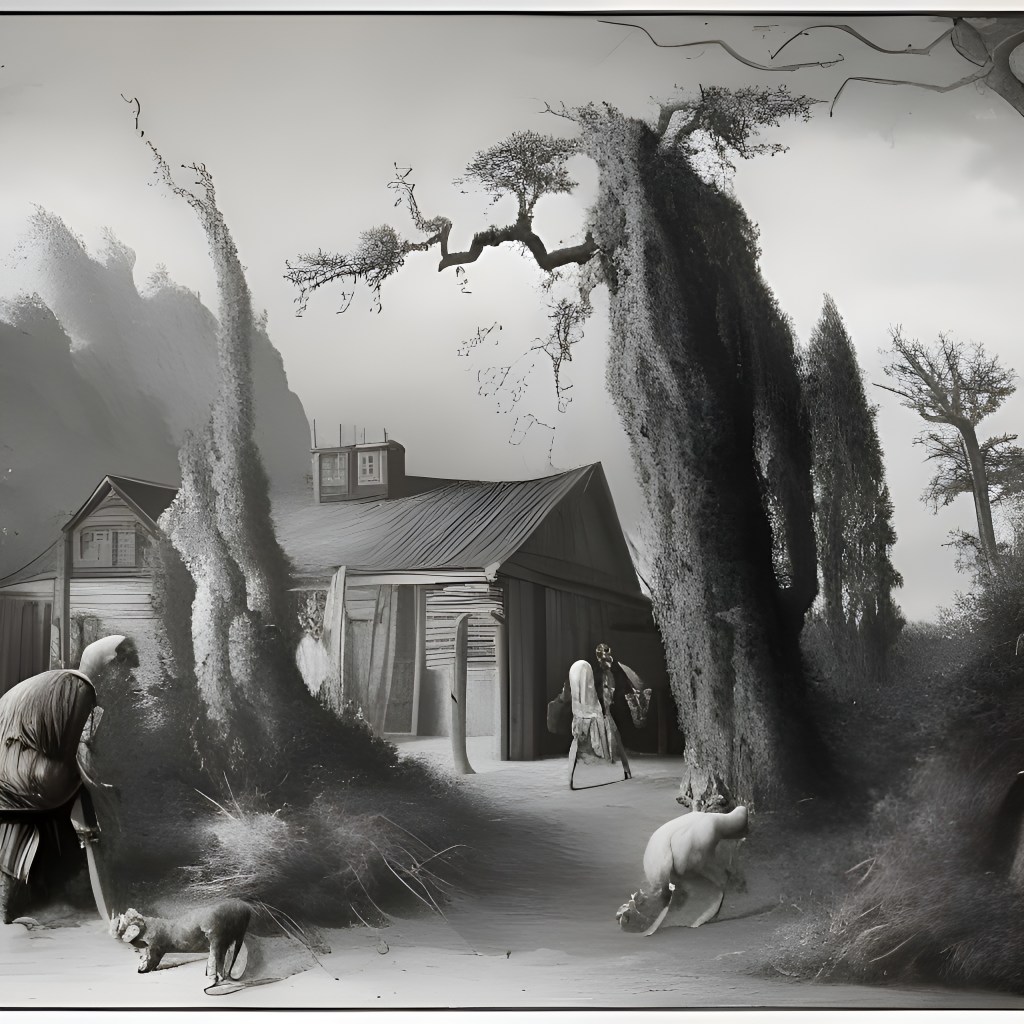
Modern historians now call this time the Grey Period. The brothers of House Silvia, as founders, were the most publicly known of the organization’s members. House Silvia famously guided the initiative for the Order to focus on the establishment of respectable graveyards for the poor and the unclaimed. The family earned much goodwill among the commons for these initiatives.

Construction site of one of the burial fields. In the tense seasons that lead up to the Good Revolution, rumors began to spread about the strange and disturbing ceremonies performed in the windowless chambers of the Strangers’ lodges. An estranged member of the Rebeccas had been slated to interview with a popular tabloid but was found dead in a barren field just before it was to take place. The cause of her death was never discovered, and the rumors were all the more amplified.
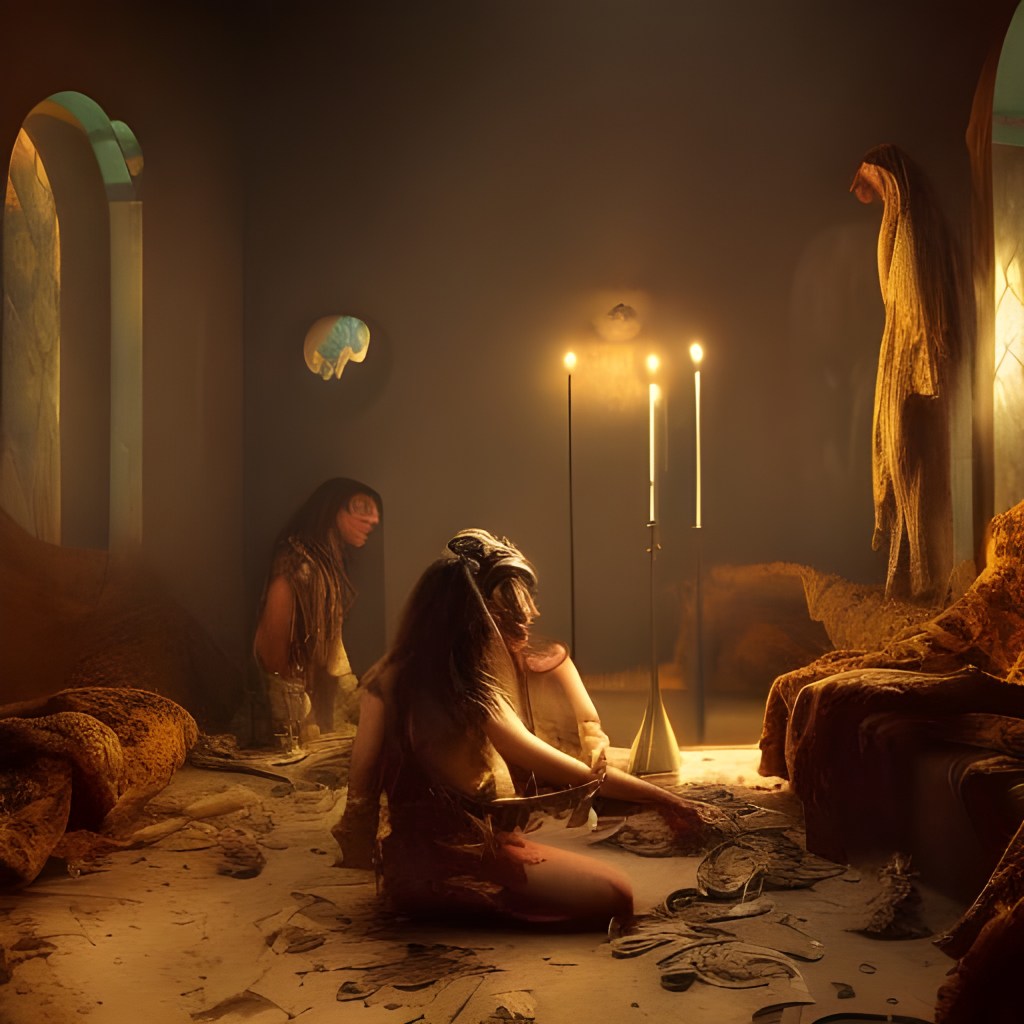
Rumors of unnatural rituals. The rumors pressurized a demand for members of House Silvia, being the only visible members of the Order, to be questioned about these public concerns. The fledgling Directory, at that time little more than a judicial force, arrested them and felt the pushback of their supporters. House Silvia underwent a lengthy, and fruitless investigation, that dragged out their time of incarceration. Every day opposing shouts rang a clamor for their heads or their freedom. The Silvas wouldn’t be restored until the intrigue of the supposed scandal died off.

The Silvia Riots While some evidence of strange rituals were found in a few lodges, drawers of human bones; empty rooms but for their mile-high violent murals; unusual symbology in the floor tiles, none of this could be connected to House Silvia.
Read more about House Silvia here.
-
1881 – 1913
Horace Smith and Daniel B. Wesson founded the Smith & Wesson Company in Norwich, Connecticut in 1852 for the development of the Volcanic rifle. Smith & Wesson Company was renamed Volcanic Repeating Arms in 1855 and soon sold to Oliver Winchester.
In 1856, when Samuel Colt’s patent on the revolver was due to expire, Daniel Wesson began developing the cartridge revolver, purchasing the patent for a “bored-through” cylinder from a former Colt employee. Wesson joined back up with Horace Smith and formed the Smith & Wesson Revolver Company.
Smith & Wesson’s first big success was brought about by the sudden demand for revolvers spurred by the outbreak of the American Civil War. At the close of the war, this demand for pocket revolvers declined. Smith & Wesson began developing arms suitable for use on the American frontier. From this effort was born the heavy caliber .44 S&W American, also known as the .44 Double Action Frontier.


-
I’ve reached what may be the halfway point of my current Royal Road serial. The link leads to the most recent chapter published, but it’s easy enough to find the beginning if you’re interested.
Read it here.
-
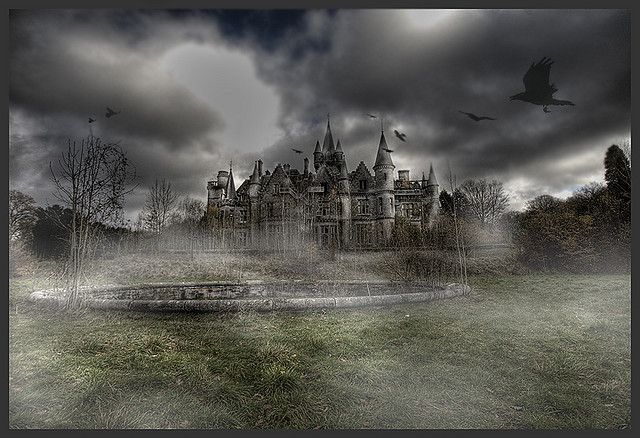
An urban explorer of over twenty-two countries. Govia is an artist who helped to popularize abandonedography. He is also a cinematographer specializing in derelict locations and innovative lighting techniques. Stranger Things is the most well-known project he’s contributed to in this capacity.
Govia collected fifteen years of work into his book Abandoned Planet, published in 2014.
His collections are here.



-
Philip K. Dick, 1962
A weird time in which we are alive. We can travel anywhere we want, even to other planets. And for what? To sit day after day, declining in morale and hope.
Philip K. DickThe first book I read by Philip Kindred Dick was Do Androids Dream of Electric Sheep? My first taste of Kafkaesque science fiction. I fell into an easy phase, but always ignored The Man in the High Castle. It’s one of his major titles and earned him a couple of awards, but its synopsis sounded like a dated “what-if”, a stoner naval gaze from yesteryear. Perhaps a decade later I had another sci-fi craving and decided to stop being so pretentious.
Like all of Dick’s writing, the story is plot and concept-driven. It feels more like a story being explained than told. In short, it reads like most 20th-century science fiction. Asimovian. The scope is everything its synopsis claims, a WWII what-if. But the book has a cleverness beyond its genre. In the book, there is a book, subversive and outlawed, “The Grasshopper Lies Heavy,” presenting a what-if world to the what-if world of the novel. The I Ching is not only a plot mover in the book, with characters utilizing it to guide their decisions, the I Ching was also used by Dick to craft the themes and storyline.
The work is standard for its author but unique for its genre. It’s worth a read because it’s an easy one. A daily reader could clear this in a week. The what-if isn’t too heavy-handed, and it becomes secondary in the depths of the story’s philosophical observations. Though it sounds like a basic junk food dystopian novel, its social analysis is transcendent. Heavily Jungian, the themes revolve around the fragility of the modern mind in discerning what is real and what is a construction of one’s personal ego.
They want to be the agents, not the victims, of history. They identify with God’s power and believe they are godlike. That is their basic madness. They are overcome by some archetype; their egos have expanded psychotically so that they cannot tell where they begin and the godhead leaves off. It is not hubris, not pride; it is inflation of the ego to its ultimate — confusion between him who worships and that which is worshipped. Man has not eaten God; God has eaten man.
Philip K. DickFor the curious, you can buy a copy here.
Home
1–2 minutes
 The Normal Times