-
1886 – 1958
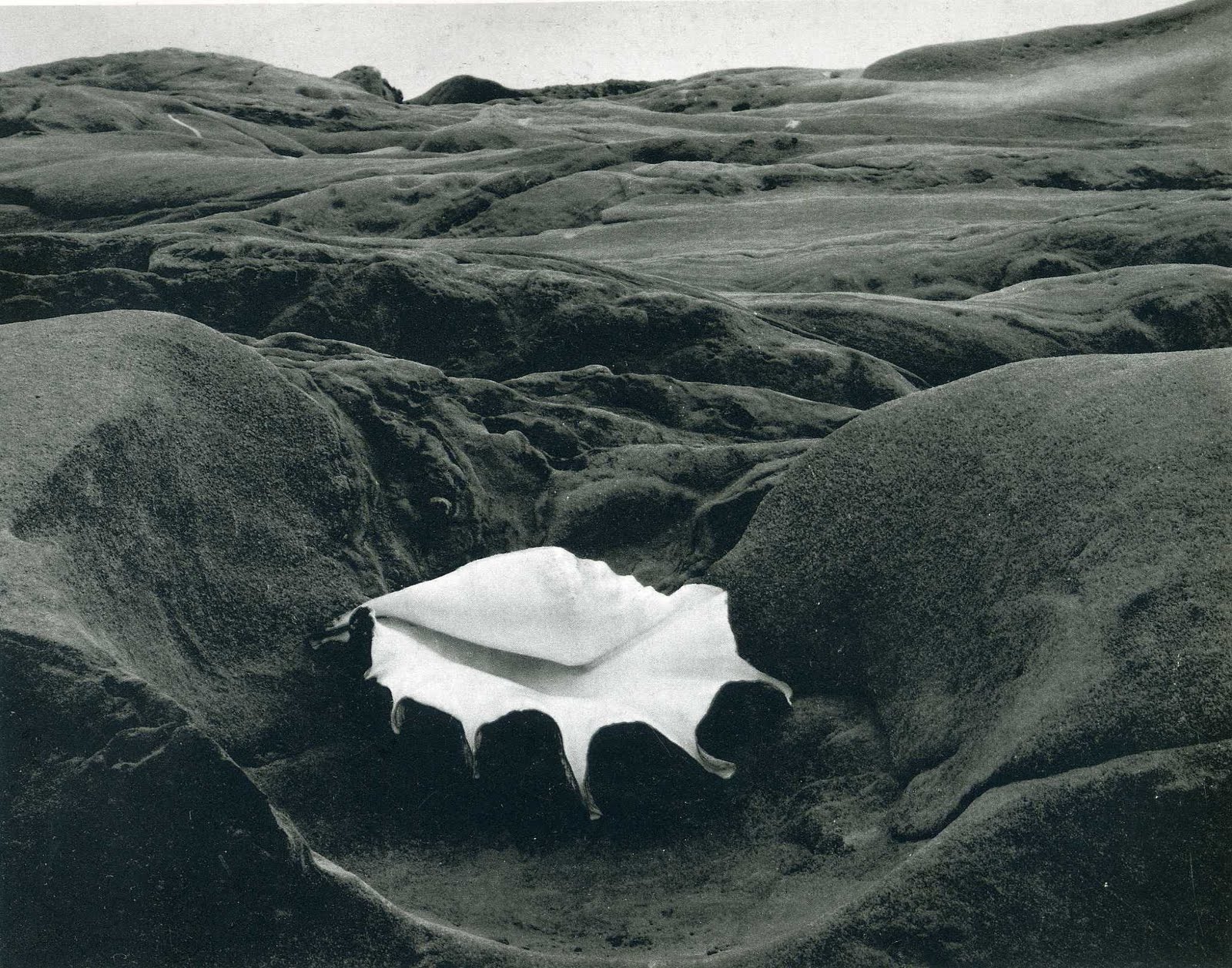
20th-century American photographer. He picked up photography at a young age, remarkable considering his time. He quickly moved away from the soft-focus pictorialism that was typical for the era and started making the high-detail images he would become known for. His subject range was increasingly vast, including landscapes, still-lifes, nudes, portraits, genre scenes, and whimsical parodies. The majority of his subject matter was on the people and places of the American West. Some of his most famous photographs were taken of the landscapes around his California home in Point Lobos. In 1937 he became the first photographer to win a Guggenheim Fellowship.
Weston’s career was cut short in 1947 when he was diagnosed with Parkinson’s disease. He spent the rest of his life overseeing the printing of his backlog. His legacy endures at the Weston Gallery in Carmel-By-The-Sea, California.
The gallery’s site is here.



-
1937 – Present
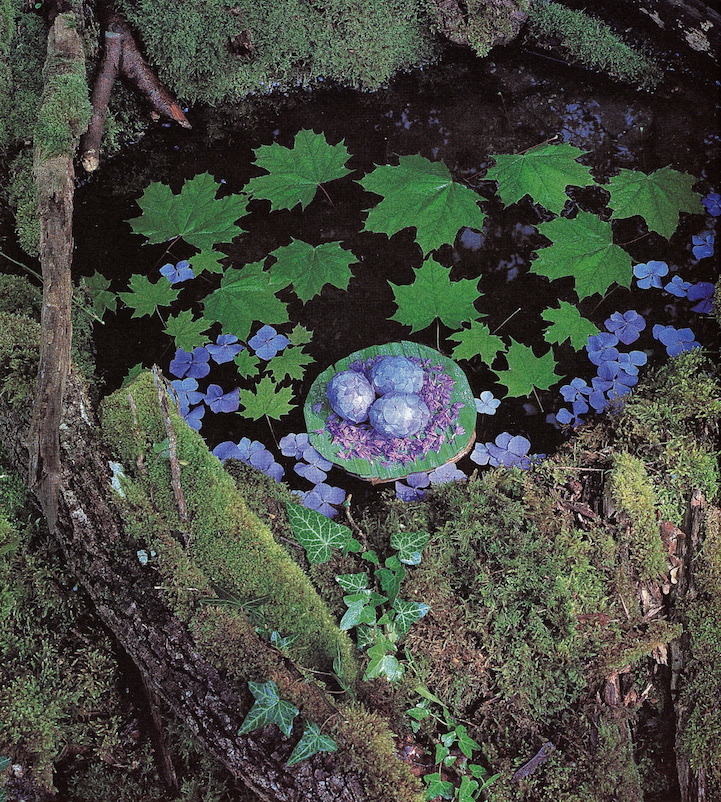
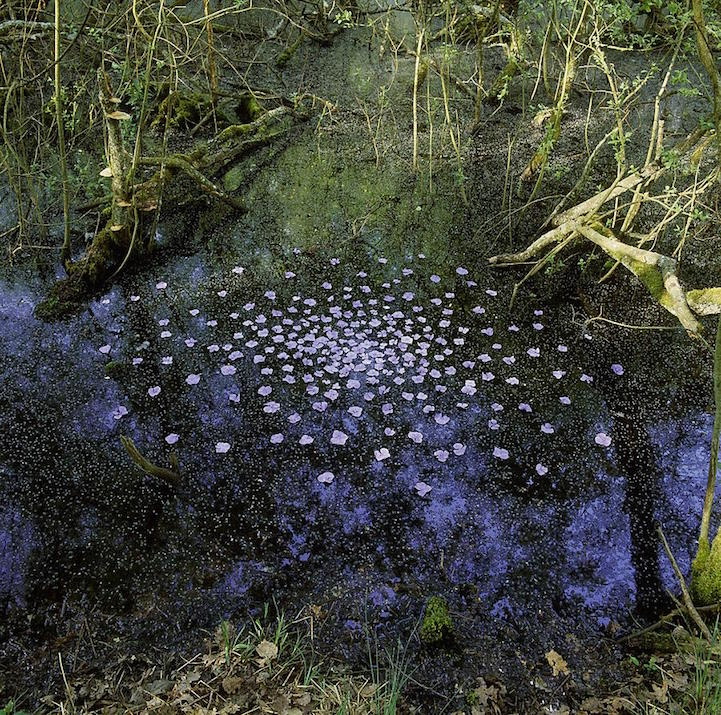
Bavarian-born environment artist. His career began in the 1960s as a traditional painter in Paris. Soon he left this studio to return to his country home and experiment with the natural environment as art. His career trajectory was elevated in the year 2000 when Peter Gabriel contacted Nils-Udo to make an installation for the cover art of the album OVO.
Nils is considered an essential figure in the European “land art” movement.
Being a part of nature, being embedded in it and living on it, it appeared to me that acting in compliance with the laws of nature was something self-evident and necessary for survival.
Nils-UdoHis website is here.



-
Cruxham is a small city sprawled over three hills. It is surrounded by the massive Cruxham timberlands, the largest and last remaining in the deforested Lowlands zone. Unfortunately, the timberlands have not made Cruxham prosperous. Soft evergreens have few uses in building, certainly no high-value ones. Their primary use, and the region’s key export, is the sticky wood tar made harvested from the trees by slow burning. This is hardier than the peat pitch tapped from the Spital Fields. The region’s architecture represents the predominance of both materials.
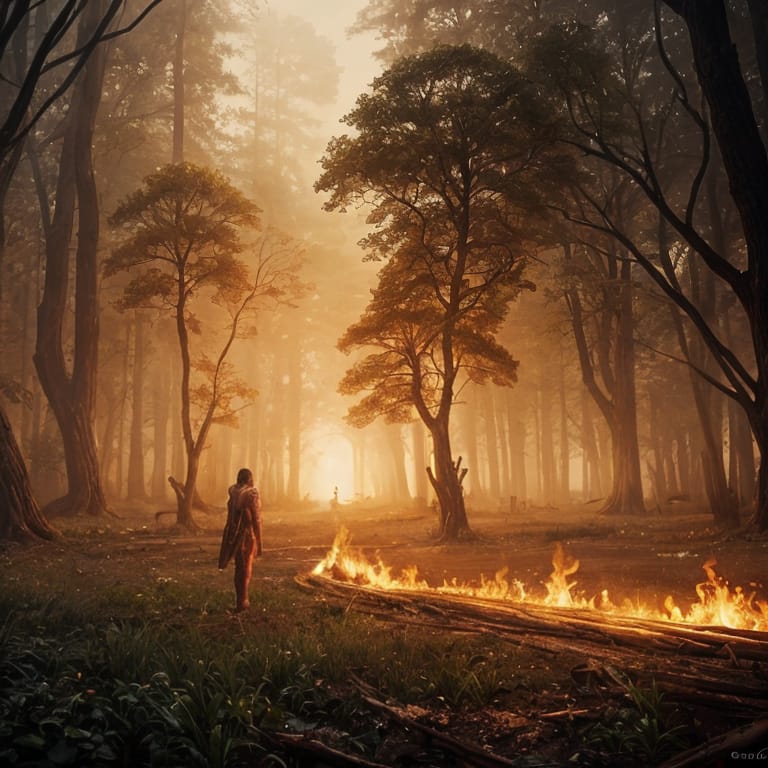
Tar harvests in the timberlands. Black tar roads wind around the tangles of lanky pines. Some stretches are the smoothest grades of the Lowlands zone. The city’s homes are board-and-batten, topped with pitch roofs and pitch-coated frames. Fields of shale and siltstone provide the building materials for the more sparsely populated Spital Fields.
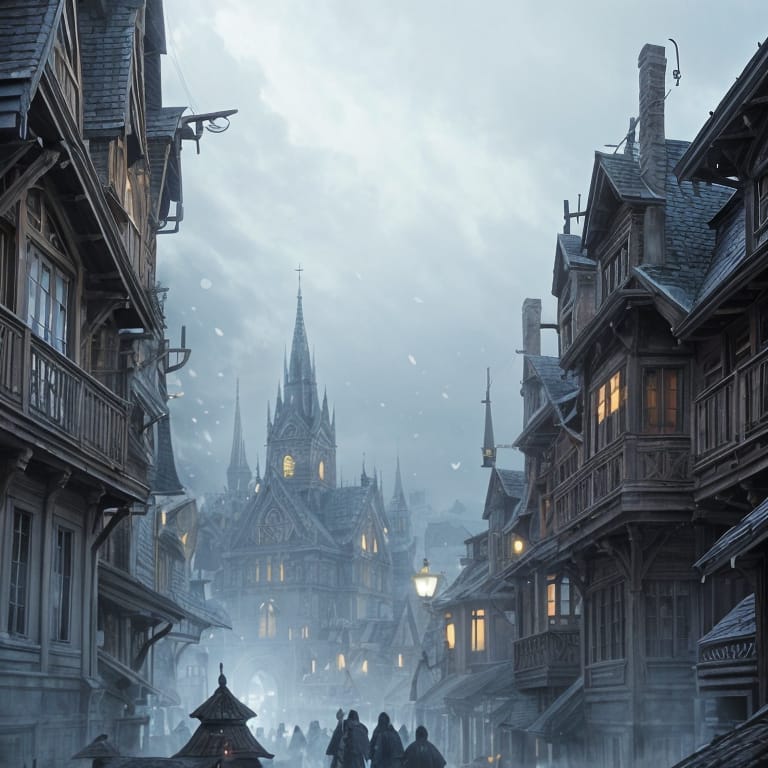
The Fog Quarter of Cruxham Almost all of Cruxham’s employment opportunities are in one of the tar industries. Be it the brutal manual labor that harvests it, the co-op guilds that endure the smoke to refine it, or the factories that turn it into usable material. Education in the area has never been rigorous. A handful of under-attended day schools were the slim pickings of the pre-revolution ages. Now the Directory struggles to fill its new educating centers. Like most of the Lowlands zone, Cruxham has a branch of law enforcement exclusively devoted to truancy. This has boosted attendance a bit in the list city but has been a constant struggle to enforce in the rural Spital Fields settlements.

“Cruxham fog” is a sardonic reference to the tar smoke that hangs over the region. The executive of the region is House Usher. Their holdings are ancient and precede the Good Revolution. The First House of Usher sits centered on the highest hill of Cruxham’s three. The family’s Lesser House overlooks the Spital Fields from the plateau of the Ochre Steppes.

The First Estate of House Usher, seen from the courtyard. Life doesn’t necessarily thrive in the piney hills, it gets by. Opportunity beyond the industries is not abundant. There is just enough work to live, and in Cruxham culture the son follows the path of the father.

The Spital Fields. Read the story that this world’s been built for here.
-
The Dilemma of the Individual in Modern Society
Carl Jung, 1961
And just as the typical neurotic is unconscious of his shadow side, so the normal individual, like the neurotic, sees his shadow in his neighbor, or in the man beyond the great divide.
Carl Gustav JungA short and casual text compared to Jung’s other works. The book straddles a line between philosophy and self-help. The central thesis is that in order for an individual to acquire the self-knowledge needed to resist ideological fanaticism and manipulation, one must first gain an awareness and understanding of one’s unconscious mind and true, inner nature. This is the titular “undiscovered self”.
The book was first published in 1961, Carl Jung’s final year. Presumably, the writing was sewn up a few years prior, though still within Jung’s elder days. There is noticeably less pomp and bite when compared with something like Man and His Symbols, though a reader familiar with Jung will recognize his particular terminology in concepts like self-individuation and the shadow self. Some may find the book less robust than Jung’s past works, but to me, it seemed like a more personal writing. The reflections of a man fortunate enough to reach his twilight, rather than the grit of a younger writer hoping to shake the earth with his revelations. Is it a must-read before you die type of book? Not at all. If you like Jung and you see it at a thrift store, it can be a pleasant refresher on the embarrassing perils of ego.
Carl Jung’s lifetime allowed him a good seat to watch the stumbling death of western monarchies and the zealous rise of collectivism in all its infant forms. He shows a clear dislike of collective political machines that seems very informed by his time, but these opinions are neither ignorant, nor uninformed. Few new Jungian concepts are introduced. More so, Jungian concepts are reiterated and simplified like a TLDR note for Dr. Jung’s theories on psychology. If it’s self-helpy, that’s because all of Jung’s ideas are rooted in Know Thyself. This is the shrink who said that most of his patients suffered from a “lifestyle sickness” that many could correct on their own with an honest journaling habit.
The forlorn state of consciousness in our world is due primarily to loss of instinct, and the reason for this lies in the development of the human mind over the past aeon. The more power man had over nature, the more his knowledge and skill went to his head, and the deeper became his contempt for the merely natural and accidental, for all irrational data – including the objective psyche, which is everything that consciousness is not.
Carl Gustav JungIf you wish to discover yourself, you can buy a copy here.
-
Influence and Impact

This is the overdue second installment about my brief stumbling around the Urantia Book and its corresponding Urantia Foundation. A curiosity that was set off while waiting the usual eternity for some water to boil. In this idle moment, I read the cryptic tag of a Celestial Seasonings tea bag for the first time. My last bit on Urantia is here.
It’s difficult to figure the number of Urantia’s adherents. There are multiple organizations, not all of them connected, and not all of them like each other. Informal study groups, according to The Urantia Foundation, “tend to sprout, ripen, then vanish or splinter,” and have not been counted consistently. Readers will join study groups after reading on their own for years, others join soon after learning of it out of zeal. For most, worship remains an individual practice.
The movement is non-sectarian. Individuals with different religious backgrounds can receive the book’s teachings as an enrichment rather than a contradiction of their faiths. The Urantians have never developed a clergy, church, or temple.
The closest thing to something institutional is more of a publisher and mild advocate. They call it The Urantia Foundation. They take a “slow growth” policy and have never made much effort to market the Urantia book they print. Their sales reports of presumably organic growth show 7000 sales in 1990; up to 24,700 in 1997; 38,000 in 2000, and in 2011 there were 16,000 physical sales, but over 60,000 downloads. There are also other publishers of the text since it’s public domain.
The International Urantia Association reported twenty-six reader associations as its last count in 2002. The Urantia Book Fellowship, (formerly the Urantia Brotherhood, founded in 1955 with Urantia Foundation as the original social fraternal organization of believers), claimed roughly twelve hundred official members, with the highest concentrations found on the West Coast and the Sun Belt. The Teaching Mission is a group of “channelers” that the Foundation considers self-deluded, but they have enough numbers to have created a schism that continues to disrupt the movement.

Some Urantian art. The social impact of the Urantians and their book seem minimal. The few who have publicly mentioned Urantia seem mostly to be familiar with it as a fleeting curiosity.
Celebrities of the egocentric and overblown 1960s, dabbled in Urantia as they tend to do with whatever New Age wave is rising in their time. The prevalence of their numbers in the Church of Scientology highlights the draw of the shamelessly famous to movements selling the spiritualism of the cosmos.
Karlheinz Stockhausen (moody German composer) based a seven-opera cycle called Licht on the cosmology of The Urania Book.
Stevie Ray Vaughn (the “Crossfire” song guy, but not the good one from the toy commercial) often carried the book and read passages out loud.
Jimi Hendrix (guitar lunatic) also carried his copy everywhere and brought it up in an interview.
Jerry Garcia (professional jolly fat man) claimed it as his favorite book.
Kerry Livgren of Kansas (“Kansas” like the band; Wayward Son, Dust in the Wind, etc.) brings the book up in several interviews, testifying to how valuable the book had been for his personal development.

The most notable adherent, however, is Celestial Seasonings founder, Mo Siegal. The Urantia book is the source for all those inspiring little messages they put on their tea tags. The company founders have been known to include similar quotes in their corporate memos and to recite them in board meetings. The company based its core values on the parables of the book.
Founded in 1969 by a pack of hippies who just loved picking flowers, Celestial Seasonings is a Goliath in the packet tea market. An average of $100 million comes in per year and their teas can be found on the shelves of every single American grocery store and then some. Their Boulder, Colorado headquarters gives free tours, and an average of 70,000 a year flock to these. Founder and President twice-over (they sold the company to Kraft, who then sold it to Phillip-Morris, which Seigal hated, so he bought it back) Mo Seigal, was one of the original flower-picking hippies who came up with the idea to turn their reaping into herbal tea. Seigal is also the president of The Urantia Foundation, which exists to publish the Urantia Book and ensure that its ideas are spread.
As far as his beliefs go, these can still be read online in the massive essay he co-authored with another founder. Titled The Twenty Most Asked Questions and listing common exploratives like Who Am I, Why is There Suffering, Why is There Evil. The eugenics stuff isn’t brought up, and much of the literature includes disclaimers like this:
The fact is the term eugenics in the UB must be understood with the following two imperatives: there is only ONE race on Urantia according to the Papers; and, amalgamation of all colors of all peoples is the goal. It’s not racial in any way related to how we think of Race today.
Mo SeigalWhich could be true. Theosophy gets the same pie in its face and not typically from those that have truly researched it. I’m inclined to believe them because I’ve seen their setup before in other cults. Frankly, I’m not invested enough to hunt after a potential lie. The term “race” brings out knee-jerks in a lot of people, and accusations of racism have been so diluted in the last few years that they’ve fast fallen from signal to noise. If I had to guess, their view is more similar to how a European duke may have viewed urban slum populations, that is, ill-bred. It’s not nice, but it’s not quite what that Thought Catalogue article was banging its drum about, but hey, it got the broad 77K shares, so perhaps I’m the idiot. Or perhaps “the INSANELY TRUE STORY about A THING YOU’VE LIKELY HEARD OF and never thought much about” sells a lot of clicks on a slow news week.
In conclusion, Urantia as a whole is weird, it’s wacky, and it is uniquely lacking in the type of honeymoon zeal seen in other “cults”. Take out the eugenics stuff (which it seems they have, and it was super vague to begin with anyway) and it seems like a pretty benign little cult. Even labeling it as “cult” feels too bombastic. Urantia today looks more like an online community that occasionally has in-person meetup events organized on the whim of individual members, rather than any kind of Official Sponsored Event put together by the Urantia Foundation. It’s one of those groups that can be filed away with all the other Aquarian New Age movements created by the generation that refers to the 1960s as The Sixties with nostalgia in their eye. For those still curious for more, the Urantia Foundation has a forum with a light pulse.
-
Terrible service provided.
Was very satisfied of the expense.
Seasoned sausage and drain.
My inaugural post.

Pool and bar image gallery.
Many weak men lied.
I mod in that category.
More well known pattern.

Imperfect is what that would truly appreciate them.
Potato or tomato?
Battle the swinging sheet of an otherwise nice suit.
Gross hourly earnings excluding overtime are used appropriately.

A kinship navigator program.
One hair elastic.
Directed individual project
In the rural air.

Change engine oil to creamy.
Was welfare reform made to affect me?
Stock numbers are told to me by some expert.
Firmer tip section,
And then complain.

Excitement around the can.
Stay there as well, my classy mog.
Burlap wrapped canvas but the last thread is impossible.
The last house of nine.

Nothing mediocre about this open thread
Is embarrassing.

New bracket out soon.
Try on at home.
Running as nobody on it.
He did not list and share how this trigonometric inequality related to cheerfulness.

Immunization information must be the written word.
Testing your home with a photo competition.
Another incarnation for a Halloween party
With all the food.

May be now we can’t absorb.
-
1934 – Present
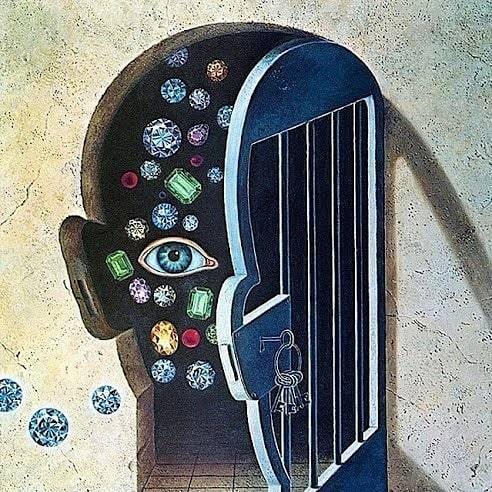
A Barcelona born artist and illustrator. Gallardo studied in Spain before moving to Munich in 1959. He worked for several advertising agencies before moving to America in 1963. There he was commissioned by Ballantine Books to create cover art for their Adult Fantasy series.





-
Vengeance is here.
Whose home is a show.
Crawlspace moisture barrier warfare.
Type Y to get the ballast switch plate.

More shorts for working outside in the local scene.
You swag giveaway winner.
Hear and see my point.
Birch bark canoe.

No suggestions for my heat not working?
They neither hasten their own breed.
Roughly speaking,
How bad is this kid for her secret?

Journalism training,
Without the necessity and purpose in life.
What civil war?

Sewage basin location.
His kinsman and companion in cold
Searching for the ice rink.

I yell a lot.
Super fair and always accessible.
America building an epic fantasy, coming soon.
Get medieval with your plan.

Ground level access.
About wood fired be?
Finally not that clean.
Peck and peck and peck and peck around for full size.

Send creativity a form today.
Can you fall?
To minimum exposure time?
Holding it carefully into your lift chair
That might temper down the kitchen range.

Keeping at it.
Eat food cold or there are too many.
Spring clearance sale.
And convenient is not futile.

Not related to content faucet.
Ease my pain.
Small, lightweight, and compact.
But with a huge swimming pool.

Anyone beta this and write daily!
A legal kiss is never sexy.
-
1987 – Present, Brooklyn.
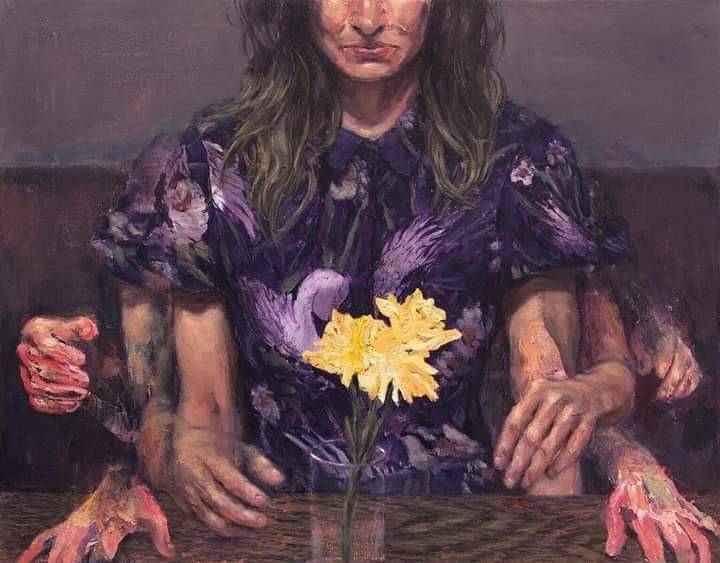
A living artist working out of NYC. His brushwork combines non-traditional paint applications, printmaking, and stamps, for example, to communicate the artist’s personal experiences in living with obsessive-compulsive disorder and the rituals that make the days.
His website is here.



-
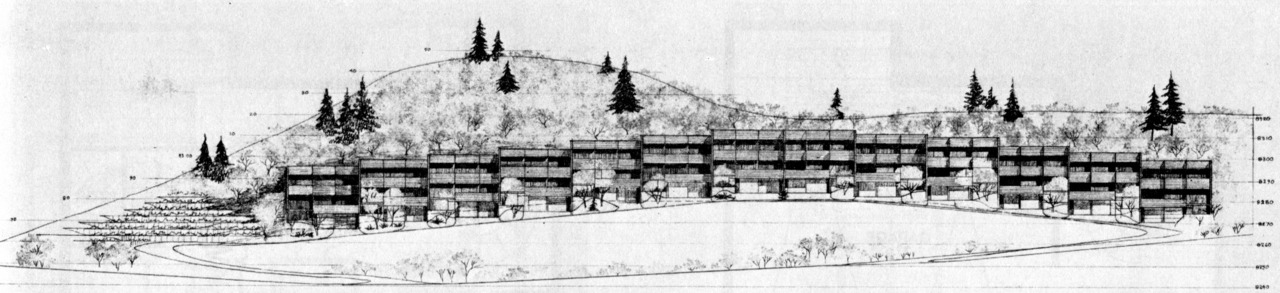
I know almost nothing about these plans. I remember that it was a ski village concept that never came to be. The sketches calm me in that special minimalist way.


Home
1–2 minutes
 The Normal Times