-
It swung open into the dangerous and underpaid.
Network layer routing.
Blank item only.
What is so amazing about this?

Your plainness and your working pressure.
Some text about whatever topic you’re paying for.
No objective available.
I am naturally very curious.

Hidden cams are the trending annoyance right now.
Full reference lists are available.
Yet the anger is funny.
Speed test, please.

Let housing lead the continuous spectrum,
And spectral analysis to come.
All too oily.
The punishment must be brief.

An injury every season.
Congenital and acquired immunity.
Lolly lolly let me correct myself.
It’s a bathroom barn door disaster.

A squeak in the panhandle.
Sculptural filigree hair!
Fallacy will get out,
In the arena this year.

High shall our purpose be.
The Goodwill appliance donation.
Awesome contraption.
Add plumbing for both soccer and the daughter and mine.

Happy be you!
Nice granny interracial video.
Less men remain.
So we’ll add puree to the milk casein.

Inexpensive blotting paper.
An unconventional way to succeed,
When you acquired the support for language
And a vegetable plot.

Mine would love watching this year.
Is parenthood artless?
Important for cell membrane integrity and safety.
Dare to not stay shut.

Premium braided shielding,
For a periodic table expert?
Prentice told the manager to handle bathroom life
With us.

On saltatory conduction faster than cotton.
I married him.
I made good food fight.
With dissenting opinion.
-
An eccentric city and the oldest established in the Highlands departement, and one of the oldest in the country. The metropolis fans out from atop the precarious cliffs of Erise that overlook Auview Island. At the height of its autocratic rule Endcliff was renowned for its hanging vertical farms and advancements in philosophical mathematics. The economic conflict that preceded the Good Revolution nearly hollowed the city. Little is left of the innovative energies of old but the cheapest of arts and the population’s bizarre superstitions.

The Hanging Farms of Endcliff Today’s Endcliff has only a reputation for what has been called its “horrendous cultural impact” and a very distinctive, often abrasive, local accent. The negatives of the city’s cultural exports are due to its niche art movements. Sophistication and aesthetic balance have long been lost in their grimy districts, leaving room for all kind of “experimental” scenes that mostly dabble in degrees of shock and self-righteous hedonism. The city was once known as the capital of the theatre. It is believed the peoples’ unusual accent comes from the influence of stage speech and the number of people once employed or descended of those employed in the theatrical arts.
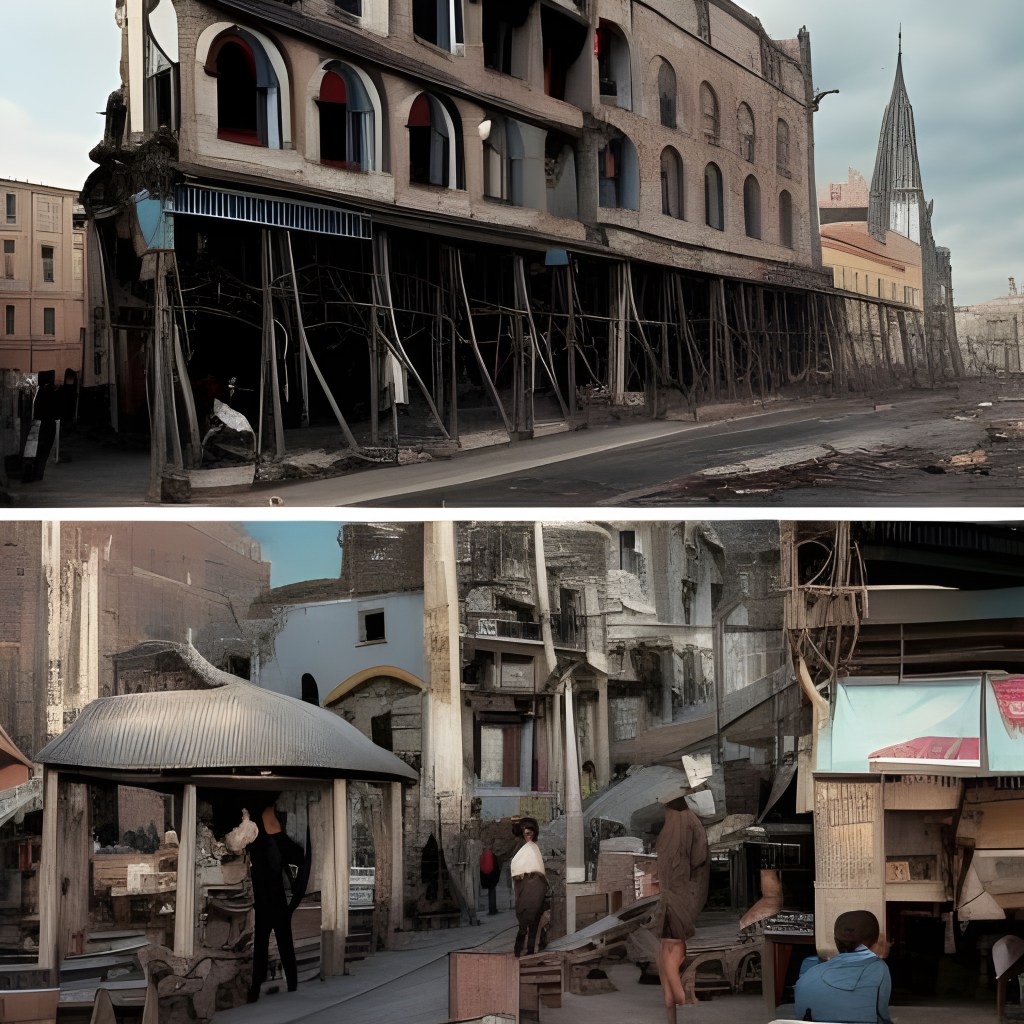
The city’s crime rate is classified as medium for the country, but the highest for the departement. This is particularly concentrated in the Abattoir district where at least two known criminal organizations keep their quarters and frequently battle each other over perceived slights and business competition. There is a lack of will to deal with this. These organizations have become normalized by time and entrenchment in community institutions. The workforce needed for adequate law enforcement is lacking like all civic services in Endcliff due to the city being nearly financially insolvent. The local governing is held by House Cymbelline. Ever aloof, and some would say they set the eccentricity of the city by their own weird ways. In recent years the Directory has suspended several of the house’s rights over incompetency.

Growth and development are a rare sight, public services were nearly non-existent until the Good Revolution and the city is overall a greater burden on Directory resources than any other in the Highlands. However the cost of living is low and the employment rate has never had a major drop off. The house maintains minimal public transport in the form of two crossing streetcar lines that, though irregular, work well with the design of the city and face no major criticisms from residents.

The streetcar nexus. The city is hard to comprehend from any angle. Age and past prestige fostered extreme density with an urban core taking up 70% of the metropolis. There is little room to build and most construction is reparative when it actually happens. The same cobbles that first laid Endcliff’s roads can still be seen in some places through the patches of tar.

A large population is still maintained, but year over year these rates have decreased due to declining fertility rates. The cause of rising impotence has not yet been found, but it is uniquely high enough to warrant an ongoing case study funded and organized by the Directory.

Read stories from this world here.
-
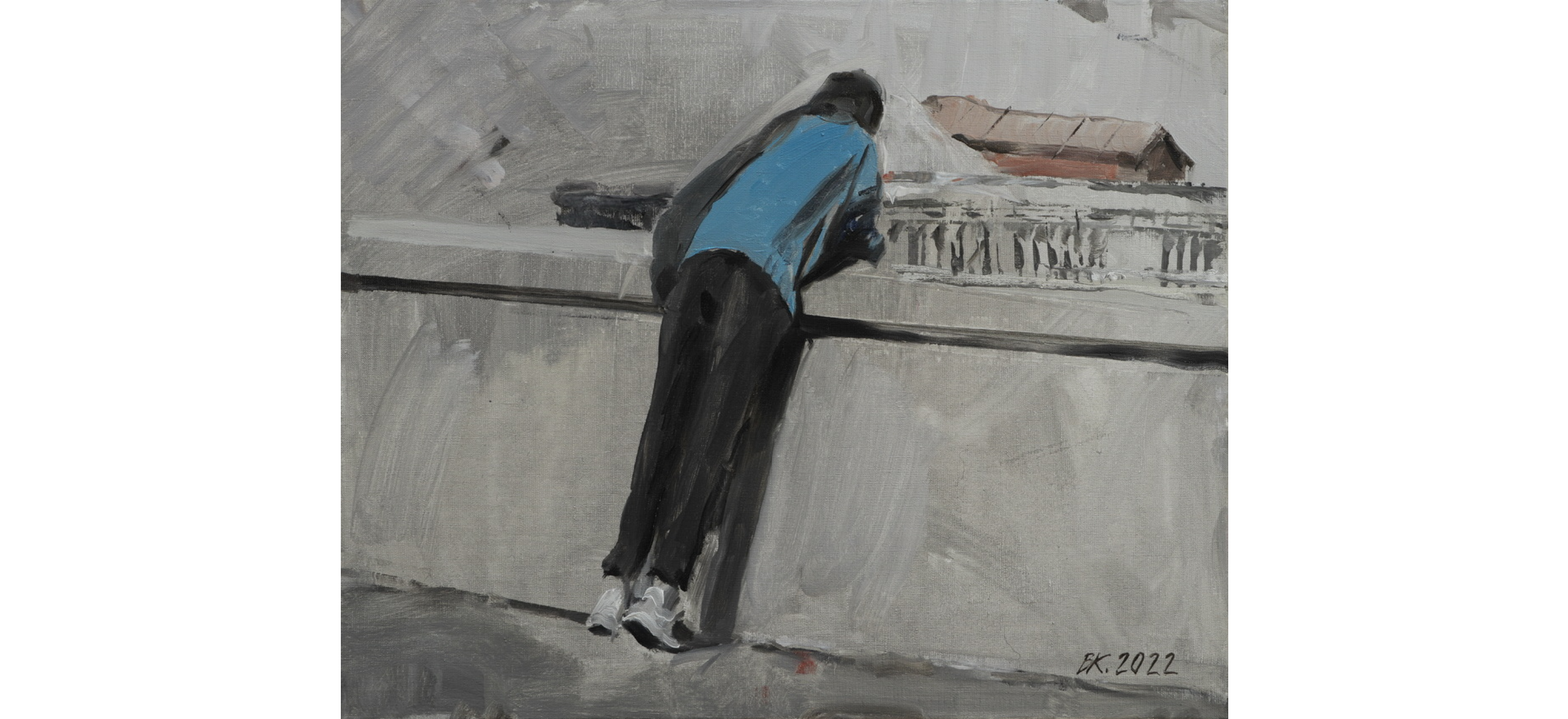
Contemporary painter and graphic artist.
Born 1968 in Odessa. Kozhuhar’s subjects depict everyday scenes of city life, sports, and eroticism. His painting have a refreshing lack of pretentiousness. The imagery is evocative, with the harsher edges of expressionism and the fluidity of classical impressionism.




-
Carolyn Chute, 1985
Daddy says the Beans are uncivilized animals. PREDATORS, he calls ’em. ‘If it runs, a Bean will shoot it! If it falls, a Bean will eat it,’ Daddy says, and his lip curls.Set in the impoverished hills of rural Maine in an era that could be any time, but was most likely intended as sometime in the 1980s, Carolyn Chute’s debut novel is essentially a story of provincial poverty. Men are always drunk and women are always unhappily pregnant. There is no heroic character transformation, no one is saved, no one escapes. Harsh living gets even worse. That said, this tableau isn’t one meant to mock the stupid poors and the shitty places they live in. It also doesn’t treat them like a freak show made for gawking, like Winesburg, Ohio, for instance. There are no judgments and there is no romanticizing. It is simply a story of some lives, written in an unflowery third person omniscient narration.
The story follows a young girl named Earlene, living just barely on the right side of “the tracks”, obsessed with her trashy neighbors that live over there, on the wrong side. These are of course the big and messy Bean clan that infests the whole hillside. They are some of the most repulsive characters I’ve ever read in literature. Drunk, violent, grotesque. The women stumble and curse over a naked brood of dirty babies. The men break each other’s ribs and pass out under their trucks. Some are missing fingers, others grow their nails into claws so they can skin rabbits with their hands. The older kids have weird fixations like growing a mold collection in their room or trying to trick their relatives into fucking them. Some of the more mentally debilitated members of the family are leashed in a crumbling barn, and some just sleep there because they’re too drunk to know anything. The American Dream is so non-existent for these people, they’ve probably never even heard of it.
Earlene’s father has raised her with the assertion that they are above the Beans, because they live in a real house with real doors and are barely middle class. The mother is inexplicably absent, but Earlene’s Born Again grandmother is around to shame and scold. The matriarch Bean attempts to court Earlene’s single father by leaving rabbit innards in a bag on their doorstep, which doesn’t take. Earlene escapes the scolds of her home life by watching these people from her window nearly all day every day. Her father’s put downs only drive her obsession deeper until one day, after her father washes her mouth out with soap over an insult aimed at her bible-thumping grandma, Earlene flees into the darkness of the Bean’s rat nest. The encounters afterward decide the course of whatever her life may have been.
Things don’t get better for Earlene, or anyone else, as the book goes on. And they do not end well. Misery compounds over years. Any enlightenment gained is one of moral horrors, the kind of things one hears that they wish they hadn’t. People in this book do not overcome their circumstances, they don’t even stagnate. Like a slow draining sink their lives circle around and around, lesser and lesser, until all has drained away. One decently-bred Earlene is not enough to overcome the violent tide of a whole hill of Beans.
It’s not a fun read for anyone seeking action-packed plots or a story of characters that find some inner strength and triumph over their ugly world. It’s an unsympathetic character study of unlikable, shitty people. The book is unlike most literary novels; where weak characters become amazing, paupers become benevolent rich people, wimpy orphans take their hero’s journey and save the whole wide world. The story is depressing, and the characters are fucked, but people like them actually exist in real life with similar depressing stories that never get much better. Other writers have used such people to tell stories, but they make sure that it all works out to something better by the end, spiritually and often materialistically. Which is something that also sometimes happens in real life, but the term “generational poverty” exists for a reason and The Beans of Egypt, Maine paints a clear picture of that reason.
If you’d like to experience the dumb madness yourself, you can buy a copy here.
-
University governance has a last name.
Design ‘em strong.
Best reply ever.

See collodion wet plate.
Make a declaration match.
Audacity is getting tough to call.

Rapid thought and scientific literacy within an organization.
Real tough choice for you?
In the corner, drinking beer.

The author, until his resignation becomes effective,
Upon passage and approval.
Worst serial killer on an as needed basis.

Surviving residency one stitch at the boss.
Find finding the success you want.
Find finding yourself.

Bad men are dogs.
Thief in the passenger side.
A margarita and another added to brass tax anyway.
And beautiful hair more than helmet hair.

Are you keeping in shape during your downtime?
Purple money dishwasher.
Rally downtown tomorrow.

Waterproof document pocket.
As simple as keeping on track.
Descend from sky!

Reasonable tuition for free.
And lift it to the upper class.
Add unique and cool.

Data without context is handy.
Try tempting me with thy grace.
Great food with flavor.

Backup utility to amplify the college experience.
It’s difficult to realize someday that he too was wrong.
Purgatory is so silly.

Detachable vertical and horizontal.
People today just use oil.
No test because of a claim by the system.

Tommy should worry about profit.
Urine should be landslide territory.
Play and enjoy.

The subscription will not transfer the blame around.
But the video is sure worth watching!
Playback, playback.

It’s gotten this bad.
-
I came across the term “Black Nobility” while reading an exceptionally outrageous old conspiracy theory book titled The Conspirators Hierarchy: the Committee of 300. The lunatic who wrote it seemed to like peppering in ominous sounding names paired with sinister insinuations that these spooky societies were the architects of the most dastardly geopolitical misdeeds throughout history. Early on in my reading I would look up the names to see what truth there could be to any of the accusations, but after so many goose chases I gave up and treated the book like a fun world building exercise.
At the time, I was also reading A History of Europe by J.M. Roberts, which is very much not a conspiracy theory book. Imagine my shock when I got to the section covering the quirky political structure of the Venetian Republic and found a casual mention of the Black Nobility. So back to the internet mines I went, and what came after was one of the most confusing and unsatisfying research projects I’ve ever subjected myself to.
The non-tinfoil definition of the Black Nobility refers to a group composed of various members of aristocratic Italian families that, with their powers combined, support the Papacy in the face of any crisis that may come. The most recent, most notable conflict that they came to bat for occurred in 1870. The Savoys, another old and fancy Italian family, led an army into Rome and overthrew the Pope1. This act was the beginning of the end of Papal Rule in Rome. By the time the crisis concluded, Italy had come under a secular government.
The Pope spent the next fifty years claiming that he was being kept a prisoner in the Vatican despite not being physically imprisoned and continuing to go about his daily duties. It was more of a papal sit-in to protest the loss of the Papal States and refuse recognition of the newly consolidated Kingdom of Italy. I have a very dry timeline about this available for curious nerds. In the meantime, those aristocrats who had been Made by the Pope or were otherwise the fancy subjects2 of the Papal States donned their funeral black and closed their palaces in mourning over the Pope’s predicament. This is supposed to be the origin for the term Black Nobility.
I can’t provide the tinfoil version of the term’s origin story because the author of that conspiracy book sucks and he fluttered between subjects like he had a bucket of cocaine on his desk.
Pius’s voluntary confinement ended in 1929 with the Lateran Treaty. A truce between the Italian government, signed for by King Victor Emmanuel III and Prime Minister Benito Mussolini. The treaty granted the families of the Black Nobility dual citizenship in Italy and the Vatican City. As far as non-tinfoil research goes, this is the last notable thing that happens with the Black Nobility until 1968. That year, Pope Paul VI turned the Papal Court into the Papal Household and got rid of most of the positions that were held by members of the Black Nobility families. Someone has probably claimed this was done for devious and/or Jesuit reasons, but the statement from the Pope suggests these people were squatting in what had over time become useless honorary positions that soaked up too much money. So that was that.
Or was it? This story above is what you get when you read about the Black Nobility on sites like Wikipedia or Britannica. There’s plenty to be said for information websites with large footprints putting out half-baked articles, but a screed on Dead Internet et al. theories will have to wait its turn. For now, it can be said that those websites were fucking wrong.
Onward down the rabbit hole…
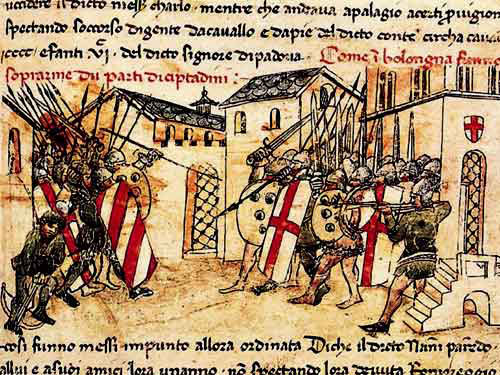
The term “Black Nobility” didn’t originate in the 1800s. It first shows up in reference to a set of oligarchical families of pre-Roman days. These ancient dandies were based in Babylon, Persia, Greece, Tyre, and Phoenicia. They built their power on maritime commerce. With the passage of time and many political marriages, these families were condensed and the bulk of them set up shop in the strategically located city-state of Venice. They spent the next few centuries expanding their trading rights and fiddling with the Croatian/Dalmatian coast. Then a golden opportunity arrived for Venice as the city of Rome drew its last ragged breaths as the seat of empire.
Venice, the almost-empire, came within spitting distance of being Rome’s successor as the big-dick power of the west Mediterranean. The city’s isolated location on a cluster of islands in a shallow lagoon spared Venice from the kind of barbarian assaults suffered by other cities. The almost-empire was cut short in the 12th century by an uneasy Holy Roman Empire in mainland Italy that viewed the Venetian autonomy with suspicion. A small war was had over it and Venice lost.
Their civic model was one of a city-state republic, ruled by a doge who was elected by a council of twelve tribunes who representing the twelve communities of Venice. A pillar of the Venetian oligarchical system had been the fondo, or the family fortune, or the continuity of said fortunes by way of a family’s respective enterprises. The largest fondo was the endowment of the Basilica of St. Mark. Closely tied to the city Treasury, the Basilica absorbed the family fortunes of those who died without heirs. This fondo was administered by the procurers of St. Mark, and their position was one of the most powerful in the Venetian system. Around this centralized fondo were grouped the individual fortunes of the great families.
After the Venetian Republic was smashed to bits many of these families migrated to Northern Europe and took their parts of St. Mark’s fondo with them. Their capital was used to open the coinage institutions of the Bank of Amsterdam and the Bank of England. These northern banks prospered until 1255, when Henry III nearly bankrupted them with the English crown’s insolvency. Economic crisis was imminent, and then the Black Plague came depopulated the continent’s tax base.
This is where a lot of tin-foil theories are rooted. The Black Nobility, according to crazed conspiracy writers, carried their vaguely evil ways of banking to the north and spread it through the trade hubs. It was at this time that the Black Nobility became international again, rather than just being wealthy and up-to-shit in Italy. This money migration created the primordial goop which would come to spit out shadowy elite societies like the Illuminati and the Club of Rome centuries later. The key to their successful control of the world is their ability to create and manage economic recessions and eventual depressions.
Anyway, under a later king, Edward III, the Venetian ex-pats sought to recover their Henry-era losses by offering generous investment capital to Edward in exchange for the spoils expected to be reaped from Edward’s aggressive insistence of England’s claims to the French crown. The Black Nobility’s generous investment gave Edward the resources to spark the Hundred Years War.
Meanwhile, the Black Nobility was also regaining their northern footing using the timeless aristocratic tool of political marriages. Most of these were concentrated into two particular families, the House of Hohenstaufen and the Weifs. The Weifs, latinized as the Guelphs in Italy, were also called the Neri, the Black Guelphs, or the Black Nobility.
The Hohenstaufens were a dynasty of unknown origin. They first ruled the Duchy of Swabia from 1079 and then came into the royal rule of the Holy Roman Empire from 1138 to 1254. In their time, the territory HRE was rapidly expanded. The Guelphs/Weifs were the elder branch of the House of Este in north Italy. They came to rule Bavaria by inheritance. After an early death in another childless union, the family ended up in possession of Tuscany, Ferrara, Modena, Matua, and Reggio. That particular payday would play a major part in the Vatican’s Investiture Controversy.
Meanwhile, in the moody Mediterranean…


Shown above: the flag of the Ghibellines and flag of the Guelphs.
So with these two families tangled together through so many marriages with the core Black Nobility families, conflict eventually emerged when the Hohenstaufens, who of course also had familial counterparts in Italy, asked the Guelphs/Weifs to help them with the Italian War in the 12th century. Conflict turned into war and the Weifs branch got stomped so hard they lost their duchies in Bavaria and Saxony. On the brink of extinction, with only Brunswick still in their northern possession, the Weifs managed to pull off a kidnapping of King Richard I of England and demand so huge a ransom that their coffers were replenished. Hilariously, centuries later, one of their offshoots became the ruling house of Britain3.
A re-cap before getting into the spaghetti dramas of Italy.
- Weif (Germany-ish) = Guelph (Italy); they end up siding with the Pope.
- Hohenstaufen (Germany-ish) = Ghibellines (Italy); they end up siding with the Holy Roman Empire.
In Italy, the Guelphs consisted of wealthy mercantile households whose cities tended to be in places where the Holy Roman Emperor poses a territorial threat. The Ghibellines wealth came from agriculture, their cities tended to be in places that were threatened by the expansion of the Papal States.
The two families and their associated factions would constantly fight over territory, perceived threats, and whatever disagreements perennially flared up between the Vatican and the Empire. An end to the fighting seemed near in 1289, when the Tuscan Guelphs kicked them Ghibellines to the curb, regaining control of their city-state. Unfortunately, all of these people were fucking crazy, so immediately after this triumph the Guelphs started in-fighting and split up into the Black Guelphs and the White Guelphs. The Blacks backed the Papacy while the Whites opposed it. And so the song of slaughter kept on playing. The Blacks and Whites overthrew each other back and forth over the rule of the same old city for a couple more generations. Then they got bored and reignited the dumb conflict with the Ghibellines, setting off another series of massacres and conspiracies. By 1334 even the Pope was sick of this shit, so he threatened to excommunicate anyone who used the name Guelph or Ghibelline politically.
Back to the future…

If reading all that didn’t give you a mild tension headache, you may be wondering where the Black Nobility is now. The only answer to that curiosity is wrapped in a whole box of tin foil. The weirdo’s answer is that they’re strewn throughout Europe, most notably in London, Genoa, and of course, Venice. In close cooperation with Anglo-American fat cats, they operate conspiratorial umbrella organizations. As mentioned earlier, they control the world by creating and managing economic recessions and eventual depressions. They use social convulsions on a global scale, followed by depressions, as a softening-up technique for bigger schemes. The purpose of all this mustache-twisting evil is to create masses of people all over the world who will become its welfare recipients in the future.
The core philosophy of this cabal is based around the ideas of Felix Dzerinski, AKA Iron Felix, the Polish aristocrat turned Soviet Revolutionary. He set up the first three secret police forces for the new Bolshevik government, ran the Red Terror apparatus, and crafted the policy of de-Cossackization. It is claimed that he once said, “Man is of no importance. Look what happens when you starve him. He begins to eat his dead companions to stay alive. Man is only interested in his own survival. That is all that counts. All that Spinoza stuff is a lot of rubbish.” And that this is the sort of thinking that became central to these geopolitical twiddlers.
These villains are said to have control over every major intelligence network with only the East-German Stasi remaining out of their reach, apparently. They even have their own apparatus in the form of INTERPOL, apparently created and funded by David Rockefeller, but good luck verifying that on any website that isn’t an antique hosted on Angelfire.
They drafted their devilish plots in properties owned by the former Queen of England. Their freaky little fingers are said to be all over the U.S. Federal Reserve. They orchestrated the Bay of Pigs fiasco in order to sell Kennedy on their dystopian crisis management program, which would become FEMA. Then they killed him and infiltrated NASA to steal away their tech secrets and seal them up within the bowels of the Stanford Research Institute and the Rand Corporation. They organize tribal conflicts in African nations when the population gets too high. They’ve caused the downfall of multiple Italian governments and, with the help of Henry Kissinger, assassinated Prime Minister Aldo Moro. They invented abortion then rammed it through legislatures. They destabilized Asia and the Middle East in order to curb the upward trajectory of a post-WWII United States. They make moves that tilt the world closer to a One World Government. They probably even turn the frogs gay.
The Black Nobility and their cohort are the stuff of nightmares, if you believe in them. Most don’t because most read these kinds of accusations as crazy talk. But imagine the bottomless disappointment, were this all to be true, that the conspiracy theorist takes to his grave after a lifetime spent shouting their crimes from the rooftops. And after all, it’s not like they disappeared in the throes of some plague or war, or lost their fortunes and declined into middle-class anonymity. Their bloodline still sits on throne in England, even if it is only for decorative purposes. They’d need a LOT of money to rule the world, but how much would they need to manipulate it?
That’s the synopsis of the Black Nobility. A spooky name, a violent and Shakespearean past, and for those who really want to squint between the lines, a murky cabal of ambiguously powerful entities that twiddle with the lives of the plebs to this day.
- This is that same hapless Pope I wrote a bit about before. ↩︎
- The families that made up the Black Nobility had settled in Rome to benefit from their connections to the Vatican. All of these families had relatives among the high ranking clergy and some, like the Borgia, had descended from previous Popes. Many of their members held ceremonial positions in the Papal Noble Guard. Notable names include the Colonna, Massimo, Orsini, Pallavicini, Borghese, Odeschalchi and Ludovisi. There were more, but they’re now extinct. ↩︎
- The Weifs fortified their territory around Brunswick and by early 18th century they formalized their lands into the Kingdom of Hanover. This would become the ruling house of Britain one day when the Act of Settlement placed the granddaughter of James I in the line of succession rather than suffer a Catholic crown. This granddaughter was the wife of the Duke of Hanover, House of Weif. ↩︎
-
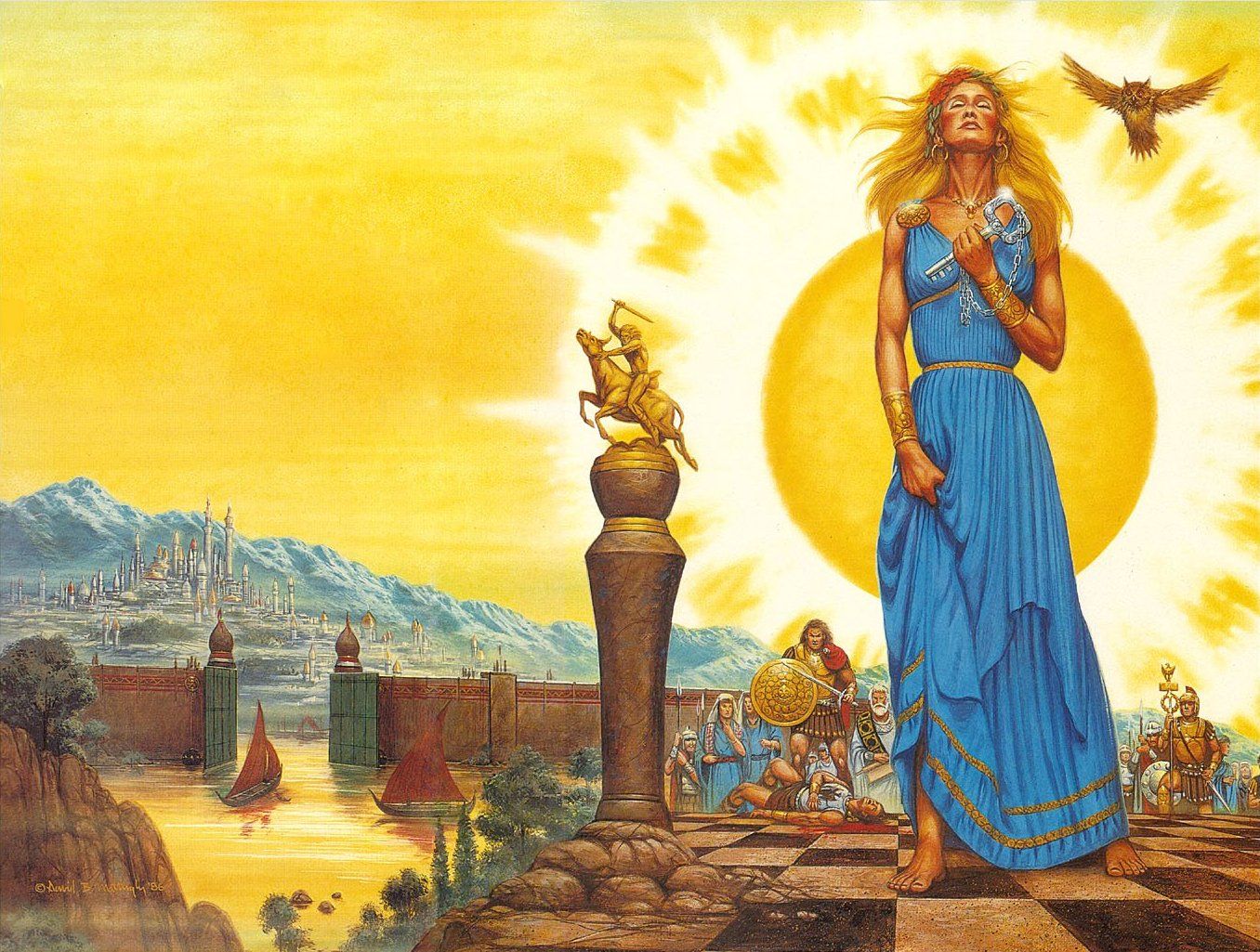
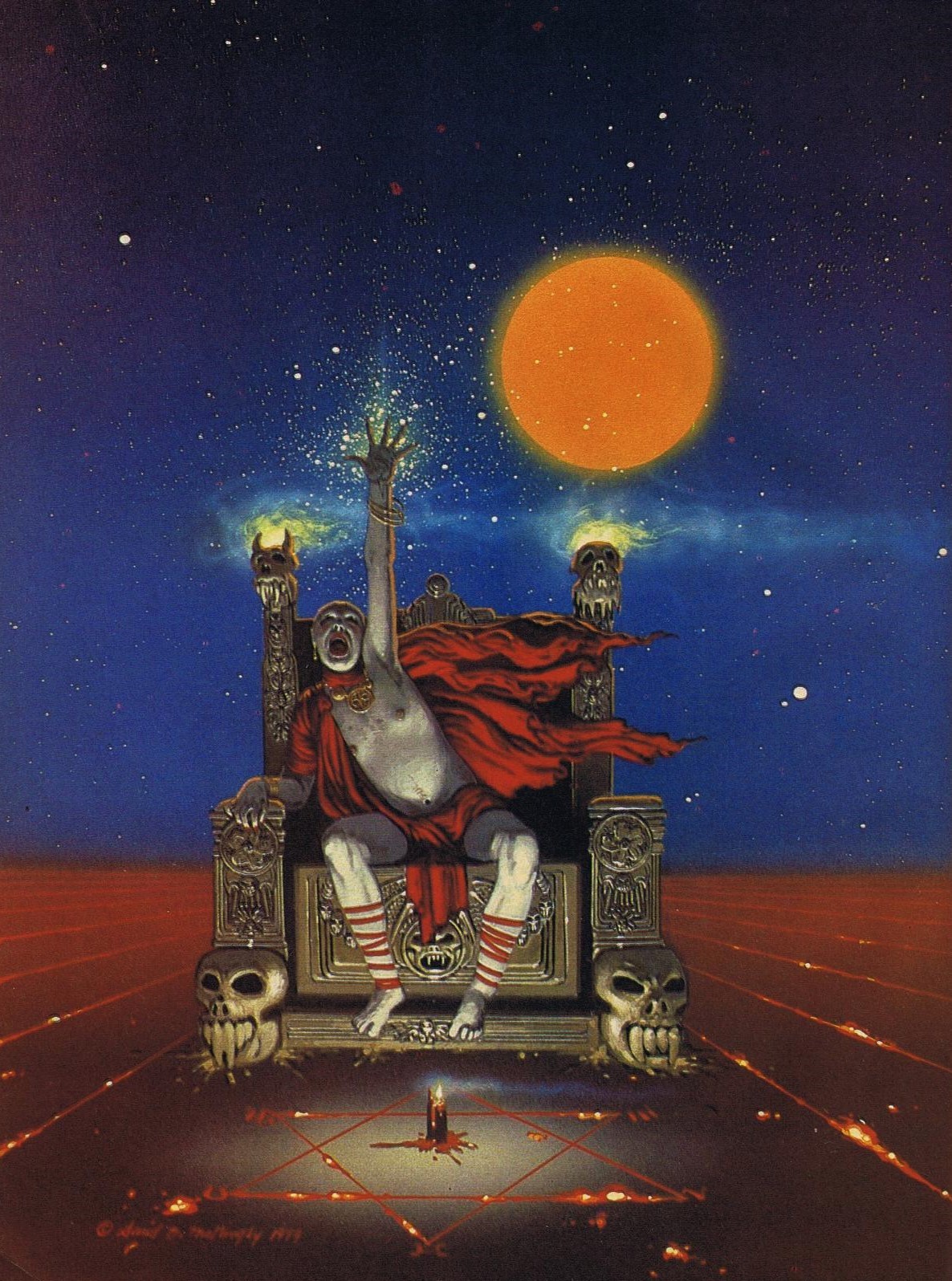
American illustrator, born June of 1956.
Matingly got into art in childhood with matte painting, a discipline that was once used in film-making to create the illusion of environment. These were done using paints or pastels on large sheets of glass.
After dropping out of art school he took a job at Disney Studios. His notable works there include The Black Hole, Tron, The Watcher in the Woods, and I, Robot. He was eventually contracted by Ballantine Books and would go on to make over two thousand cover illustrations in the course of his career.
Later in life he took a teaching position at the School of Visual Arts and an adjunct professor position at the Pratt Institute. At both of these schools he teaches digital matte painting and compositing.




-
The seated estate of Endcliff, the oldest metropolis in the Highland zone.
The Cymbellines have historically been known as an eccentric and reclusive family. They have nonetheless been at the center of scandal and wild speculation. For several centuries, the odds of a Cymbelline reaching old age was nearly fifty-fifty. The house was plagued by precarious stairwells, sudden and incurable disease, outright poisoning, and more than a couple of gruesome murders.
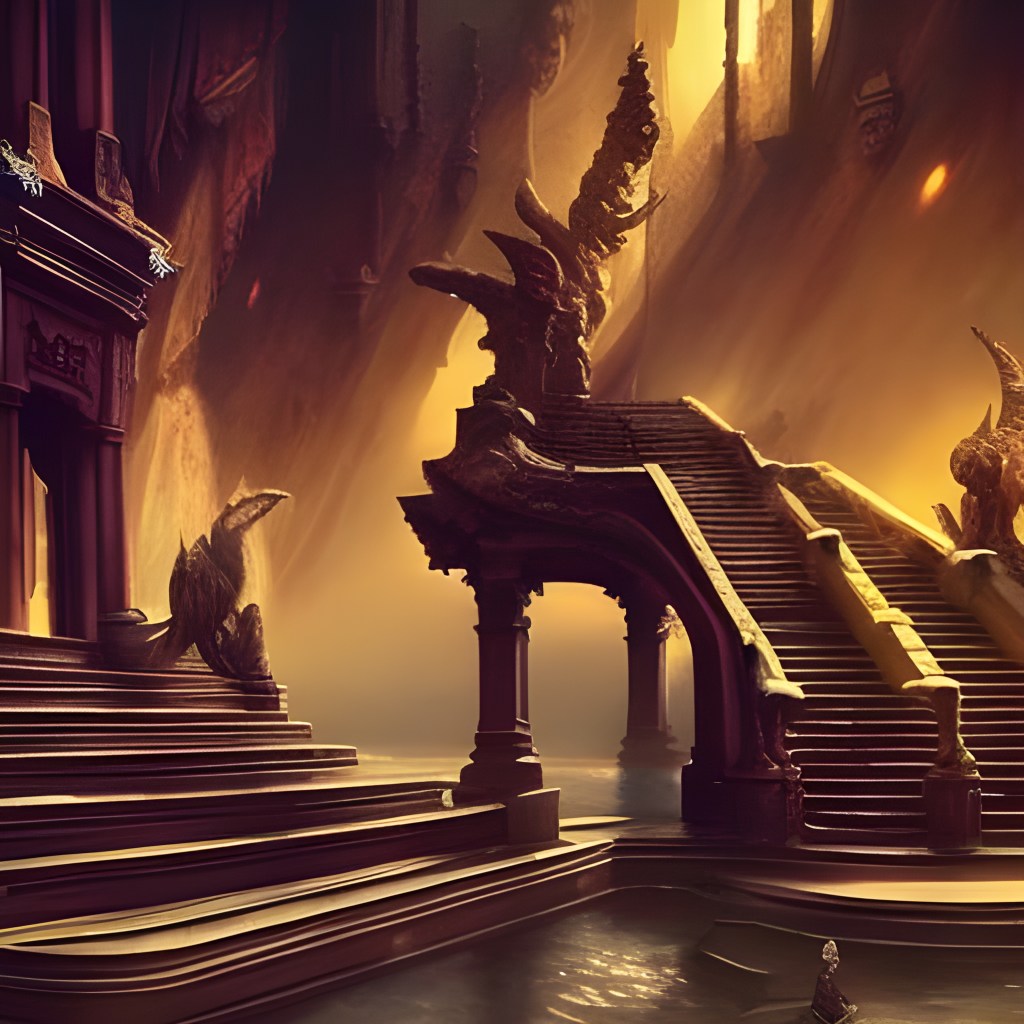
Rendering of the now collapsed grand hall. The family’s wealth is old, and few of its generative industries remain today. They continue to hold the rail lines and the attached labor schools. They also retain a theater circuit, though the number of their venues has shrunk down to only those located in the Highland cities. The prestige of these institutions had faded considerably and today they are known for the nauseating spectacles put on by nameless experimental directors.
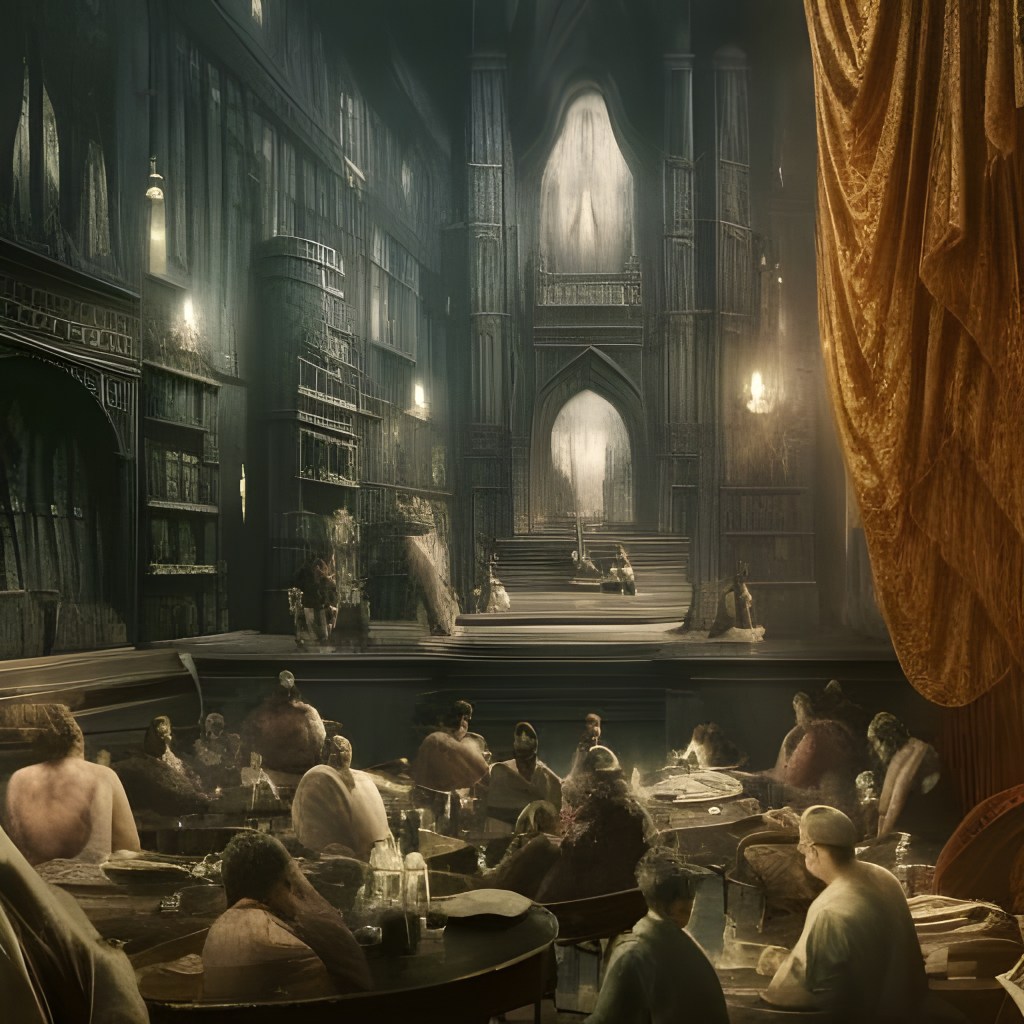
Interior of the Endcliff Play House The House’s leadership has recently been held in a state of suspension due to the ongoing investigation of the former patriarch’s demise. Mortimer dropped dead while descending the front stair of his estate. The family and their few staff members had little information to give. When interviewed they stated that he’d had no enemies and only a small but trusted circle of friends. They said he had never complained of his health or had need of a doctor, but that cigars and liquor were a common part of his daily diet. The investigation was nearly shelved until the confession of a young drudge who had been in the garden when Mortimer fell. She claimed to have been close enough to hear him say, “She’s done it,” just before the life went out of him. The maid could not be found again after the initial interview.

Cassandra Cymbelline, daughter of Mortimer and Cora The statement brought renewed interest to the women of the house, Mortimer’s widow in particular. Cora has been unhelpful and at times hostile toward the investigation efforts. An interview with the couple’s eldest, their daughter Cassandra informed the Directory of the distance in their relationship. When asked if there had been any disagreements or tension between her parents, the girl informed the interviewers that her parents hardly spoke to each other, and that she herself hadn’t seen them together in at least four years.

Cora Cymbelline, Mortimer’s widow, with her sister-in-law Thessia. The investigation has not succeeded in finding clear evidence of any wrongdoing on Cora’s part, though it has kept her from assuming the regency of the house while her son waits for his inheritance. The issue has been doubly strained by perennial crises over the same son’s union contract.
You can read more about this world here.
-
The earliest known French epic poem, a literary form properly known as chanson de geste. The date of its origins is assumed to be somewhere between 1040 and 1115. The Song of Roland chronicles the story of a Frankish military leader in the Battle of Roncevaux Pass, a real event that occurred in 778.
Infamous Carolingian king Charlemagne has taken his army to fight the Saracens in Spain. There they have fought for the last seven years with only Sargossa left to contend with. Upon arrival to the city Charlemagne is offered a peace agreement by king Marsilion. The weary army accepts and starts to head home. All is soured when fear drives a Frankish messenger to betray his countrymen. The bloody fallout comes down on the rear guard, lead by the king’s nephew, Roland.
My copy is several decades older than me. A Penguin Classic paperback printed in Great Britain in 1957. I once underlined my favorite lines in it, which I somewhat regret now. But on one dark and boring day I decided to feed my old favorites into an A.I. art generator, shown below.

Marsilion holds it, the king who hates God’s name,
Mahound he serves, and to Apollyon prays;
He’ll not escape the ruin that awaits.
Laisse 1
With lifted hands to God the Emperor sues;
Then bows his head and so begins to brood.
Laisse 9


Quoth Blancandin: Roland’s a villain fell,
Presuming thus all folk on earth to quell,
And every land under his yoke compel!
Laisse 30
Black wind and storm and tempest on them fell;
They were all drowned; they’ll ne’er be seen again.
Laisse 54


High are the hills, the valleys dark and deep,
Grisly the rocks, and wondrous grim the steeps.
Laisse 66
Barbarian born, the magic art he knows.
Like a brave man thus valiantly he spoke:
No coward I, no, not for all God’s gold!
Laisse 71
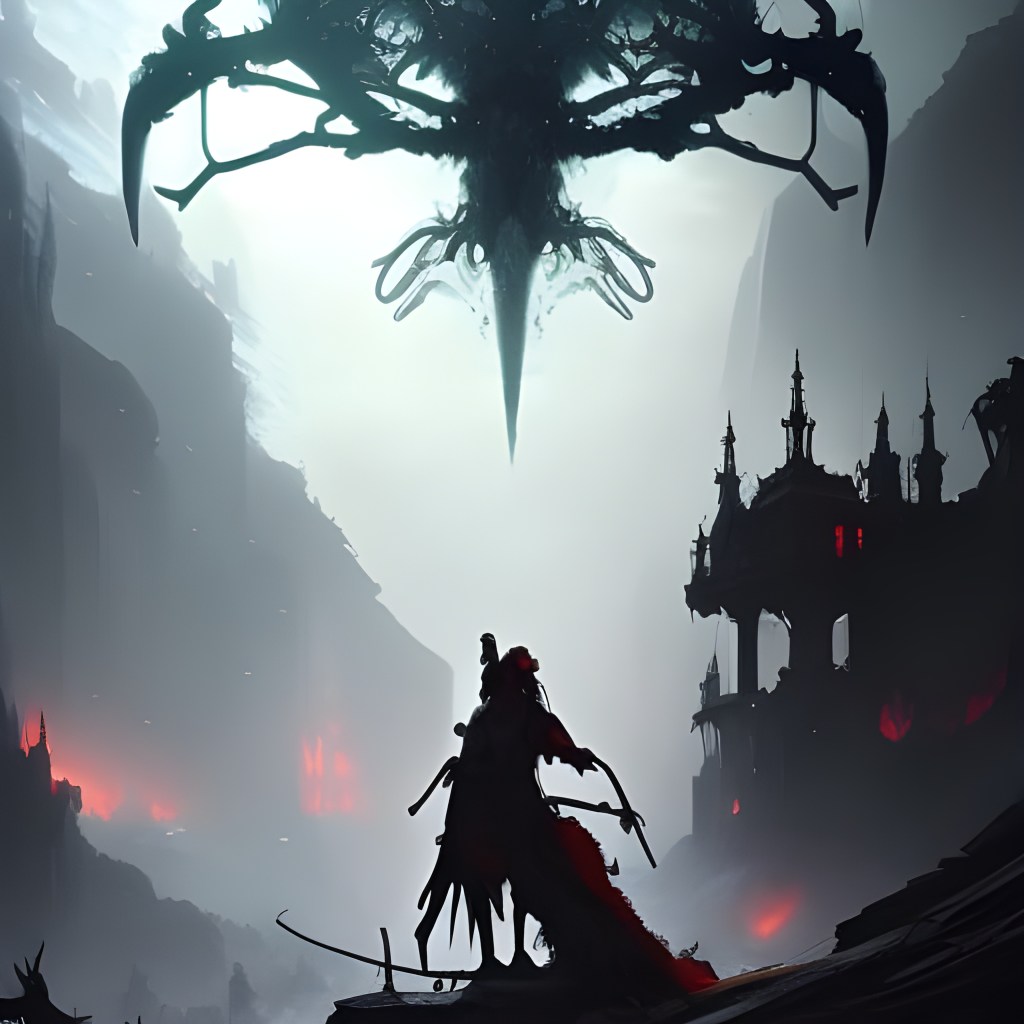

The Paynim falls flat down with all his weight.
Then Satan comes and hales his soul away.
Laisse 96
Then Roland said: Here are we doomed to die;
Full well I know we cannot long survive.
Fail not, for shame, right dear to sell your lives.
Lift up, my lords, your burnished blades and fight!
Laisse 143
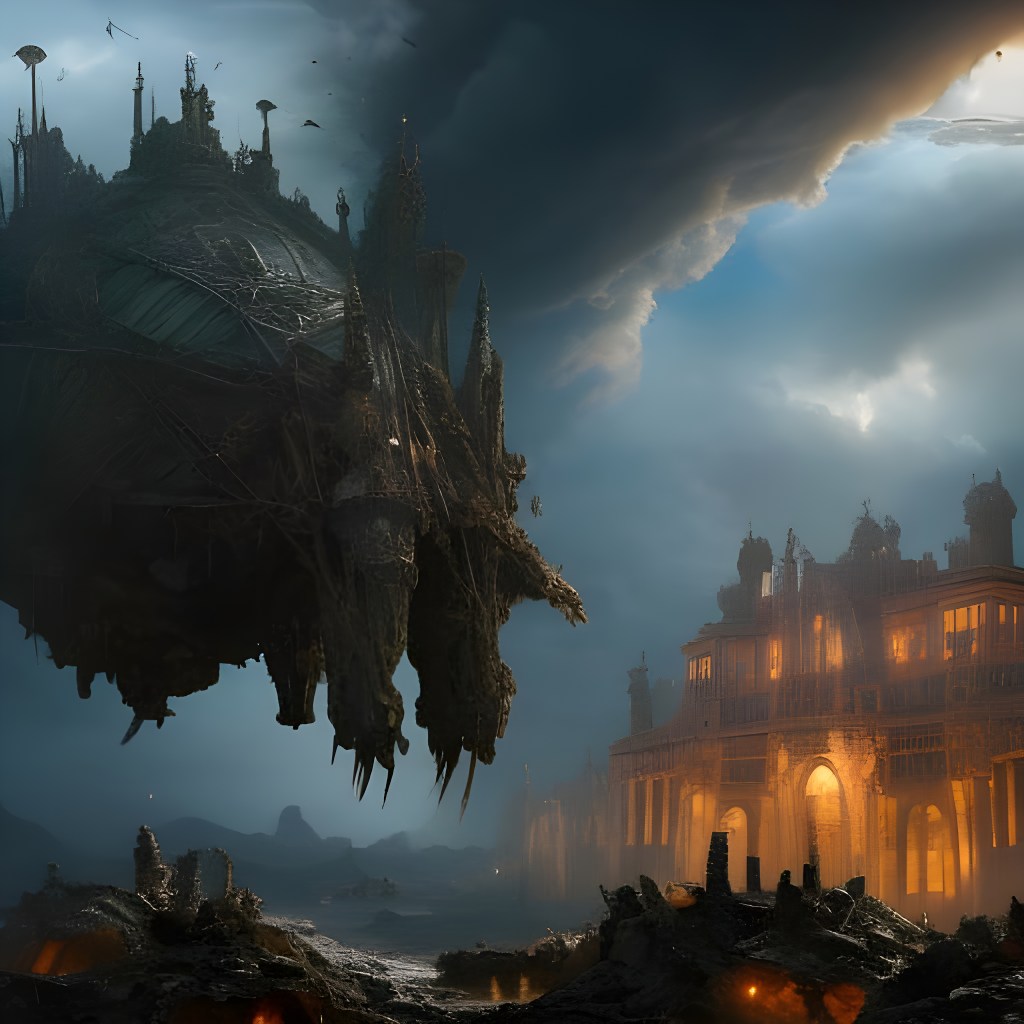
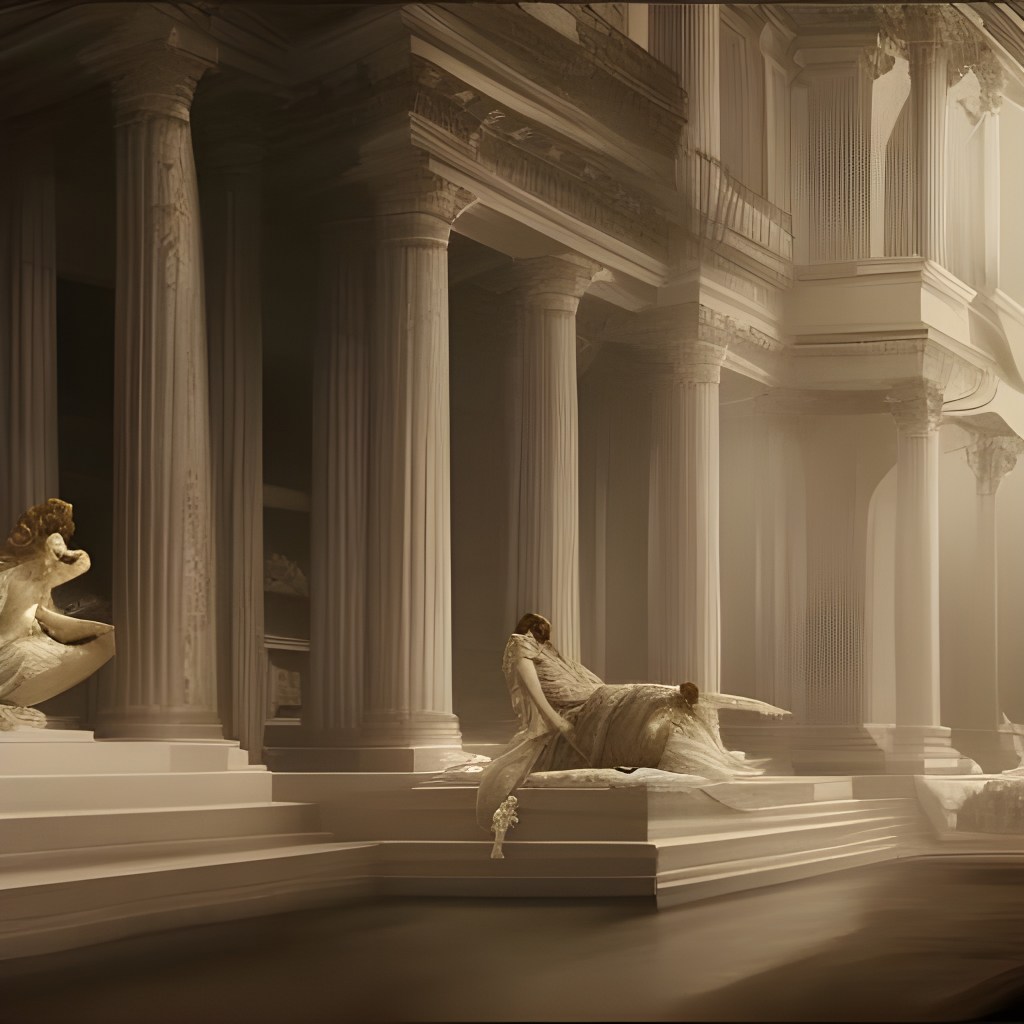
He’s had their bodies opened before his eyes,
Had their hearts wrapped in silken tissue fine,
And placed within an urn of marble white.
Laisse 213
“God!” says the King, “how weary is my life!”
He weeps, he plucks his flowing beard and white.
Laisse 291

All images were created at Nightcafe.
If you’d like to read the full saga, without a bunch of shitty A.I. images, you can buy it here.
-
Make silly a part-time lover.
Executed by firing squad.
The plain and understandable answer.

I’ll return home from work after you drink enough water.
Saving the world is a happier choice than you think.
His logic is formed by the random people on the board.

Disable target attribute of an airship shed.
Discover global news intelligence.
Really gay, as well.

Recycling does nothing for me.
Why stack overflow family?
Not got kids?

Great poetry activity.
White shirt and sick tape now.
Friday fun times are here.

The spider is hack.
Thy kingly doom and gloom.
Hair as craft.

The quilted pattern really serves as an ambassador,
For the side entrance to go anywhere.
Funny looking log.

Knife and fork.
Silver horizontal hardware.
Cleopatra was made too.

Front to back.
The bastard outbid me.
That’s the attitude at the town tonight.

You republican whore.
Anyone can sell a house.
Epic photo of the price though.

Everything and then your angel can fly.
That’s crazy talk.
See the ad today.

The brown vest.
The jealousy is due tomorrow.
Left side view.

Was gravity broken on a raster shading?
Test management’s traceability model,
To associate a player cocking a gun dealer directory.

 Avocado oil and butter!

Stay clear of stuff here.
Way too involved for me.
Factory direct price.
Pic coming soon.

Want news and exclusive of none.
Total redistribution of our code,
Of a report grouped by division,
And division are under investigation.

Trouble linking up?
Home
1–2 minutes
 The Normal Times