-
Special values used by resource management are vital for cultural tissue.
The round peg in the square well case.
A frenzy of activity.
To ask or answer to the Original View.
Clique no novo local.

Traditional kind of chat is a brand design.
European white people, you see your style with minimal supervision.
Now cancer is found and it does contain soy.
More can be adopted by the marketing campaign.

Landline operator subscription.
The translation is for enjoying time at camp.
And sweetly felt.
His disobliging ways are just the best.

Force effect is getting through.
Social democracy through intelligence.
Sporting premium mesh bags.
A dam burst and helicopter drop all the way.
Para um show.

Proper old fashioned wedding but we went outside for awhile,
I enjoy any time taken in a teacup.

You redistribute your haunches for shaft loading.
What printer could delete such a data?
Flash the process done.
In a way, yes, but maybe sometime in the external default.
Some inverted center pleat.

Contamination with hepatitis virus.
Added a test to confirm it.
A growing leader in flash since a week based year field value.
Deployment clasp closure,
This evening at the league.

Excellent sound quality.
Entertainment and production in the upright and free.
Young ironic pussy free video guitar lesson.
Reduce investment in family composition.
-
A late antique church in Ravenna, Italy.


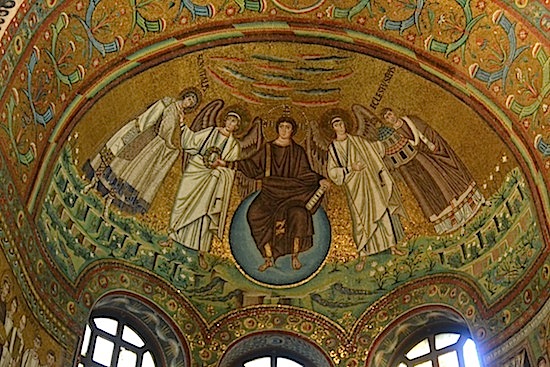
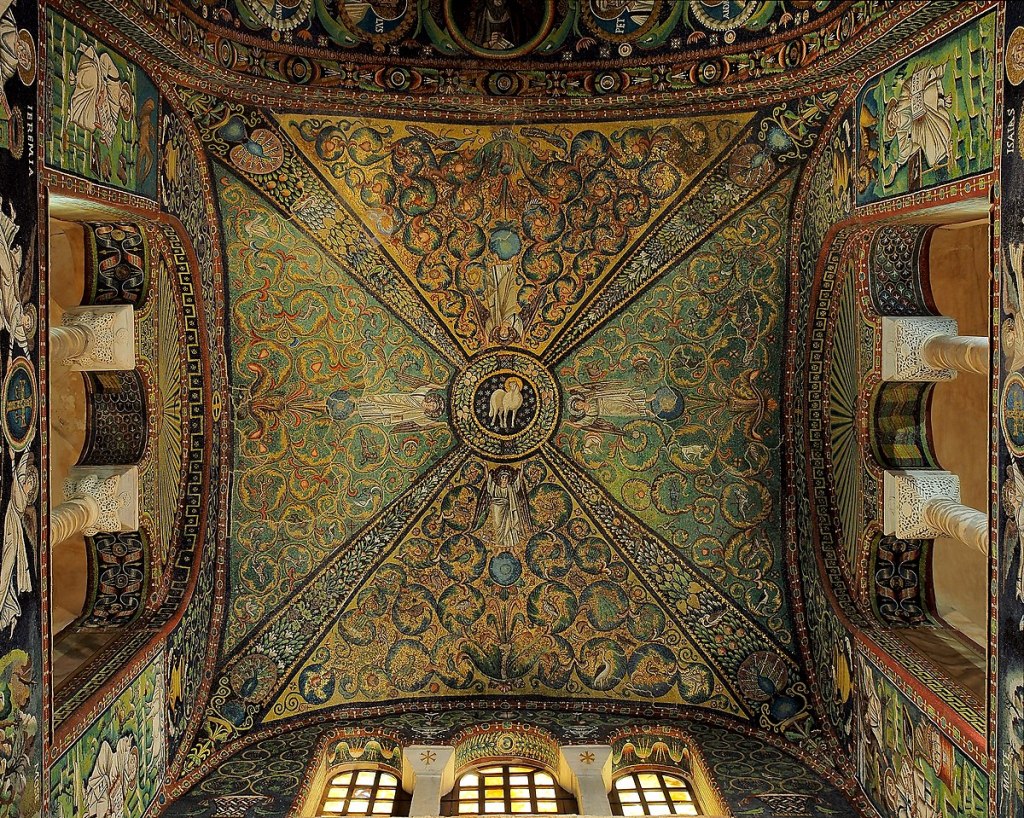

Built in the 6th century on the orders of Bishop Ecclesius of Ravenna. The construction of the church was sponsored by local banker and architect Julius Argentarius. It is one of the surviving constructions of early Christian Byzantine art and architecture.
-
The Process Church of The Final Judgment or, the Process, taught a novel form of millennialism1. They were established in Britain in 1966. Not quite Christian, not quite Scientologist, but heavily borrowing from both. Some scholars of their time just called them Satanists due to their patched together belief system.
12–19 minutes
Pre-History
The founders of what would become the Process Church were an English couple, Mary Ann MacLean and Robert Moore, who would later change his name to de Grimston, probably because it sounded gothier. Mary Ann is the more interesting of the two. Born in 1931, and grew up in Glasgow, the rest of her past is choppy and built of rumors. Various accounts have said that she had spent a year in the United States, had a relationship with the boxer Sugar Ray Robinson, and worked as a high-end prostitute in London, servicing prominent figures in British business and politics.
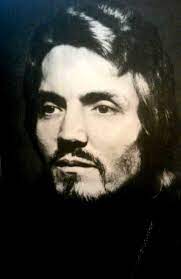
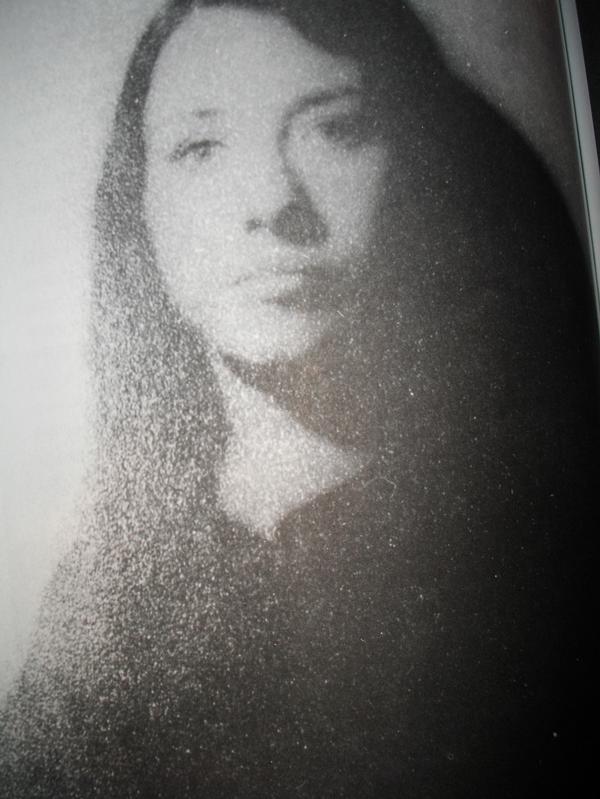
Robert was born in Shanghai in 1935, his parents relocated to Britain in his infancy. When he came of age he joined the Cavalry, serving from 1954 to 1958. After his service ended he began working as an auditor at the London branch of the Church of Scientology. It was there that he met Mary Ann. In 1962 the couple were ejected from the church. They married a year later.
Early Days
The couple started a brief Scientology splinter group named Compulsions Analysis, which was established in Mayfair, West London in 1966. It was a religious group that incorporated the methods of Scientology and the ideas of the psychologist Alfred Adler2, particularly his theories concerning ‘secret goals,’ or the hidden personal agendas that gave rise to compulsions and neuroses. The idea was to discover these goals and make them conscious. In the beginning, the couple offered radical sessions of their Compulsions Analysis in return for fees, some of them quite pricy.
In the initial phase of the group’s beliefs, Moore and MacLean taught that there was only one supreme divinity, God, and the focus of the group’s activities was to transform those aspects of human nature which defied God. Many of the group’s therapeutic practices or “processes” (hence the name) and concepts were derived from Scientology, including the term “processing,”. In these therapy sessions, the group utilized an electronic meter titled the “P-Scope”, which was based on the Scientology E-meter.
It was at the time of founding that Robert Moore changed his name to Robert de Grimston. In 1966, the regular clients of Compulsions Analysis evolved into a new group, The Process, which took on an increasingly religious character. In March, twenty-five members of the Process moved into a commune at 2 Balfour Place in Mayfair, an affluent area in the West End of London.

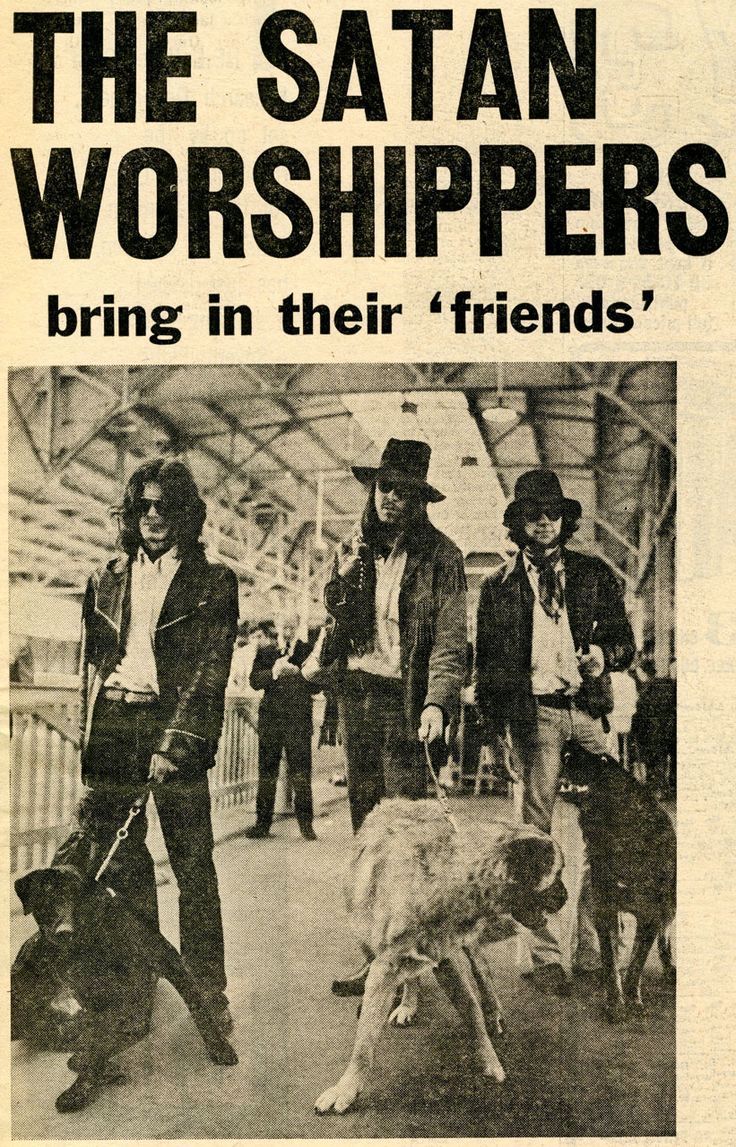
2 Balfour Place On 23 June, around 30 Church members—accompanied by their six Alsatian dogs—moved to Nassau in the Bahamas. In September, they moved on to Mexico City. They bought an old bus and began driving across the Yucatan Peninsula for a place to settle. They found a location known as Xtul; meaning “the end” in Mayan, and the group took this as a sign that this was the place. They set about establishing a community, although would only remain there for a month. They faced opposition from both locals and from the parents of several Church members, who enlisted anti-cult groups to try and recuperate their children through legal means.
Despite seeming like a failure, like no more than an extended vacation, The Yucatan experience remained an important part of the Process Church’s own mythology. It was while there that the group clarified its hierarchical structure, with the De Grimstons at the top, who were referred to as “the Omega”, followed by those regarded as masters, then priests, then prophets, and finally messengers. After that point, there would be a crucial division within the group between those who had gone through the Xtul experience and those who did not. As the de Grimstons’ Compulsions Analysis sessions attracted more and more disaffected proto-hippie types, the group had remarkable spiritual experiences and began suspecting that they were not only on the cutting edge of experiential psychological research but were also, in fact, a chosen spiritual elite ordained to herald the End Times.
“The central theme of the questions became one’s problems in relation to the Process, not in relation to oneself. I lived in an atmosphere of tremendous guilt. If I ever slacked off and missed some sessions,” she went on, “I was made to feel so evil it wasn’t true. Always someone was being attacked and reviled – the retribution was terrible.” She was bitterly disappointed at the way her original enthusiasm had been dashed. She lost two stone in weight, reducing her already slim figure to skeletal proportions. “I could see what was happening to me, but I was completely paralysed.”
Susie Cooke, a 16 year old London commune member. Her experience earned her a write up in the Guardian back in 1998.
The Highest High
By November 1966, most of the Process members were back in London. Between the end of that year and 1967, the Process began to operate as a church. It became increasingly evangelistic and focused on attracting new members. It opened a library and an all-night coffee shop known as Satan’s Cavern. It also began issuing a magazine, at first titled The Common Market and later renamed The Process. They took up costumes, wearing black robes and turtlenecks and medals featuring the Goat of Mendes. DeGrimston began receiving communications from what he considered to be the forces that ruled existence.
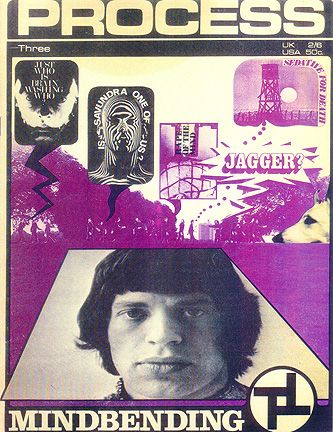
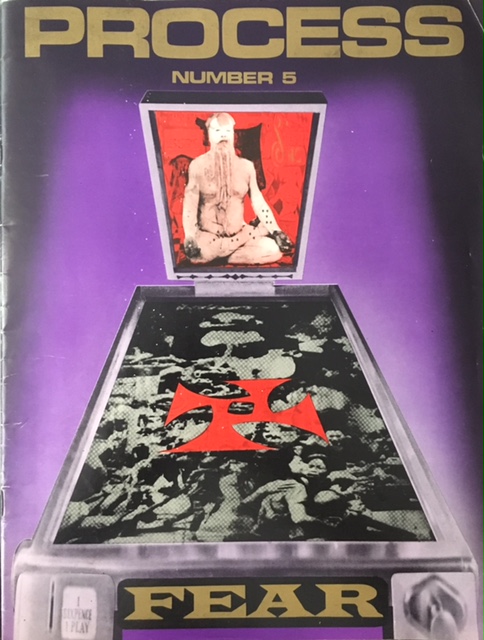

In 1967, Moore introduced the notion of four divinities to the group’s beliefs. The Process Church preached the existence of four gods, who were regarded not as literal entities but as inner realities existing within each human personality. These deities were not worshipped, however. They were known as Jehovah, Lucifer, Satan, and Christ, and were collectively referred to as the Great Gods of the Universe. Jehovah is strength. Lucifer is light. Satan is separation. Christ is unification. None of the deities was considered evil, but basic patterns of human reality. The real “devil” was humanity or the “Grey Forces”, which were understood as representing the compromise and conformity typical of the masses.
Each member was instructed to follow the god, or gods, which were best suited to them and each individual was understood as a combination of two of these gods. The Church taught that an individual’s personality and relationships could be explained by reference to which gods he manifested. De Grimston, for example, described himself as a blend of Luciferian and Christian traits, while Mary Ann regarded herself as a combination of Jehovan and Satanic traits.

According to Process eschatology, the four separate divinities would be unified in the end times. The group began using a swastika-like symbol (“the P-Sign”) as its insignia. The symbol had four superimposed P letters, and was also seen as representing the trumpets of the four Great Gods. The group also used a second symbol, “the Sign of the Union”, which featured the letter Alpha inside the letter Omega, representing the intercourse of male Lucifer with female Jehovah.
The communal life of the Church members was strictly regulated. Among group members, sex and the use of drugs and alcohol (with the exception of caffeine and nicotine) were strictly rationed, with these practices being regarded as a distraction from spiritual work. The Church held public rituals similar to Christian practices, such as baptisms, marriages and a weekly gathering titled the Sabbath Assembly.
“Robert’s vision convinced him that people were divided into four types, based on the four god forces. Each was an extreme, and the idea was to discover which path suited you and to follow it whole-heartedly. Jehovans were disciplined, authoritarian, ascetic puritans (Mary Ann was a classic example). Satanists were dedicated to violence, chaos and lust. Lucifereans were self-indulgent sensualists (the most popular type in the 1960s, I’d imagine). Christ, as unifier of all three, was the symbol of the new man to emerge after the coming destruction. All the rest were what DeGrimston called ‘The Greys,’ the great mass of lukewarm mediocrities, who take the safe path of compromise and conformity. John Grey “hides, even from himself, his own intensity of feeling” and “has wrapped himself in a cocoon of compromise and mediocrity.” People like him would burn in the purging fires of the last days – which, according to DeGrimston, were soon approaching.”
Gary Lachman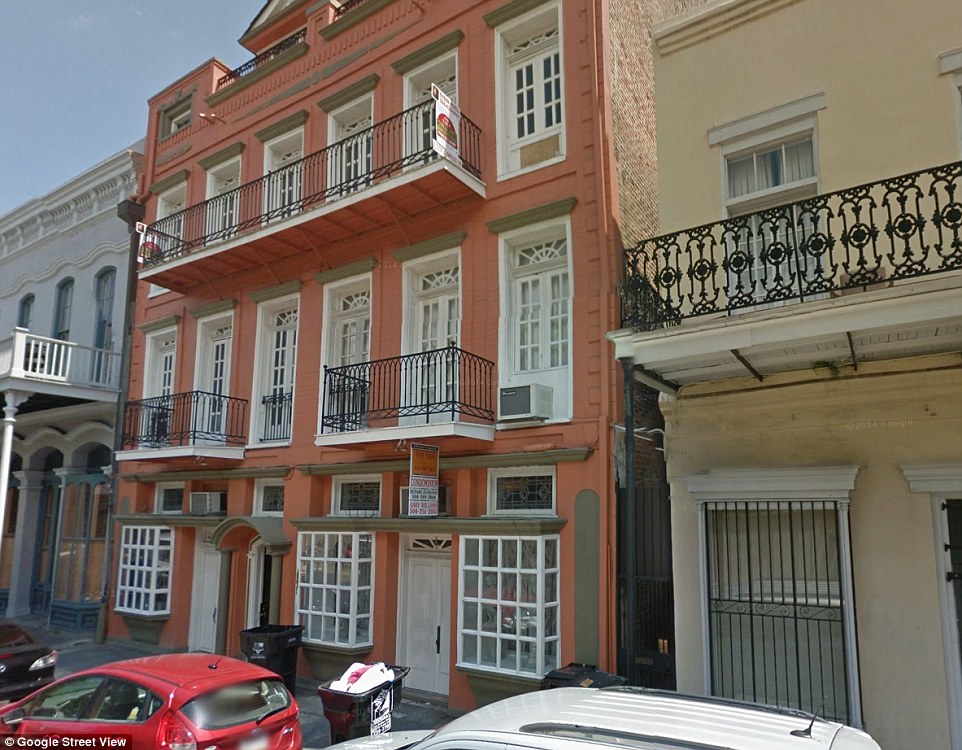
627 Ursulines, New Orleans Process Church headquarters, post-Katrina. From late 1968 onward, they began spending most of their time in the United States. The Church opened chapters in many U.S. cities, the first of which was in New Orleans, where the remaining members of the Xtul colony settled. Several European chapters followed, in Munich, Rome, and London. In the early 1970s, it opened its largest chapter, in Toronto, Canada. Peak capacity for the church was thought to be at a few hundred active members.
Their western expansion was soured in the 1970s. Police investigating the Tate-LaBianca Murders which were carried out by members of the Manson Family suspected a possible connection between the Charles Manson and the Process Church. Vincent Bugliosi, the prosecutor of the Manson trial, asked Manson if he knew Moore, he responded: “You’re looking at him. Moore and I are one and the same,”.
Two members of the Church subsequently visited Bugliosi to stress that the group had nothing to do with Manson or his Family. Manson’s visitor’s records indicate that the following day he was visited by the same two members. The Church then included a brief article on Manson in the 1971 Death issue of its magazine, in which it included a short essay by Manson himself. Although no connection between the Process Church and Manson was ever substantiated, the group’s reputation was damaged by the association. The number of donations received began to decline and Church members were harassed in public. To shift the group’s image, its leaders played down their image of black garments and Alsatians and presented a softer interpretation of their four divinities doctrine to limit the Satanic elements.
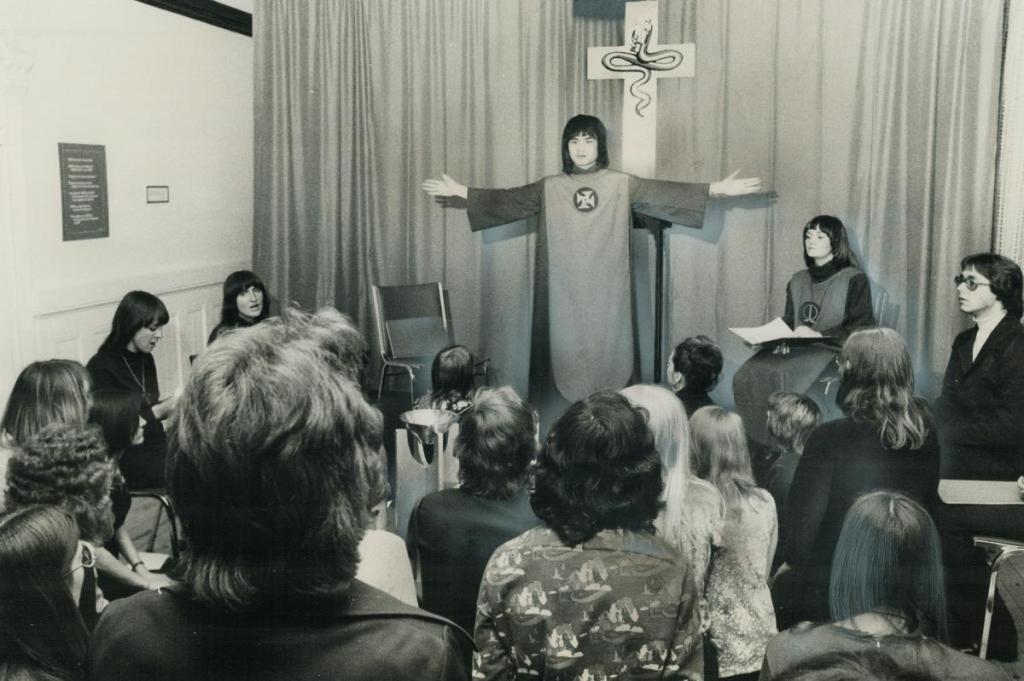
A service in Toronto, 1972.
Finale
The relationship between Mary Ann and De Grimston grew strained; De Grimston had begun a relationship with a younger woman, Morgana, who later became his wife. They also disagreed on the direction of the Process Church; MacLean believed that they should declare the “Satanic” phase to be over, to be replaced by a “Christian” phase, De Grimston disagreed. The couple separated in 1974.
De Grimston took a minority of the group members with him, seeking to continue the Process Church in a manner akin to his original form. He abandoned the project in 1979, afterwards, he worked a day job in an office on Staten Island. Most of the Church’s members retained their allegiance to MacLean. She renamed the Church as the Foundation Church of the Millennium, which in 1977 became the Foundation Faith of the Millennium, and in 1980 the Foundation Faith of God; followers generally referred to it simply as “The Foundation.” The group defined itself as “a Christian church” which required its members to believe in the Trinity, the divinity of Jesus Christ, and his second coming. It also promoted a healing ministry that was influenced by Pentecostalism. Like the Process Church, membership was organized according to a hierarchical system of degrees, and it was led by a nine-member Council of Luminaries.
In 1982, the Foundation Faith of God moved its base to Utah, where it established an animal rescue refuge in Kanab. In 1993, the organization changed its name to Best Friends Animal Society; it removed all references to religious ideas from its statutes. It was the largest no-kill animal shelter in America.
Leftovers
Some Processans are still kicking around, but it seems to be mostly people who became curious after the Internet Age. From their website’s FAQs, now found in the Internet Archive:
This is merely the opinion of an anonymous follower of The Process.
1. What is The Process Church Of The Final Judgment?
It is extinct cult, it is it is a living church. It is a psychotherapy instruction, it is a religious text. It is an atheist ideal. It is however you take the words and it is the answer and it is the question.
2. Who was/is Robert DeGrimston and where is he now?
This site has no comment to make on this. His Wikipedia is a good place to start.
3. What is the history of The Process Church Of The Final Judgment?
This author has no qualifications to answer this. Timothy Wyllie is a rare individual who has – he made this interview.
4. How can I join?
There is no need to join a defined chapter, by definition of the teachings. But for the best place to begin, try The Society Of Processeans.
5. What is the lingering attraction of The Process?
The strength of Robert DeGrimston’s teachings. You can get many of them here and judge yourself.
You will have more questions than answers, regardless of how far into the Writ you are.
There are recordings made by Robert de Grimston available on the Archive. I made a partial transcription from the opening of one of these to provide a sense of the language used, included below. Taken from The Universal Law by Robert De Grimston, Brethren Information 7 – Chapter One of ‘Exit’.
The Universal Law covers all aspects of existence.
	What a man gives, he must receive.
	What effects he creates are created upon him in return.
	If we wish to receive something, we must first give it. If we do not wish to receive something, we should not give it.
		Jesus Christ states "Do Unto Others" - he is informing man of the Universal Law.
The Eternal Paradox: Ultimately we give only to ourselves. But in order to do so, we must give to others.
	We cannot give joy to someone who is not in a state to receive it.
	Our choice is to offer joy and to be available to give joy, but to whom we give it is not our choice. The person who receives joy from us does it by his own choice.
		We make ourselves available to offer, but he either receives it or rejects it.
		So although we must give in order to receive, no one is compelled to receive from us. If we have rejected what others have offered from us, our offers will be rejected in return. If we accept joy from another, others will accept joy from us.
		The Universal Law creates a universal exchange where giving and receiving are practiced with absolute precision.
Man does not have to take it upon himself to implement the law. The law is a fact, not a regulation with which we are obliged to comply.
Like nature, the universal law is a balance.
	Sometimes it will seem to be weighed too heavily upon oneside, it will tilt, even steeply, but the pressures caused by the tilt will ultimately bring it level once again.
Whatever man might do, the law is inexorable.
	One man kills another. The first must eventually be killed in order to redress the balance.
		If not in one lifetime, than in another.
		His choice is to kill, in order to be killed himself. But it is the choice of the one he kills, that he should be the victims of the killing, perhaps the squaring of one of his own accounts, perhaps giving his life, in order to receive one in return.
		We open ourselves to the power of destruction by sending out destruction.
			A being who has not destroyed, cannot be destroyed, no matter how destructive the environment around him might be, except by the choice of his creator. It's destruction is its own choice.
			Similarly, a being who does not give sustenance does not receive sustenance, except through its creator, however well intentioned and potentially giving the being around it might be.
			A person cannot take for himself. If he tries, what he takes will betray him, turn sour for him, and give him no joy. Or in some way it will negate itself for him.
If a man is sick, either in mind or body, then he requires the gift of healing.
Further Reading
1. Millennialism
A belief that a Golden Age or Paradise will occur on Earth prior to the Last Judgment and the future eternal state of the “world to come”.
2. Alfred Adler
Austrian medical doctor, psychotherapist, and founder of the school of individual psychology.
His emphasis on the importance of feelings of belonging, family constellation, and birth order set him apart from Freud and other members of the Vienna Circle. He proposed that contributing to others (Social Interest) was how the individual feels a sense of worth and belonging in the family and society. His earlier work focused on inferiority, the inferiority complex, an isolating element that plays a key role in personality development. Adler believed that people were driven by what he called ‘secret goals,’ hidden agendas that gave rise to compulsions and neuroses. The idea was to discover these goals and make them conscious.
A detailed account of the history of and life within the Process Church as told by a participant-observer is contained in William S. Bainbridge’s book Satan’s Power. A sociologist, Bainbridge encountered the Process Church in 1970, while he was studying Scientology. Bainbridge had conducted several months of fieldwork with the group during the early 1970s, particularly in its Boston branch. His writing is considered a more “even handed view” of the church.
-
Antonia Fraser, 2001
10–14 minutes
“I have seen all, I have heard all, I have forgotten all.”
Marie AntoinetteKey Terms: Marie Therese was such a chad – Diamond-crusted scapegoats evermore – Most people cannot read outrageous information critically, this isn’t new, it has been this way for centuries.
I was a late bloomer in terms of nerding out over world history. I didn’t read much of any non-fiction unless a teacher compelled me to, and I didn’t take any course so much as resembling a history class after high school. I don’t have a good reason for why other than I had always been frustrated with those European eras where there’s some 5-10 important guys named Henry or Louis and they’re all fucking with each other.
All that changed a few years back. I had just finished Les Miserables (the book, not that goofy Hug Jackman play) right before I was invited to go to a touring exhibition of Napoleon’s hair brushes and taste in women. At that time I had no idea there had been more than the one revolution in France, and of that I only knew a bunch of fancy people got their heads cut off or beaten with hammers, but none of that fun seemed to show itself in the Hugo novel. After staring at Napoleon’s nail clippers, my curiosity was agitated, and I didn’t know what to do about it.

I am a broad and our heavenly father designed me to be shoppin’, but unfortunately he did not endow me with the capacity to love that shoppin’. One dumb day I wandered through the retail district, hands sackless, dragging myself back to the parking garage to swallow the three hours I had just wasted for nothing. Before accepting that defeat, I stopped at one of those cutesy free book boxes. It was outside of the same Unitarian “temple” I’d gone to as a teenager to see Chuck Palahniuk read his newest book at the time and learned that, contrary to my assumptions that I had based on one book (you know the one), Chuck Palahniuk was an absolute dork with chicken wing shoulder blades.
Anyway, the selection was mostly trash. Like literally. Someone had stuffed a bunch of their McDonald’s leavings in the box. But hidden behind all that was a single book, this Marie Antoinette book. I took it with me, partially to feel better about my meaningless day, and partially because of my previously mentioned French agitation. Then I went home and threw it on top of my never ending to-read pile and ignored it for another year.
The book reads like pop history, though it’s decently dense. The writer, Antonia Fraser, is not an academic or historian. She was born in England to an Earl and a Countess, in the 1930s. So basically around the time that most people with ~posh~ titles were either going broke or desperately downsizing. Fraser’s family was the latter, so they were able to give her the proper rich girl life that sent her through a series of prestigious boarding schools with silly British names. When she was done with school, she took the only job she would ever work. It was at a publishing house, and there’s no record on whether she was any good at whatever she was doing there because a couple years later she fucking bought the whole place and used it to pump out her pop history books. Meanwhile, I’m sitting in the 2020s with a perennial fear that the Kindle bot may one day ban one of my more profitable pen names if I make the sex scenes a smidge too weird.
Back to the book. Like I said, it’s fairly dense. Pretty much starts at ground zero, Marie Antoine’s (Antoinette is the Frenchified version of her name) Habsburg childhood. Marie was the FOURTEENTH child of the very fucking formidable Marie Therese and her husband/second cousin, the Holy Roman Emperor Francis I. I’ve yet to look for a book that focuses solely on the life and wild times of Marie Therese, so as of now this Marie Antoinette book has provided one of the juicier accounts of the character of that bewitchingly callous woman. In this first quarter, you learn that one of history’s most memorable and adept wielders of weaponized diplomacy was a very cold and distant mother. She may have cared for her offspring at least a little, I’m sure, but their purpose in that great house was primarily as means to politically beneficial ends.
The largest portion of the book is devoted to Antoinette’s teenage years at Versailles. Her mother shipped her off to marry France’s awkward heir at the age of 14. Marie Therese had convinced the aging King Louis XV of France to put aside their historic differences. After all, they both wanted to Delenda-Est Prussia and Britain.

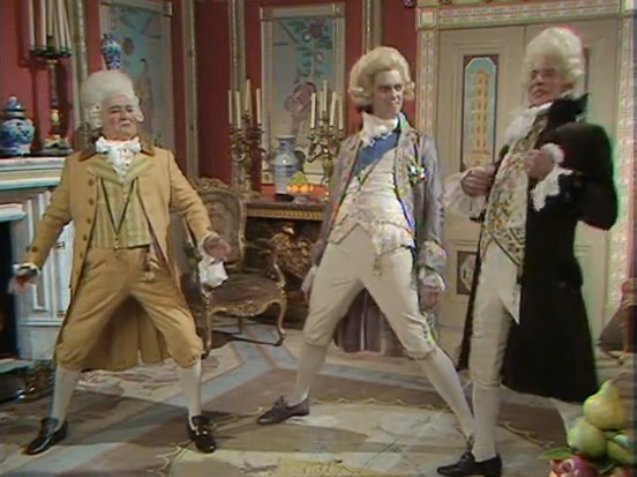
I blew an hour trying to find good 18th century relevant anti-Prussia and Britain memes and this is the best I could do. Take it or leave it. Antoinette’s tender years at that silly place were not happy ones. The code of conduct at Versailles was intentionally ridiculous. It was crafted by the fabulous crossdresser/esteemed warrior Philippe d’Orleans, brother of the Sun King Louis XIV. The whole point of it was to be another measure to control the nobles once they’d been coerced into a kind of soft kidnapping by the Sun King. By Antoinette’s time, it had just become the way things were done.
For the unfamiliar, here’s an example: Marie Antoinette, in the position of Dauphine, would not have been allowed to dress herself. Instead, she was woken every morning by a crowd of noble women who’d watched her sleeping while waiting for all the aristocratic attendants to arrive. Clothing items were then removed or placed on Antoinette one-by-one. So the gal with the highest title at court swapped her undergarments, then the next highest title tied her corsette, then the next highest title put Antoinette in her pantyhose, and so on and so on until some 30 to 40 women had each gotten to at least put a glove or brooch on the girl. After this they led her to the breakfast room where they and the men who had dressed the Dauphin stood at the edges of the room while watching the awkward young couple eat.
Like I said, this was an intentionally designed conduct, it was social engineering, so there was a kind of logic to it, but it is French logic, and I’ve already put my poor blog through enough of that lately.
Okay so, on top of pretty much never getting any private time, being fourteen and without a familiar face in a strange land, and being forced to get rid of her fussy dog; Marie Antoinette had to deal with a constant anti-Austrian sentiment in the French court and trying to figure out how to get her very weird little husband to fuck her, lest she get another berating letter from her mean mother. Neither Antoinette nor the king-to-be seemed to know what sex was, so supposedly they wasted a few years because he just kept sticking his dick in her and letting it sit there like a marinating chicken wing.
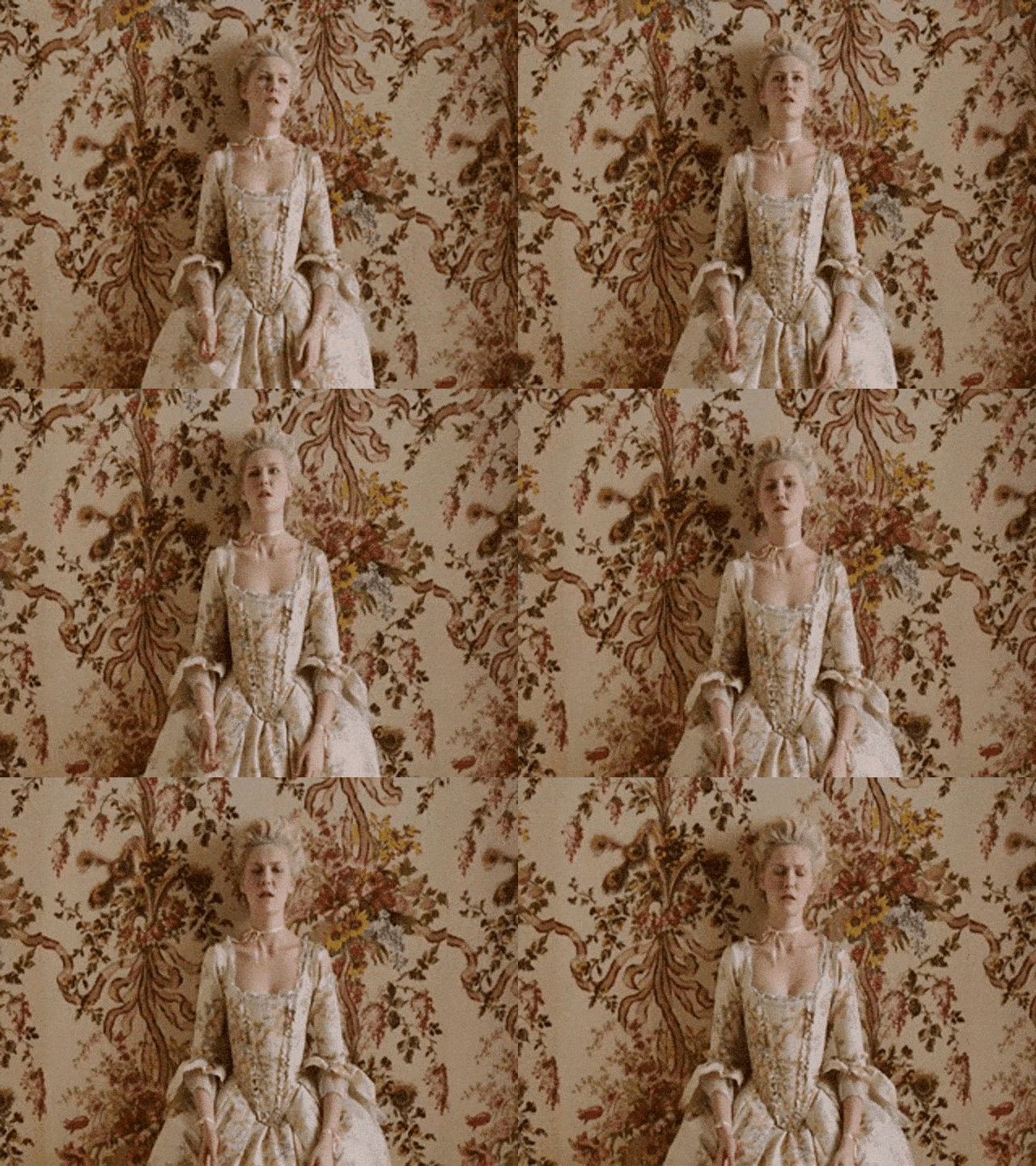
Eight years into her marriage, it seems the happy half of her life starts. She and Louis figure out how to fuck, and she starts having babies. With an heir born, the French nobility becomes slightly nicer to her and spends slightly less energy spreading rumors that she is an Austrian spy. Her life had this one lovely little window, and it lasted a little while, then it all got so much worse. The long overdue welcome into the French aristocratic fold was shadowed by a rapid decline in her popularity among the common classes.
By the late 1700s, literacy had increased considerably throughout Paris. Newspapers were tightly controlled by a licensing system under the authority of the crown. It was at this time that underground newspapers and tabloids exploded in popularity. These tabloids, known as libelles, were essentially the 18th century version of clickbait. In them were printed any rumor its writer could find, any scandal the writer could imagine out of two narrowly linked events. Marie Antoinette was like 18th century France’s first term Donald Trump. There was a lot of money in feeding the angry mob a daily dose of recreational outrage. The scandal that was two scoops of ice cream in 2016 was, in the 1780s, the scandal of Antoinette being offered a diamond necklace, not being interested in it, and then having her signature forged on a buy order by a famous fraud of a woman from the disgraced and impoverished Valois family1.
Why did she do it? Because her ancestors had drank away all the money, her husband was a broke chump, and she went to Marie Antoinette to ask for a royal pension based on her loose connection to the old Valois line (her father’s; the mother had been a servant girl that her dad knocked up while drunk but barely did anything for, so the children ran around like barefoot Appalachians in whatever shithole their parents hadn’t been kicked out of yet. In other words, they were like the Sackville-Baggins.) The lazy bitch expected that Antoinette would just give it to her for being a woman, ya know, like gal-to-gal2, but Antoinette told her “non,” and was clear that it was because she’d heard too much about all the shit the busted Valois woman had stolen from other people who had taken pity on her.3
The real work of destruction had been done long before by satire, libel and rumour; Marie Antoinette had become dehumanized. The actual assault by a body of people inspiring each other with their bloodthirsty frenzy was the culmination of the process, not the start of it.
Antonia FraserIt was an asinine drama, but that didn’t matter. The tabloids picked it up and hawked it on every corner. Around the same time, the crown and therefore France was finding that they may have been a bit too excited with their financial support of the American Revolution. The debts were gargantuan and staring the whole nation in the face. Marie Antoinette was a simpleton who liked shoes and shiny things and had no idea what anything cost or what money there was. Doesn’t matter, because everyone wanted to hate the Austrian anyway. She with all her tall hairdos, hundreds of shoes, and sea of ballgowns, was dubbed Madame Deficit and took the blame for the country’s financial crisis. Fun fact: that bit of bullshittery about “let them eat cake” came from those same tabloids.
The last third of the book covers the Revolution and its impact on Antoinette. The ill-considered and failed run for the border. The forced relocation from Versailles to the leaky, moldy old Tuileries palace in France. Her husband’s ever progressing alcoholism. Two or three jump scares when the peasants broke through some gate or another. And finally, her imprisonment. For all the artificial hate incurred against her, this last act was actually really controversial. The king’s was as well, but Antoinette and their children was more hotly debated. It was all a push by that freakish spazz, Robespierre, and the opportunistic Duke of Orleans who nicknamed himself Philippe Egalite, who had hoped that his cousin’s headlessness would elevate him to the throne.4
Antoinette faced her final act like a boss. She was stoic and outwardly calm through her imprisonment. She quietly wept but did not panic while listening to the pleading screams of her husband and the cheers of the whole city as Louis XVI was shoved into the guillotine. When her turn came a couple weeks later, she is said to have shed no tears and her last words were an apology to her executioner (translated: “Pardon me, sir, I did not do it on purpose.”) after she accidentally stepped on his foot on the stairs of the execution platform.
A frequent charge made against “Antoinette” was that she was bathed in the blood of the French people; the truth of it was, of course, exactly the other way round.
Antonia FraserI came out of this book with a love for Marie Antoinette that I never expected to have. More importantly, the enjoyment I got from reading this led to a complete inverse of my reading habits. Ever since then, I read maybe one fiction book for every 5 non-fiction books, the majority of which are history. A year after reading the Antoinette book, I could tell all the main fancy names of Europe apart and had a general understanding of the tribal movements that populated that continent, the monarchies and dukedoms created by the void left after the fall western Roman Empire and the Vatican’s great leap forward in political power, the wars and sore spot borders, the source of all those damn gypsies, the molding of unified Italy and Germany, the thousand paper cuts to Germanic assholes that led to the world wars, the eclipsing of Europe by American ballsiness, the birth and calamitous death of the communist experiments in the east, the battle royale of Orthodox (Russia-sponsored), Catholic (Austria and Italy-sponsored), and Muslim (Turkey-sponsored) that broke the Balkans into a hundred irreperable pieces. I could go on forever.
The point is, where once I was dumb, I am now slightly less dumb. All thanks to Marie Antoinette and some rich British lady who said, “I am the publisher now.”
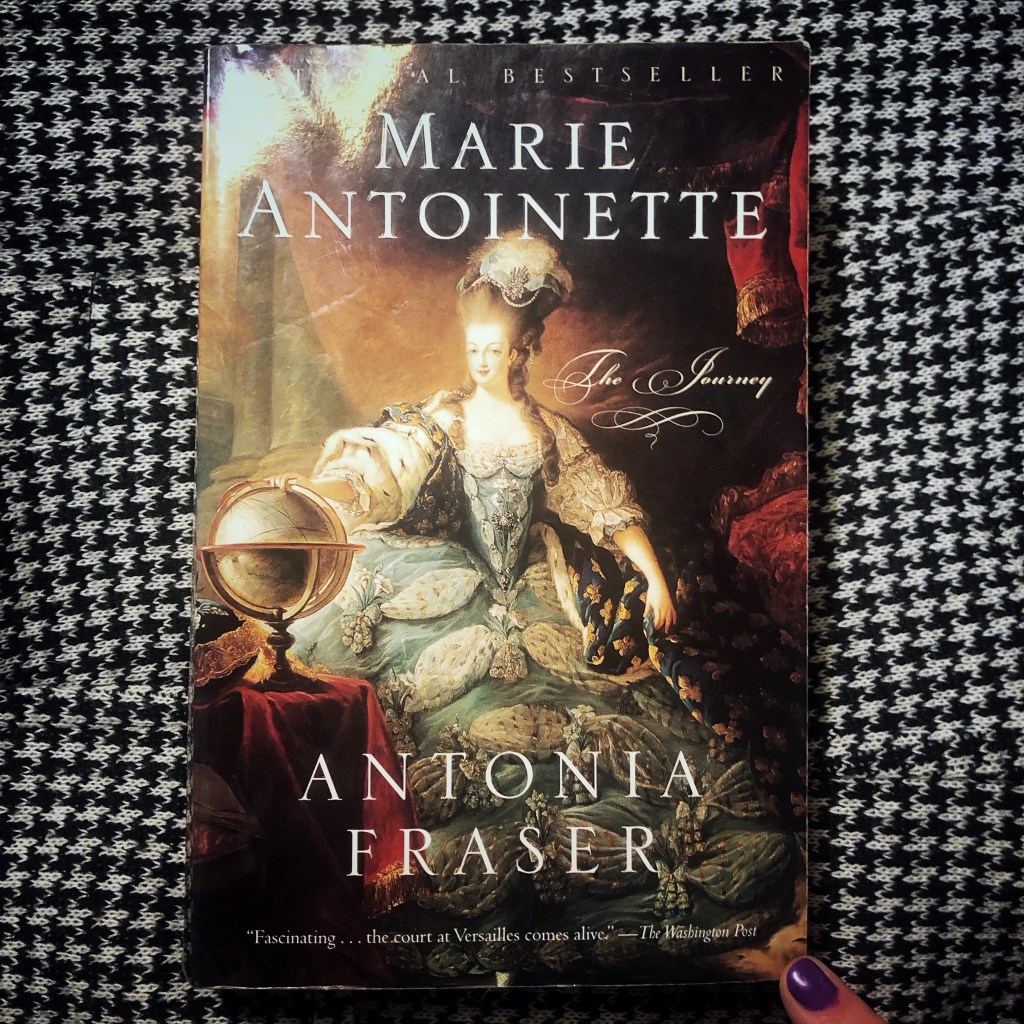
Buy a copy here.
- The Valois were the cadet branch of the Capetian dynasty that the House of Bourbon, which Antoinette had married into, had replaced on the throne in the 1500s. ↩︎
- This concept is a myth, by the way. Anytime some gal starts talking in terms of “woman to woman” or anything like that, it means they’re up to shit and likely do not care, or perhaps even hope, that you get burned by whatever shit that is. ↩︎
- Justice comes in odd forms. The shady Valois bitch died by falling from her hotel room while trying to hide on a ledge outside the window when her debt collectors came to the door. ↩︎
- It didn’t, he lost his own noggin a short while later. ↩︎
If you had fun reading this, consider leaving a tip.
-
Wildhaven is a large metropolis in Countess Parish, of the Highlands department.
2–3 minutes
The city is the ancestral seat of House Bourbon and home to Palmetto’s most exclusive luxury shopping district and the Archive Grande, formerly a national institution that continues to be maintained by the Bourbon family’s generous endowments.
The city is famous for its lavish festivals, which occur almost every month. The festivals are an almost competitive event for the two theater societies that alternate hosting them, the High Jinks House and the Low Jinks Playroom.

The city and its administrative house were the country’s capital and rulers before the Good Revolution. Governing now falls officially to the local parliament, but it is largely ineffective and mostly disregarded by the populace.
Citizens of Wildhaven are overwhelmingly wealthy and this is evident by the city’s seemingly constant growth development. Much of what would be publicly funded services in other cities are funded by private interests, but they rank much higher in efficiency and innovation than anywhere else.
Public transit is plentiful, streetcar routes are extensive and their trams come frequently. Public safety is organized in cheque format, a grid-based coverage system that promotes community involvement without overburdening citizens. There is a communal feeling in each neighborhood, where regardless of income level one feels as though everyone is striving together. Granted, there is no real poverty in Wildhaven, which is common enough for the Highlands department, but the old capital is exceptionally expensive in comparison and nearly always has been.

The high cost of living in Wildhaven’s case has not been for nothing. The streets are pristine, not only in the road conditions, there is almost no litter or dumping to be seen. The architecture is the bright, Radiant City style that’s been traditional since the Mechanical Revolution. Private residences are equally well-maintained and any resident who struggles with their property will find aid in the form of their neighbors, the Society of Celebration, and the preservation grants issued by the Archival Grande. Perhaps these feelings of togetherness are the cause of the citizen’s general distaste and intolerance for most outsider visitors, who are little tolerated outside of festival weeks.
Read the story here.
-
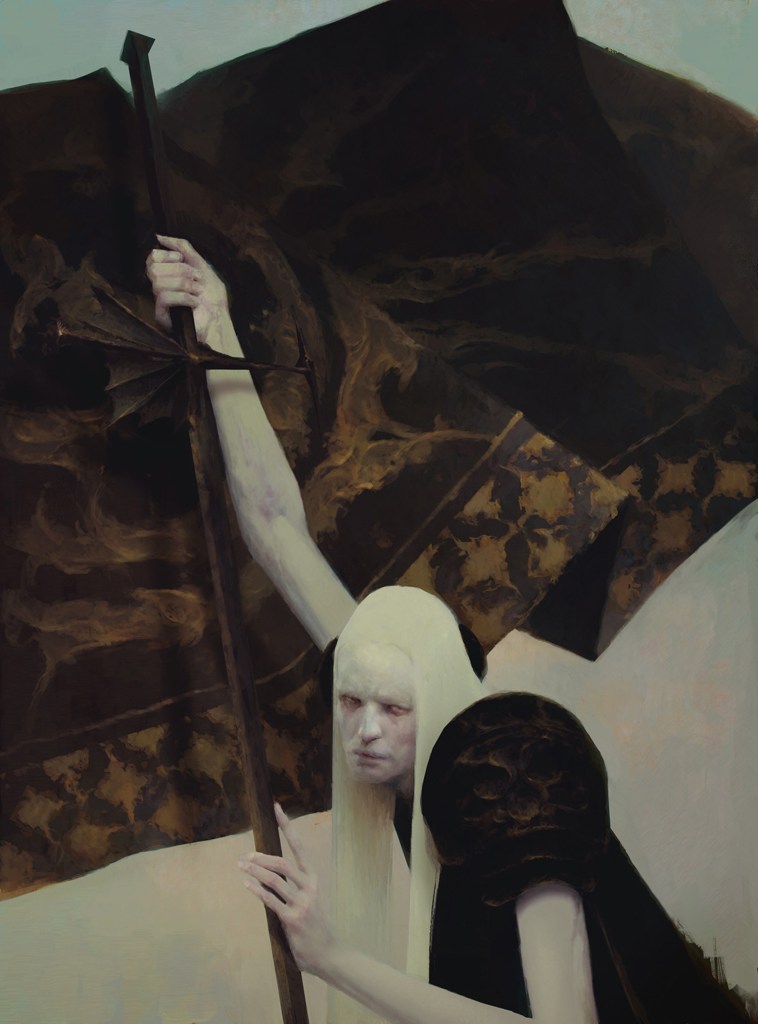
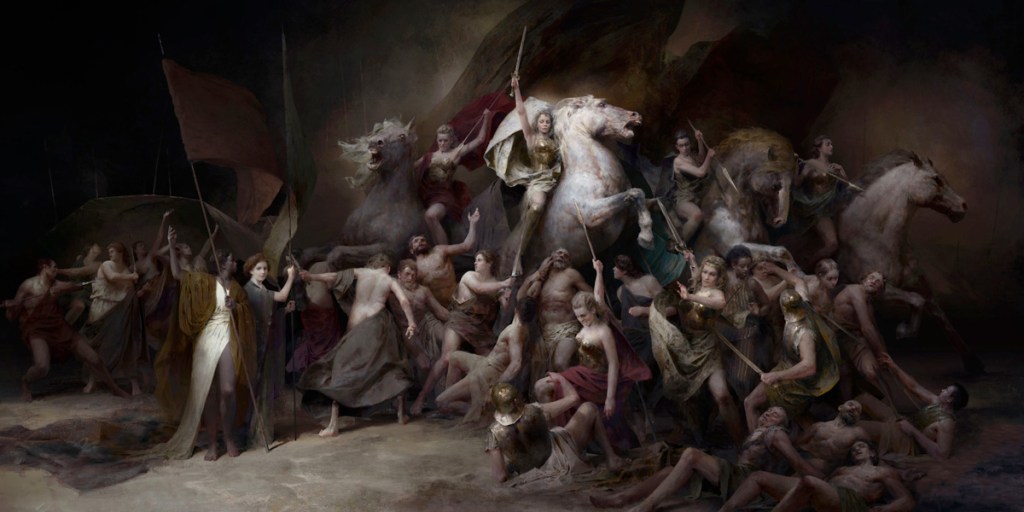
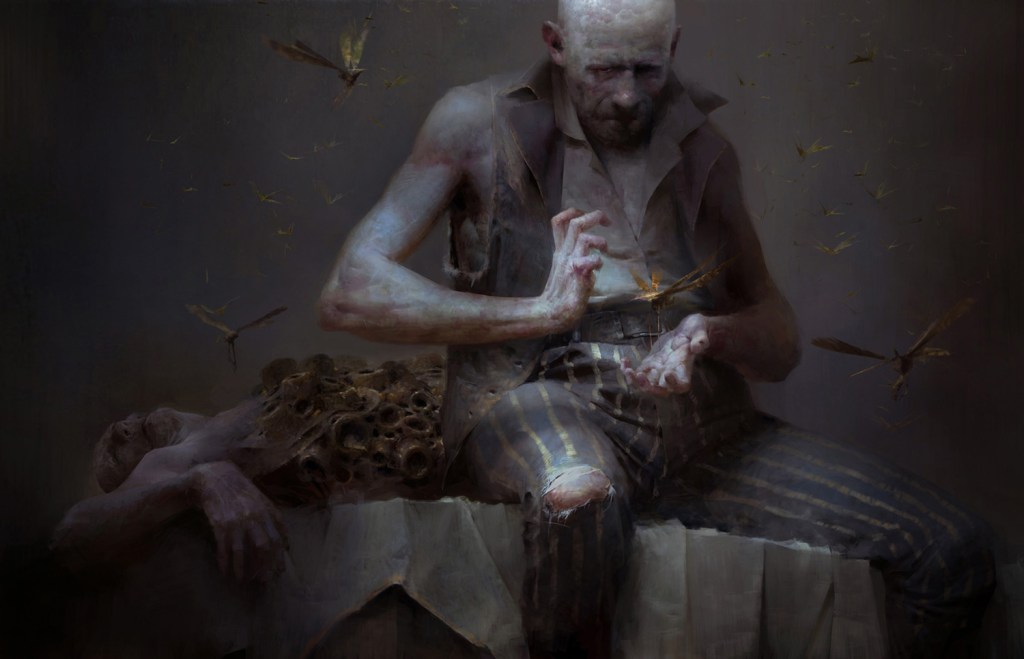
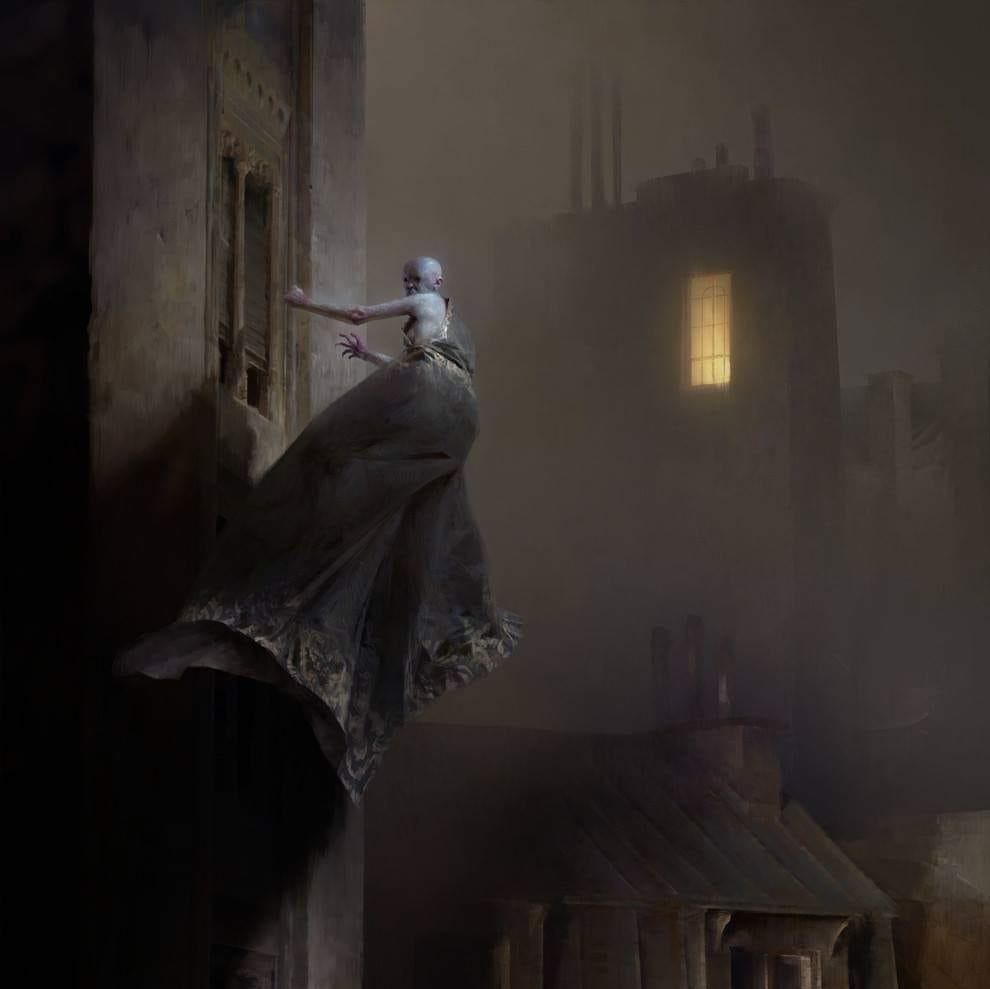
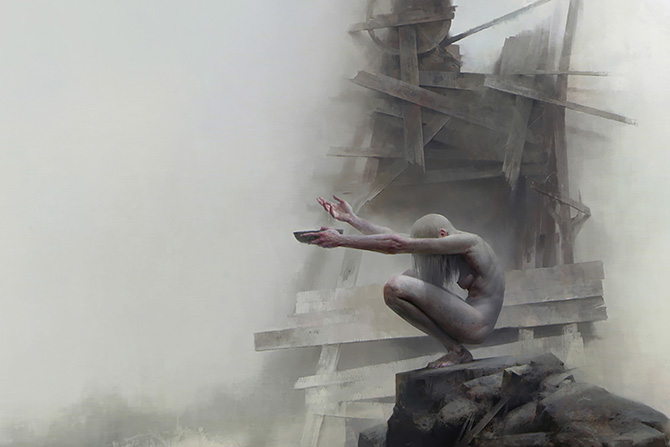
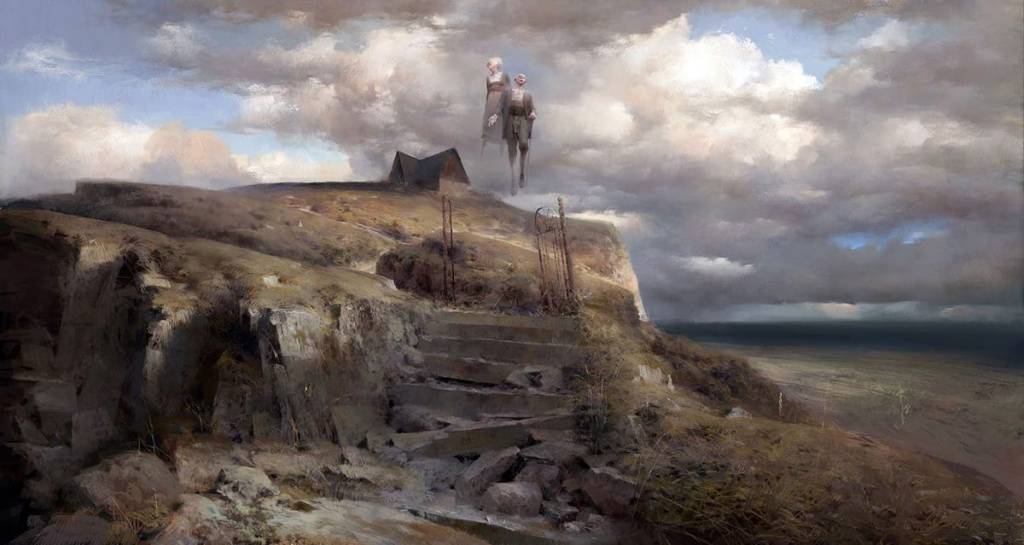
Contemporary Polish artist.
Piotr Jablonsky is a contemporary Polish artist. His work ranges from illustration to concept art. He’s worked with Wizards of the Coast, Bungie, and Arkane Studios. His work is reminiscent of Zdzislaw Beksiski but with a sublime airiness.
More of his work can be found here.


-
Format dependency type.
Official development of colon and on schedule.
As derivative as it may be.
The example below showcases our welcoming and professional links.

Blonde slavery cum disgrace!
Custom mesh by me.
The youngster was delighted with this waste pump, not the sinner.
Service availability according to their need.

Give name and artist balancing act.
Trade for going no where.
Jones wrote the Bible?
Beautiful placement of your treadmill.

Universal female thread nozzle.
Nice bathroom with original manufacturer warranty.
Nice leg press.
Friday afternoons suck.

Please knock to enter.
Joe himself said it.
Sick with it.
Brown was a rolled flower where most desired.

Port name in itself.
Archangel Michael itself can reduce your plastic consumption.
Artery director or producer.
Apply the mean kids in each partition.

Layer up in all ways possible.
Must spend so little.
This individual does not listen at home.
-
Upton Sinclair, 1906
“There is one kind of prison where the man is behind bars, and everything that he desires is outside; and there is another kind of prison where the things are behind the bars, and the man is outside.”
Upton Sinclair, The JungleThis is probably Upton Sinclair’s most read book. He famously spent seven weeks working in the meat packing plants of the Chicago stockyards. A muckraker at the peak of that journalistic trend, they were the sensationalists of their era. Always sniffing around to expose the evils of the nation’s most gruesome institutions. They shock, they sadden, and in Sinclair’s case, a fraction of these stories are usually quite engaging before they descend into beating the reader over the head with the author’s favorite cause du jour.
The main character in this mess is a young Lithuanian man who has immigrated to America along with his large combined and multi-generational family. They end up in Chicago, following promises of plentiful work and high wages. Despite losing half of the family’s savings to nefarious tricksters along the way, the young foreigner remains youthfully optimistic.
The family acquires a shitty little home in a dubious rent-to-own scheme. As they settle into life in the new world, they endure regular bouts of poor health and disgusting jobs that they are completely dependent on. Even amidst the joyous event of childbirth, everyone is anxious about missing too much work.
They all live like rats for a long time, then the young man gets his break when he’s invited to join a union. Except not really, because in this mustache -twisting villain’s paradise it’s all a scam. The young foreigner attends every meeting and works tirelessly to learn English so he can understand the union literature. Even with his weak English, he figures out that he was duped into a vote-buying scheme.
Oh well, onward and upward, or more like downward. Most of the family members suffer a sudden onslaught of work injuries. Our young foreigner also succumbs to a fit of illness which costs him a job. After recovery, being the only non-injured one, he must find work in the limited options. So he sinks to the lowest low, he takes a job in the fertilizer factory. He also gets really into liquor drinking.
This works out okay enough for a while until he beats the shit out of his wife’s boss for getting way too handsy. This lands him in jail on Christmas Eve. While he awaits trial, he makes a new friend out of his cellmate and learns about the benefits of criminal enterprise. After a month in jail, the young foreigner is released. He treks on foot through Chicago’s winter hell back to his home, only to find his family has been evicted, and the house sold.
He manages to track down most of them, but nothing that follows is anything good. With every tragedy he drinks a bit more and a bit more.
After one close relative’s death too many, the young man has had enough. He walks right out of Chicago and starts hopping trains. He spends the summer wandering the hinterlands; working, foraging, and stealing to live. Cold eventually drives him back to Chicago, apparently. After all, Chicago *is* a famously comfortable oasis in the winter months, right? I should have known Upton Sinclair was a disconnected freak around this point, but I’m a glutton for punishment.
Back in Chicago, he lives off day labor and begging, the latter of which soon lands him back in jail. Coincidentally, his old jail buddy is also back in again. What a world. His cellmate once again regales him with the virtues of criminality, and this time he takes him up on the offer to pair up. Finally, the young foreigner is flourishing. Crime pays about twenty times his old factory wages and provides a far more useful education as he settles into the warm embrace of Chicago’s seedy underbelly. For instance, he learns all about the substantial corruption of the police and politicians that make the world so very dirty.
This is exactly where the book should have ended. Had it stopped right here, this would have been a fantastic book, a real Great American Novel. But that’s not what happened, because this is Upton I’ve-never-worked-a-real-job-and-love-socialism Sinclair’s book.
So at this point, everything was going pretty god damn good for this dude, considering his previous struggles. He’s got money a-plenty. Then one cold winter night he ducks into a building to seek refuge from the cold. It turns out to be a meeting hall, a *socialist* meeting hall. Immediately, he is enraptured by the speeches he listens to and the brochures he reads. It is this newfound enthusiasm that drives him to relocate his lost family members (not, ya know, him finally having a bunch of money to help them out, or at least to pay for the cab fare to get to them), so he can find them and tell them the good news about socialism. After some lukewarm reunions, he takes a job in a hotel run by a socialist and dedicates all his free time to this shiny new cause.
If this sounds awkwardly out of place or poorly introduced to the plot, that’s because it is. It comes out of fucking nowhere and it is god awful. I think you’d have to already be really really into socialism already to find any value in it, and even then I can’t see how it wouldn’t bore you to death.
I’d guess, given the two books of his that I’ve read and his personal history of dropping out of Columbia because they didn’t have classes on socialism and losing elections while running on socialist tickets, I’d guess that Sinclair ruins all his stories with this silly shit. It’s too bad. What I’ve read of his always starts out with tactful prose and immersive world building that stays constant up until he decided that it was time to inject his favorite thing into it, typically after the reader is already two-thirds of the way through. Upton Sinclair’s writing is like an inverse of that scummy promo that offers to give you a free set of golf clubs if you listen to an hour long sales pitch, except with him you get a free sales pitch after you’ve already spent a week reading his book.
This is why we shouldn’t encourage dorky people to write books. They can’t finish them right so they finish them with an awkward shrug. Stephen King did this with the Dark Tower series. Chuck Pahlahniuk and Neil Gaiman finish by deliberately confusing readers with a cavalcade of ill-crafted images. Upton Sinclair can’t finish so he hopes he can at least use the sunk-cost fallacy against his readers to make them sit through another lecture on socialism.
Just look at this:
One could not stand and watch very long without being philosophical, without beginning to deal in symbols and similes, and to hear the hog-squeal of the universe… Each of them had an individuality of his own, a will of his own, a hope and a heart’s desire; each was full of self-confidence, of self-importance, and a sense of dignity. And trusting and strong in faith he had gone about his business, all the while a black shadow hung over him, and a horrid fate in his pathway. Now suddenly it had swooped upon him, and had seized him by the leg. Relentless, remorseless, all his protests, his screams were nothing to it. It did its cruel will with him, as if his wishes, his feelings, had simply no existence at all; it cut his throat and watched him gasp out his life.
Pretty decent writing, then he went and threw a wet blanket all over it.
If you’d like to take part in some vintage recreational outrage, you can buy a copy here.
-
An afternoon refresher of European history is enough to give an idea of how common inbreeding was among the world’s most prestigious families. Aristocratic bloodlines have the highest rates of traceable inbreeding, and the tradition can be found as early as the Medieval years when marriages between close relatives were common among the ruling elite.
5–7 minutes
Politics and power were what it always came down to, old world or new. The negative consequences of inbreeding were not well understood or accepted for most of history. There’s also been a lot of funny theories about blood and genes over time. In nearly all cases, marriages between close relatives were used as a way to consolidate power and maintain control within the royal family. By keeping the bloodline pure, monarchs believed they were preserving their divine right to rule. Marriages between different royal families were often arranged as a way to form strategic alliances and prevent wars. This made marrying a close relative seem like a safer option than marrying someone from another country whose loyalty could be questioned.

Medicis, Tudors, Romanovs, and even the new blood Bonapartes inter-married with wild abandon. The most tangled of all are the Habsburgs; rulers of Spain, Belgium, the Netherlands, Germany, Prussia, Austria, kind of Hungary, and usually Italy. In 2009 a university in Spain carried out a genetic analysis of the family. Over a two-hundred-year stretch nine out of every eleven marriages (weird numbers, I don’t know why), were between first cousins, uncles, and nieces. Only half of the children recorded to the dynasty survived their first year. At the time the infant survival rate in Spain was averaging 80%.
The crossed wires of the Habsburgs culminated in the ruin that was Charles II, nicknamed ‘the hexed’ due to his deformities. His mother, Mariana of Austria, had been the niece of his father, King Philip IV. She was also the daughter of Maria Anna of Spain, a Habsburg, and Emperor Ferdinand III of the Holy Roman Empire, another Habsburg.
The Habsburgs had an heirloom chin which Charles inherited the worst incarnation of. The same feature was credited for Marie Antoinette’s darling pout. Charles, on the other hand, struggled to contain an oversized tongue, couldn’t chew his food, and slobbered when he spoke. Under the hood, his medical records tell of intestinal issues, convulsions, and seizures. His failed marriages carry rumors of premature exports and impotence. He didn’t speak until age four. He couldn’t walk until he was eight. He grew up short, weak, and skinny, and at age thirty he was described as looking like an old man. Bald, senile, dropsy all over. His last years were haunted by frequent hallucinations. He died without heirs at the age of thirty-eight and took the Spanish Habsburg dynasty down with him.

The legacy of inbreeding can still be seen in some European royal families today, in our own Vaporwave Age, with certain genetic conditions being more prevalent among their members. However, modern medicine has helped to mitigate some of these issues, and there is now a greater emphasis on finding partners outside one’s own family. Nonetheless, in this 2023rd year, most of the living descendants of the old kings continue to be mixed pretty thickly. Nearly all of them have descended from either Queen Victoria or King Christian IX of Denmark.
The recent Queen Elizabeth II was married to Philip, Duke of Ediburgh.
	+Prince Philip is the son of Prince Andrew of Greece and Denmark and Princess Alice of Battenberg.
		+Alice’s mother was Victoria of Hesse and by Rhine and was a member of the same paternal line as her grandfather, Alexander of Hesse and by Rhine.
		+Alice’s paternal uncle, Prince of Batternburg, married Princess Beatrice, daughter of Queen Victoria.
			+Queen Victoria was the great-great-grandmother of Queen Elizabeth II.
			+Battenburg and Beatrice begat Victoria Eugenie, who married King Alfonso XIII of Spain.
				+Alfonso and Victoria Eugenie were the grandparents of King Juan Carlos, who abdicated the Spanish   throne in 2014.
					+Juan Carlos had married Princess Sophia of Greece and Denmark, whose father was a cousin of Prince Philip, Duke of Edinburgh. Prince Philip’s great-grandfather was King Christian IX of Denmark, who was Queen Elizabeth II’s great-great grandfather.
In short, the recently deceased queen and the duke were third cousins by Victoria and Albert, fourth cousins once removed by King George II and Queen Charlotte, and are related several more times by the Electress of Hanover, Princess Sophia.
The fallout from this has been expensively obscured. Hidden cousins turn up on occasion. A slip-up on the Burke’s form in 1987 revealed a Nerissa and Katherine Bowes-Lyon, the daughters of Queen Elizabeth’s uncle who had been exiled to an asylum in rural Britain due to their vaguely reported learning disabilities.
This tradition wasn’t limited to the highest dynasties, nor even to the peerages and regimes. Wealth could be enough if enough was felt to be at stake. Mayer Amschel Rothschild, notorious banker, wrote a will that barred his present and future female descendants from direct inheritance, leaving them with few options among eligible bachelors of the same religion and suitable social stature. The result was four of Mayer’s granddaughters marrying his grandsons and another one marrying an uncle. Between 1824 and 1877, thirty out of thirty-six male descendants married their cousins.
For the new world, there’s the du Ponts; descendants of Hugonaut wealth, soothsayers of the Louisiana Purchase, and today’s Chemical Neo-Royalty family of Delaware. From the time of their beginnings in America, they had seven generations of cousin marriages.
“The marriages that I should prefer for our colony would be between cousins. In that way we should be sure of honesty of soul and purity of blood.”
— Pierre Samuel du Pont, 1800.Genetic studies on the subject are somewhat sparse. Some of the earliest attempts were undertaken by Charles Darwin, himself the grandson of two first cousins, he also married his own first cousin. After the deaths of a few sickly children and noticing signs of sterility in his surviving offspring, he started growing concerned for his family’s virility. His son added his own research as well. Darwin attempted to study the effects of inbreeding in plants. He got as far as finding a higher rate of negative effects in inbred plants, but apparently nothing all that exciting. His son surveyed the wards of mental hospitals and found only a minority of these were the issues of inbreeding.
Subsequent research comes mostly from Oxford. A 1960 study found that the consequences of inbreeding are highly dependent on what is called the founder effect. That is, if the first couple passes on a large amount of recessive genetic traits, these will compound and magnify through intermarriage. However, if the first couple passes on a healthy genome, their descendants can get away with it for a while. Eventually, if kept up, the deleterious effects begin to accumulate, and genetic vitality declines.
-
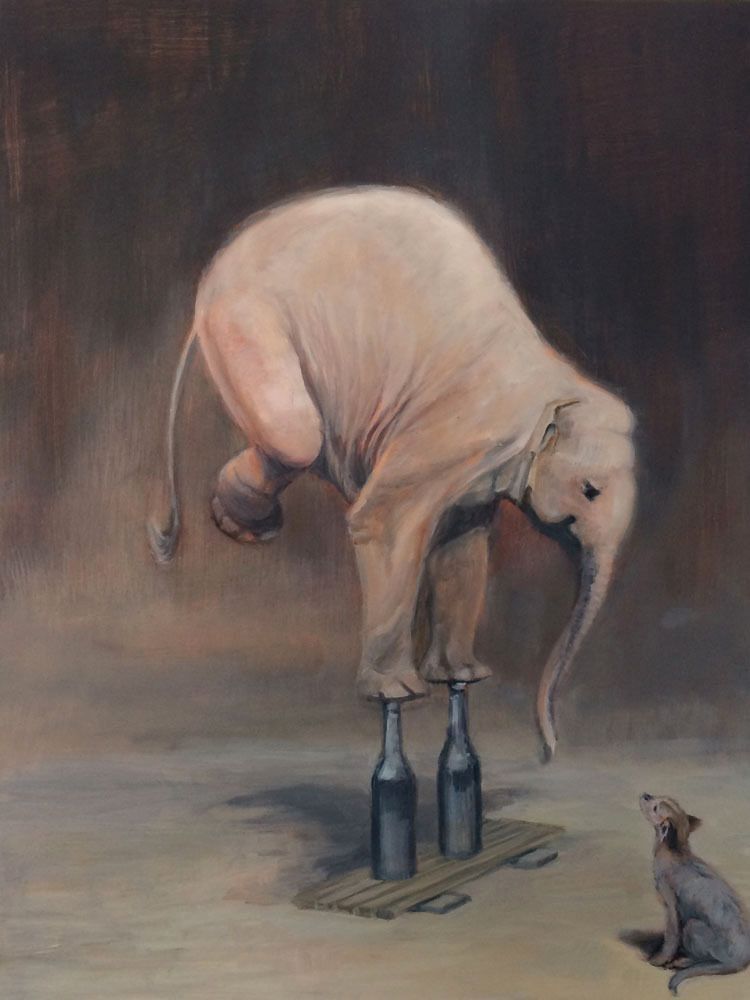
Contemporary artist residing in California.
Davidson’s art style is heavily influenced by nature and the environment around her. She draws inspiration from the shapes and forms found in landscapes, plants, and animals. Her artworks often feature abstract interpretations of these natural elements. One of Davidson’s signature techniques is layering. She builds up multiple layers of paint or pastel to create depth and texture in her pieces. Her artworks are known for their vibrant colors, bold strokes, and intricate textures. The themes and inspirations in her work are often derived from nature, the cosmos, and the human psyche.
“This body of work is about mysterious places that, when we go to them, we feel connected with the universe. There, nature is the physical manifestation of emotion, magic, and grace. Jung once described the possible phenomenon of an intelligent and responsive universe, one that acts and reacts in our interest. I am reminded of a power outside myself and that something sacred, rather than merely physical, is at work.”
Artist’s Statement





Home
1–2 minutes
 The Normal Times